The Story
Plant Bio
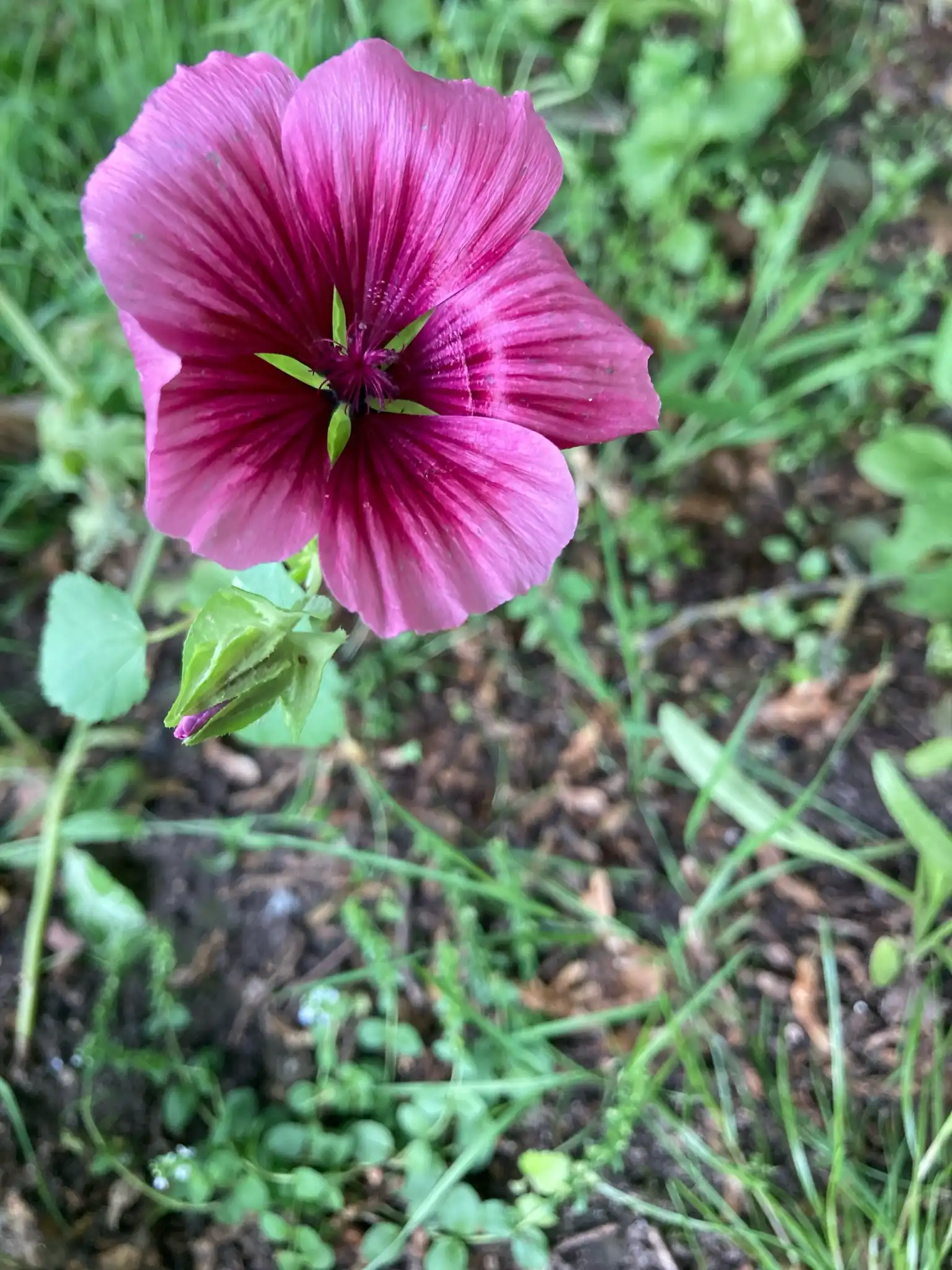
Malope trifida, the mallow-wort, is a fast-growing erect annual reaching two to five feet in height, featuring a naturally bushy, upright form with deeply three-lobed, glossy green leaves. The showy, paper-thin, trumpet-shaped flowers are produced from summer through early fall, showcasing deep purplish-red petals set against distinct bright green sepals at their bases.
While the wild species bears deep rose-purple blossoms, cultivated strains expand the palette to include shades of white, pink, and deep magenta. The prominent, star-like green sepals remain highly visible behind the satin petals, providing a sharp structural contrast unique to this genus.
Uses & Benefits:
Essentials
At a Glance
Plant Type
Annual
Height
60"
Width
24"
Light
Full Sun, Partial Sun
Zones
4, 5, 6, 7, 8, 9, 10
Water
Moderate
Humidity
Moderate
Lifespan
Annual
Native To
Western Mediterranean
Toxicity
Non-toxic
Bloom period
Summer – Fall
In flower about 6 months of the year
Planting
How to Grow
- Select a site in full sun with fertile, humus-rich, and exceptionally well-drained soil.
- Sow seeds directly into the garden bed after the last spring frost, covering them lightly with soil.
- Water regularly to keep the soil evenly moist until seedlings establish, then reduce frequency to allow the topsoil to dry between waterings.
- Apply a light layer of organic compost at planting, avoiding high-nitrogen fertilizers that stimulate foliage over flowers.
- Deadhead spent blooms weekly to encourage continuous flowering and prevent excessive self-seeding.
Pro Tip
Sow seeds directly into their final garden positions rather than transplanting; the seedlings develop a sensitive taproot that reacts poorly to root disturbance.
Keep It Thriving
Care Guide
Do
- Direct-sow seeds to avoid disturbing the sensitive taproot.
- Ensure excellent soil drainage to prevent root and collar rot.
- Space plants adequately to promote good air circulation.
Don't
- Do not transplant mature or root-bound container specimens.
- Do not overwater or allow the soil to become waterlogged.
- Do not apply heavy nitrogen fertilizers.
Seasonal Care Calendar
| Task | Jan | Feb | Mar | Apr | May | Jun | Jul | Aug | Sep | Oct | Nov | Dec |
|---|---|---|---|---|---|---|---|---|---|---|---|---|
| Deadhead | ||||||||||||
| Fertilize | ||||||||||||
| Pest Check | ||||||||||||
| Plant | ||||||||||||
| Spring Cleanup |
Watch Out For
Pests & Diseases
Common Pests
Common Diseases
In the Garden
Landscape Uses & Companions
Landscape Uses
Companion Plants
Multiply
Propagation Methods
Good to Know
Common Questions
Mallow-wort questions
What zones can Mallow-wort grow in?
Mallow-wort is hardy in USDA Zones 4–10. Inside that range it survives winter in the ground; outside it, grow it as an annual or a container plant you protect.
When does Mallow-wort bloom?
Mallow-wort typically blooms in summer through fall. Exact timing shifts a week or two with your zone — Sow's bloom calendar maps it to your garden.
Does Mallow-wort need full sun?
Mallow-wort does best in full sun to part shade. In hot climates, afternoon shade keeps blooms fresher longer.
Is Mallow-wort drought tolerant?
Yes — once established (usually after the first full season), Mallow-wort handles dry spells with minimal watering. Water deeply its first year to build the root system that makes that possible.
Keep exploring
Explore the genus
Grow Mallow-wort with confidence
See it in a design of your actual yard, get zone-matched care reminders, and track it season by season in your garden journal.