The Story
Plant Bio
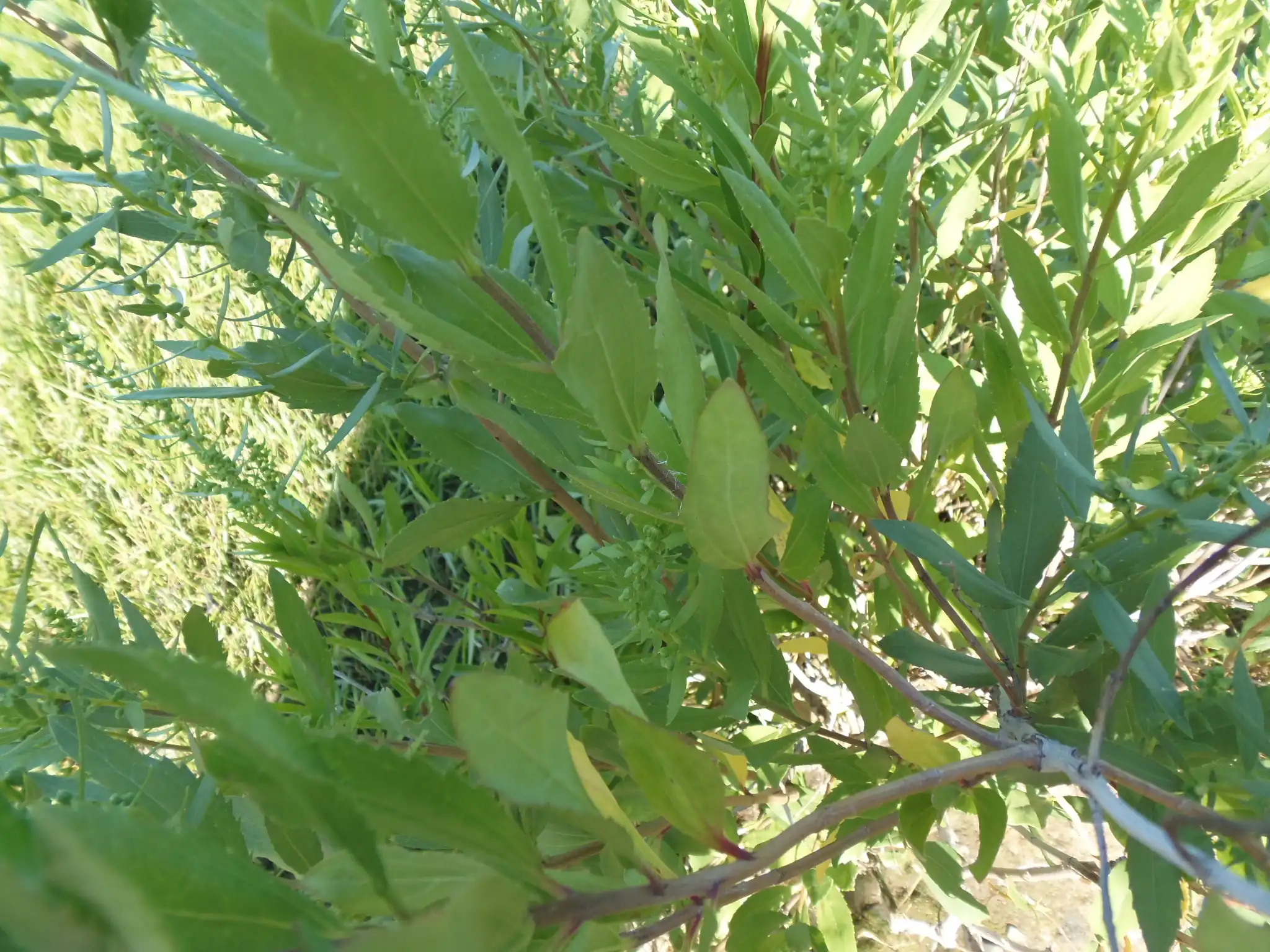
Iva frutescens, commonly known as Maritime Marsh Elder, is a deciduous to semi-evergreen shrub native to the salt marshes of the eastern and southern United States. It is exceptionally tolerant of salt spray, saline soils, and periodic inundation.
As a species, its most distinctive trait is its remarkable adaptability to harsh coastal environments where few other woody plants can survive. It plays a critical role in stabilizing shorelines and providing habitat in tidal marsh ecosystems.
Uses & Benefits:
Essentials
At a Glance
Plant Type
Shrub
Height
72"
Width
72"
Light
Full Sun
Zones
4, 5, 6, 7, 8, 9
Water
Moderate to high
Humidity
High
Lifespan
Perennial shrub
Native To
Eastern and Southern US Coasts
Toxicity
Pollen is a significant allergen for some people.
Bloom period
Late summer – Early fall
In flower about 2 months of the year
Planting
How to Grow
- Select a site in full sun, ideally with moist or wet soil
- This plant is not picky about soil type or pH
- Dig a hole large enough to accommodate the root ball
- Place the plant in the hole at the same depth it was in the pot
- Backfill the hole and water to settle the soil
- No supplemental watering is needed once established in a moist site
Pro Tip
This plant thrives on neglect in the right environment; simply plant it in a sunny, salt-affected area and let it grow.
Keep It Thriving
Care Guide
Do
- Plant it in full sun for densest growth
- Use it in difficult coastal or salt-spray areas where other plants fail
- Prune if needed to maintain a desired size or shape
- Appreciate its ecological role over its ornamental value
Don't
- Do not plant in deep shade
- Avoid planting near homes of people with severe ragweed allergies, as the pollen is similar
- Don't expect showy flowers or fall color
- Do not fertilize; it is adapted to lean conditions
Seasonal Care Calendar
| Task | Jan | Feb | Mar | Apr | May | Jun | Jul | Aug | Sep | Oct | Nov | Dec |
|---|---|---|---|---|---|---|---|---|---|---|---|---|
| Plant | ||||||||||||
| Prune |
Watch Out For
Pests & Diseases
Common Pests
Common Diseases
In the Garden
Landscape Uses & Companions
Landscape Uses
Multiply
Propagation Methods
Good to Know
Common Questions
Jesuit's Bark questions
What zones can Jesuit's Bark grow in?
Jesuit's Bark is hardy in USDA Zones 4–9. Inside that range it survives winter in the ground; outside it, grow it as an annual or a container plant you protect.
Is Jesuit's Bark deer resistant?
Yes — Jesuit's Bark is rated deer-resistant. Deer typically pass it over, though extreme hunger can override any plant's defenses.
When does Jesuit's Bark bloom?
Jesuit's Bark typically blooms in late summer through early fall. Exact timing shifts a week or two with your zone — Sow's bloom calendar maps it to your garden.
Does Jesuit's Bark need full sun?
Jesuit's Bark does best in full sun (6+ hours).
Is Jesuit's Bark drought tolerant?
Yes — once established (usually after the first full season), Jesuit's Bark handles dry spells with minimal watering. Water deeply its first year to build the root system that makes that possible.
Keep exploring
Explore the genus
Grow Jesuit's Bark with confidence
See it in a design of your actual yard, get zone-matched care reminders, and track it season by season in your garden journal.