The Story
Plant Bio
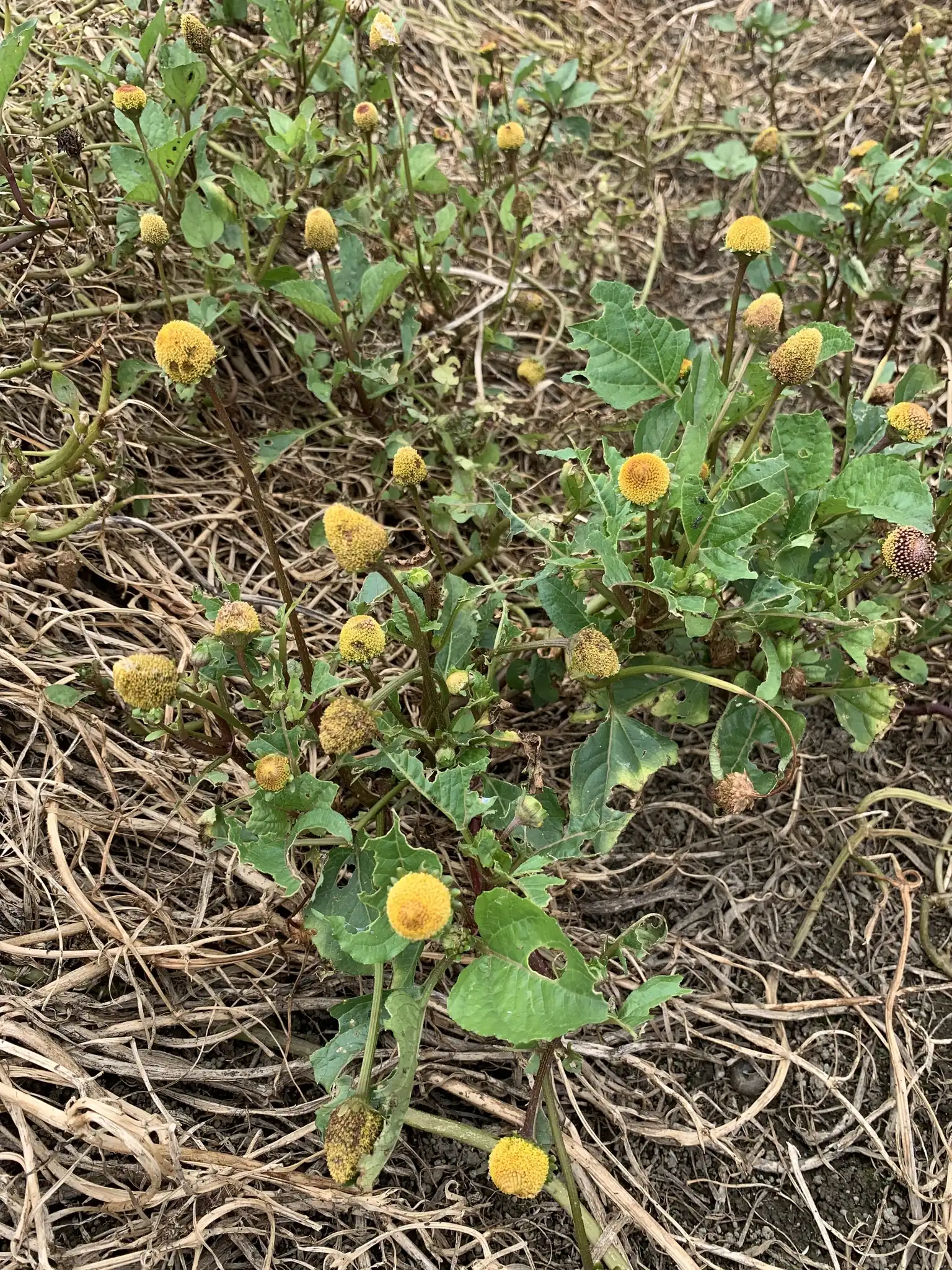
Acmella oleracea, commonly known as the toothache plant, is a low-growing, spreading herbaceous perennial native to tropical South America that is widely cultivated as a warm-season annual. The plant features opposite, broadly ovate green-to-bronze leaves and distinctive conical flower heads that lack ray petals, displaying dense yellow-to-orange disk florets with a dark red central cone.
The foliage and flower heads contain spilanthol, an active compound that induces a strong, temporary tingling and numbing sensation when chewed. This species requires consistently moist, organic soils and wilts rapidly under drought stress, distinguishing it from superficially similar succulent herbs.
Uses & Benefits:
Essentials
At a Glance
Plant Type
Perennial
Height
18"
Width
20"
Light
Full Sun, Partial Sun
Zones
9, 10
Water
High
Humidity
High
Lifespan
Tender perennial or annual
Native To
South America
Toxicity
Non-toxic (causes oral numbing)
Bloom period
Summer – Fall
In flower about 6 months of the year
Planting
How to Grow
- Sow seeds indoors 4 to 6 weeks before the last frost, or direct-sow in spring once soil temperatures warm.
- Plant in rich, organic, moisture-retentive soil in a full sun to partial shade location.
- Water regularly to maintain consistent soil moisture, preventing the soil from drying out completely.
- Pinch back growing tips in spring and early summer to encourage a bushier, more compact habit.
Pro Tip
Avoid treating this species as a drought-tolerant succulent despite its fleshy appearance; keep the soil consistently moist to prevent rapid wilting and leaf drop.
Keep It Thriving
Care Guide
Do
- Keep soil consistently moist to prevent rapid wilting.
- Pinch back stem tips occasionally to promote branching.
- Apply a balanced organic fertilizer monthly during the active growing season.
Don't
- Do not allow the soil to dry out completely, as the plant has low drought tolerance.
- Do not overwater to the point of waterlogging, which causes root rot.
- Do not plant outdoors until all danger of frost has passed.
Seasonal Care Calendar
| Task | Jan | Feb | Mar | Apr | May | Jun | Jul | Aug | Sep | Oct | Nov | Dec |
|---|---|---|---|---|---|---|---|---|---|---|---|---|
| Deadhead | ||||||||||||
| Fertilize | ||||||||||||
| Pest Check | ||||||||||||
| Pinch |
Watch Out For
Pests & Diseases
Common Pests
Common Diseases
In the Garden
Landscape Uses & Companions
Landscape Uses
Multiply
Propagation Methods
Good to Know
Common Questions
Toothache plant questions
What zones can Toothache plant grow in?
Toothache plant is hardy in USDA Zones 9–10. Inside that range it survives winter in the ground; outside it, grow it as an annual or a container plant you protect.
Is Toothache plant deer resistant?
Yes — Toothache plant is rated deer-resistant. Deer typically pass it over, though extreme hunger can override any plant's defenses.
When does Toothache plant bloom?
Toothache plant typically blooms in summer through fall. Exact timing shifts a week or two with your zone — Sow's bloom calendar maps it to your garden.
Does Toothache plant need full sun?
Toothache plant does best in full sun to part shade. In hot climates, afternoon shade keeps blooms fresher longer.
Keep exploring
Explore the genus
Hardy in your zone?
Grow Toothache plant with confidence
See it in a design of your actual yard, get zone-matched care reminders, and track it season by season in your garden journal.