The Story
Plant Bio
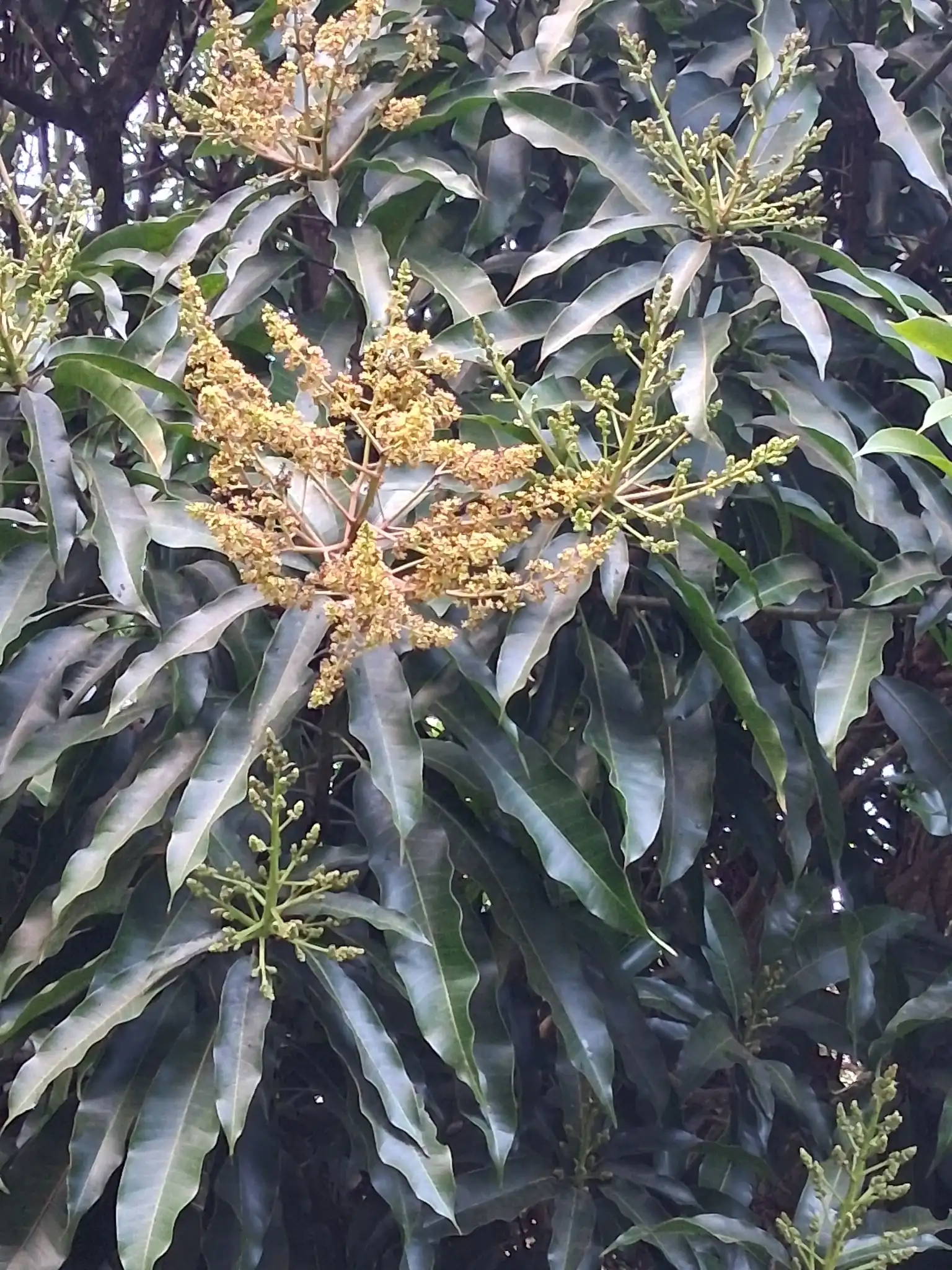
Mangifera indica is a large, evergreen canopy tree native to the tropical seasonal forests of South and Southeast Asia. It develops a dense, rounded, and symmetrical crown of leathery, lanceolate leaves that emerge in bronze, pinkish-red, or purplish flushes before maturing to deep glossy green.
The species produces small, yellowish-green or pinkish-white flowers in large, branched terminal panicles during winter and spring. These panicles contain hundreds to thousands of individual flowers that rely on insect pollination to set fruit.
Uses & Benefits:
Essentials
At a Glance
Plant Type
Tree
Height
600"
Width
600"
Light
Full Sun
Zones
10
Water
Low to Moderate
Humidity
Moderate
Lifespan
Long-lived
Native To
South and Southeast Asia
Toxicity
Skin Irritant
Bloom period
Winter – Spring
In flower about 6 months of the year
Planting
How to Grow
- Select a planting site in full sun with deep, well-draining sandy loam or loam soil.
- Dig a hole twice as wide as the root ball but no deeper, ensuring the graft union remains well above the soil line.
- Water thoroughly upon planting, then establish a minimal watering schedule that allows the soil to dry between applications.
- Apply a balanced fertilizer lightly every two to three months during the first few years of active growth.
Pro Tip
Planting mangoes too deep or in heavy, poorly drained soils triggers fatal Phytophthora root rot. Avoid excessive nitrogen fertilization, which stimulates lush vegetative growth at the expense of flowering, and ensure the tree experiences a dry winter period to induce flower bud initiation.
Keep It Thriving
Care Guide
Do
- Prune annually immediately after harvest to maintain a manageable canopy height and remove dead wood.
- Ensure the tree receives at least six to eight hours of direct daily sunlight.
- Allow the soil to dry out during the winter to trigger the necessary dormancy break for flowering.
Don't
- Do not plant in heavy clay or poorly drained soils that collect standing water.
- Do not apply heavy nitrogen fertilizers, which suppress flowering in favor of foliage.
- Do not prune deeply into old, thick structural wood that lacks active green foliage.
Seasonal Care Calendar
| Task | Jan | Feb | Mar | Apr | May | Jun | Jul | Aug | Sep | Oct | Nov | Dec |
|---|---|---|---|---|---|---|---|---|---|---|---|---|
| Fertilize | ||||||||||||
| Harvest | ||||||||||||
| Pest Check | ||||||||||||
| Prune | ||||||||||||
| Winter Prep |
Watch Out For
Pests & Diseases
Common Pests
Common Diseases
In the Garden
Landscape Uses & Companions
Landscape Uses
Companion Plants
Multiply
Propagation Methods
Good to Know
Common Questions
Mango questions
What zones can Mango grow in?
Mango is hardy in USDA Zone 10. Inside that range it survives winter in the ground; outside it, grow it as an annual or a container plant you protect.
Is Mango deer resistant?
Not reliably. Deer may browse Mango, especially tender spring growth — plan on repellents or fencing where pressure is high.
When does Mango bloom?
Mango typically blooms in winter through spring. Exact timing shifts a week or two with your zone — Sow's bloom calendar maps it to your garden.
Does Mango need full sun?
Mango does best in full sun (6+ hours).
Is Mango drought tolerant?
Yes — once established (usually after the first full season), Mango handles dry spells with minimal watering. Water deeply its first year to build the root system that makes that possible.
Keep exploring
Explore the genus
Hardy in your zone?
Grow Mango with confidence
See it in a design of your actual yard, get zone-matched care reminders, and track it season by season in your garden journal.