The Story
Plant Bio
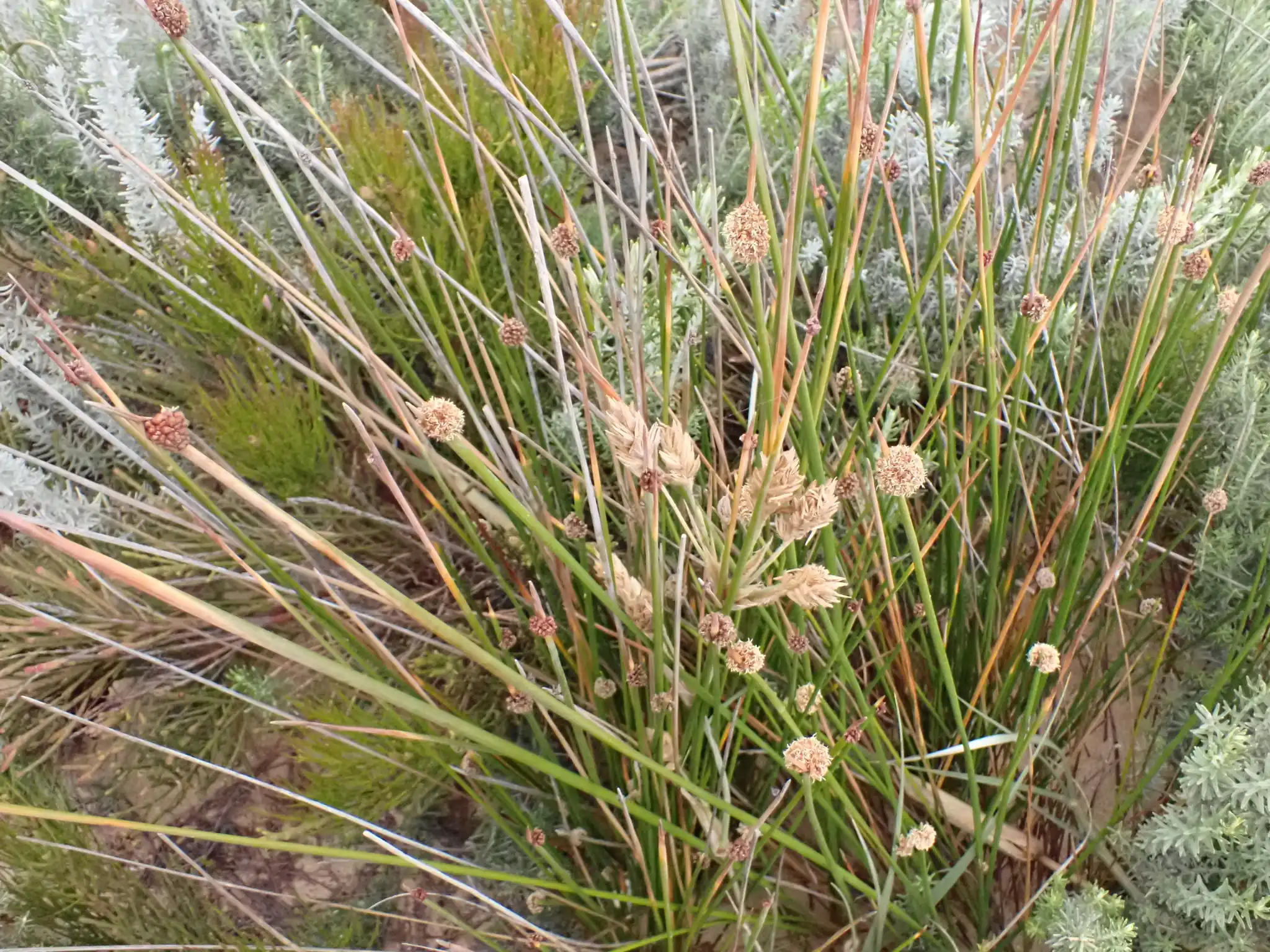
Ficinia nodosa, commonly known as knobby club-rush, is a densely tufted, rhizomatous perennial sedge native to South Africa, Australia, and New Zealand. The plant produces stiff, upright-to-arching cylindrical stems that remain green to yellow-green throughout the year.
This species is distinguished by its dense, globular brownish-orange flower clusters that sit just below the stem tips, primarily appearing from mid-spring to early summer. It is highly resilient in coastal environments, tolerating strong salt-laden winds, maritime spray, and sandy soils.
Uses & Benefits:
Essentials
At a Glance
Plant Type
Grass
Height
40"
Width
80"
Light
Full Sun, Partial Sun
Zones
8, 9, 10
Water
Low to high
Humidity
Tolerant
Lifespan
Perennial
Native To
South Africa, Australia, New Zealand
Toxicity
Non-toxic
Bloom period
Mid-spring – Early summer
In flower about 3 months of the year
Planting
How to Grow
- Select a planting site in full sun to partial shade with sandy, loamy, or gravelly soil.
- Dig a hole twice the width of the root ball and of equal depth.
- Position the plant so the crown sits level with the surrounding soil surface.
- Backfill the hole, firming the soil gently around the roots, and water deeply to settle.
- Maintain consistent moisture during the first growing season to help the root system establish.
Pro Tip
When tidying old clumps, prune the stems back to three to four inches above the ground, but avoid cutting into the old, leafless woody base where regeneration is limited.
Keep It Thriving
Care Guide
Do
- Water regularly during the first summer to establish a deep, resilient root system.
- Apply an annual slow-release fertilizer in spring to support steady growth.
- Prune the clump hard every few years if it becomes untidy or ragged.
Don't
- Do not cut back into the old, leafless woody base of the plant.
- Do not allow container-grown specimens to sit in stagnant, unmanaged water without drainage.
- Do not plant in deep, heavy shade where stems will become weak and floppy.
Seasonal Care Calendar
| Task | Jan | Feb | Mar | Apr | May | Jun | Jul | Aug | Sep | Oct | Nov | Dec |
|---|---|---|---|---|---|---|---|---|---|---|---|---|
| Divide | ||||||||||||
| Fertilize | ||||||||||||
| Propagate | ||||||||||||
| Prune |
Watch Out For
Pests & Diseases
Common Pests
Common Diseases
In the Garden
Landscape Uses & Companions
Landscape Uses
Companion Plants
Multiply
Propagation Methods
Good to Know
Common Questions
Knobby Club-rush questions
What zones can Knobby Club-rush grow in?
Knobby Club-rush is hardy in USDA Zones 8–10. Inside that range it survives winter in the ground; outside it, grow it as an annual or a container plant you protect.
Is Knobby Club-rush deer resistant?
Yes — Knobby Club-rush is rated deer-resistant. Deer typically pass it over, though extreme hunger can override any plant's defenses.
When does Knobby Club-rush bloom?
Knobby Club-rush typically blooms in mid-spring through early summer. Exact timing shifts a week or two with your zone — Sow's bloom calendar maps it to your garden.
Does Knobby Club-rush need full sun?
Knobby Club-rush does best in full sun to part shade. In hot climates, afternoon shade keeps blooms fresher longer.
Is Knobby Club-rush drought tolerant?
Yes — once established (usually after the first full season), Knobby Club-rush handles dry spells with minimal watering. Water deeply its first year to build the root system that makes that possible.
Keep exploring
Explore the genus
Hardy in your zone?
Grow Knobby Club-rush with confidence
See it in a design of your actual yard, get zone-matched care reminders, and track it season by season in your garden journal.