The Story
Plant Bio
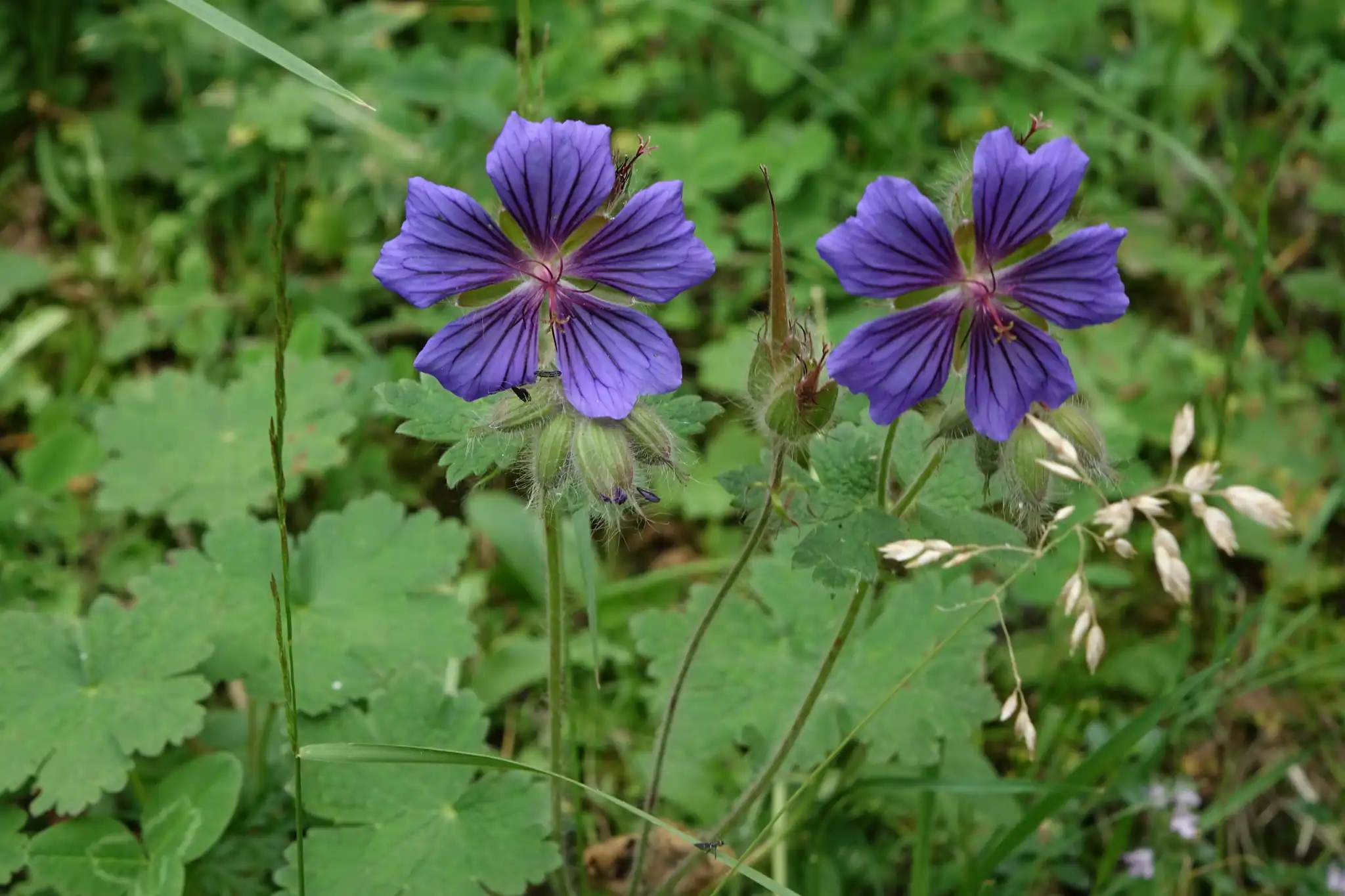
Geranium platypetalum, known as the broad-petaled cranesbill, is a clump-forming herbaceous perennial native to the Caucasus and Western Asia. It forms a dense, mounding ground cover of deeply divided, soft-textured dark green leaves that emerge fresh green in spring.
The large, saucer-shaped flowers feature broad, overlapping purple petals with prominent dark veining, held in loose clusters above the foliage. Flowering begins in late spring and continues into mid-summer, providing nectar for bees and butterflies.
Uses & Benefits:
Essentials
At a Glance
Plant Type
Perennial
Height
20"
Width
24"
Light
Full Sun, Partial Sun
Zones
4, 5, 6, 7, 8
Water
Moderate
Humidity
Moderate
Lifespan
Perennial
Native To
Caucasus, Western Asia
Toxicity
Non-toxic
Bloom period
Late spring – Summer
In flower about 4 months of the year
Planting
How to Grow
- Select a planting site in full sun to partial shade with average, well-drained soil.
- Amend heavy soils with organic matter to ensure excellent drainage, as plants will rot in waterlogged winter conditions.
- Space plants 18 to 24 inches apart to allow the mounding ground cover to fill in without crowding.
- Water regularly after planting to establish the root system, then reduce watering to a moderate schedule.
Pro Tip
Shear the entire plant back to the ground after the main flowering flush to stimulate a clean, fresh mound of basal foliage and prevent summer tattering.
Keep It Thriving
Care Guide
Do
- Cut back the foliage hard after flowering to encourage a fresh flush of healthy leaves.
- Apply a balanced, slow-release organic fertilizer in early spring.
- Ensure the soil drains rapidly, especially during the winter months.
Don't
- Do not over-fertilize, which leads to floppy, excessive foliage at the expense of flowers.
- Do not plant in low-lying, boggy areas where water collects.
- Do not allow the soil to dry out completely during prolonged heatwaves, as foliage quality will drop.
Seasonal Care Calendar
| Task | Jan | Feb | Mar | Apr | May | Jun | Jul | Aug | Sep | Oct | Nov | Dec |
|---|---|---|---|---|---|---|---|---|---|---|---|---|
| Divide | ||||||||||||
| Fertilize | ||||||||||||
| Pest Check | ||||||||||||
| Prune |
Watch Out For
Pests & Diseases
Common Pests
Common Diseases
In the Garden
Landscape Uses & Companions
Landscape Uses
Companion Plants
Multiply
Propagation Methods
Good to Know
Common Questions
Broad-petaled Cranesbill questions
What zones can Broad-petaled Cranesbill grow in?
Broad-petaled Cranesbill is hardy in USDA Zones 4–8. Inside that range it survives winter in the ground; outside it, grow it as an annual or a container plant you protect.
When does Broad-petaled Cranesbill bloom?
Broad-petaled Cranesbill typically blooms in late spring through summer. Exact timing shifts a week or two with your zone — Sow's bloom calendar maps it to your garden.
Does Broad-petaled Cranesbill need full sun?
Broad-petaled Cranesbill does best in full sun to part shade. In hot climates, afternoon shade keeps blooms fresher longer.
Is Broad-petaled Cranesbill drought tolerant?
Yes — once established (usually after the first full season), Broad-petaled Cranesbill handles dry spells with minimal watering. Water deeply its first year to build the root system that makes that possible.
More Geranium to compare
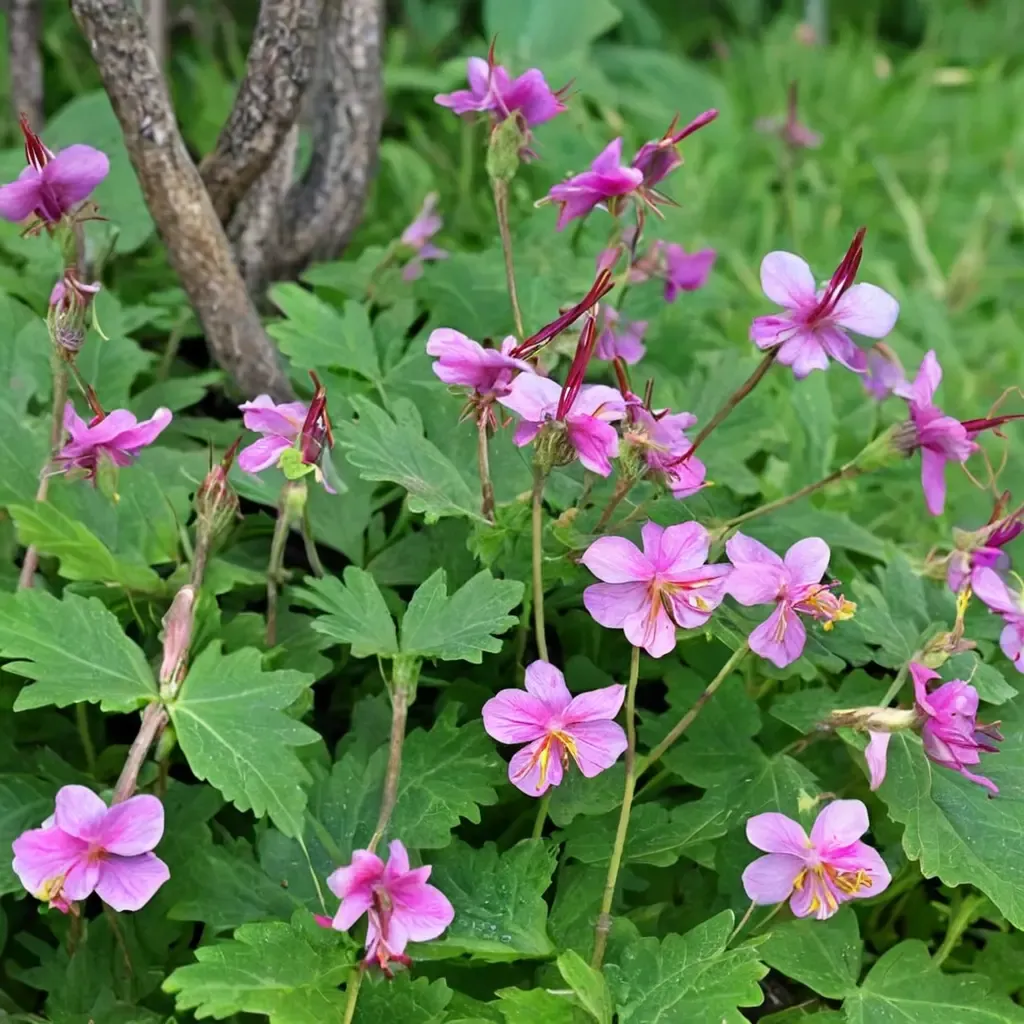
Bigroot Geranium
Geranium macrorrhizum
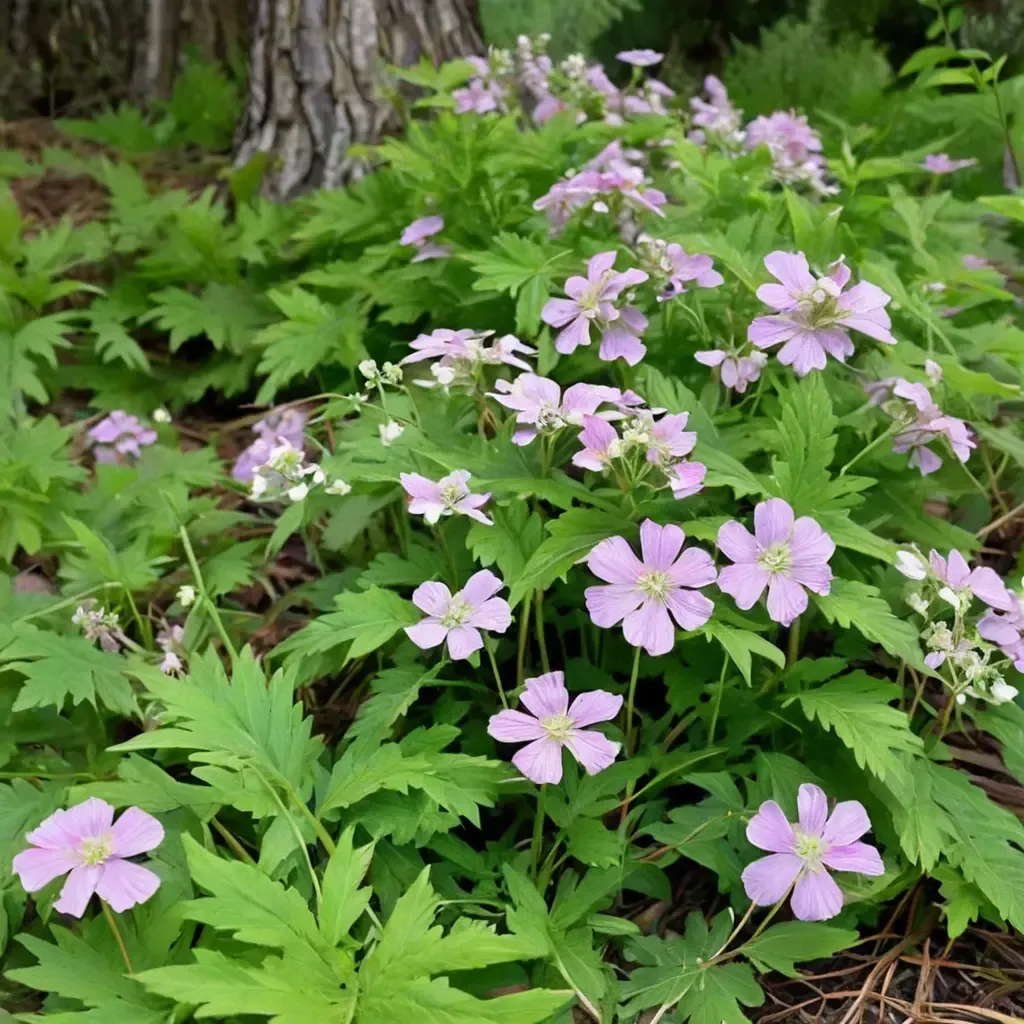
Wild Geranium
Geranium maculatum
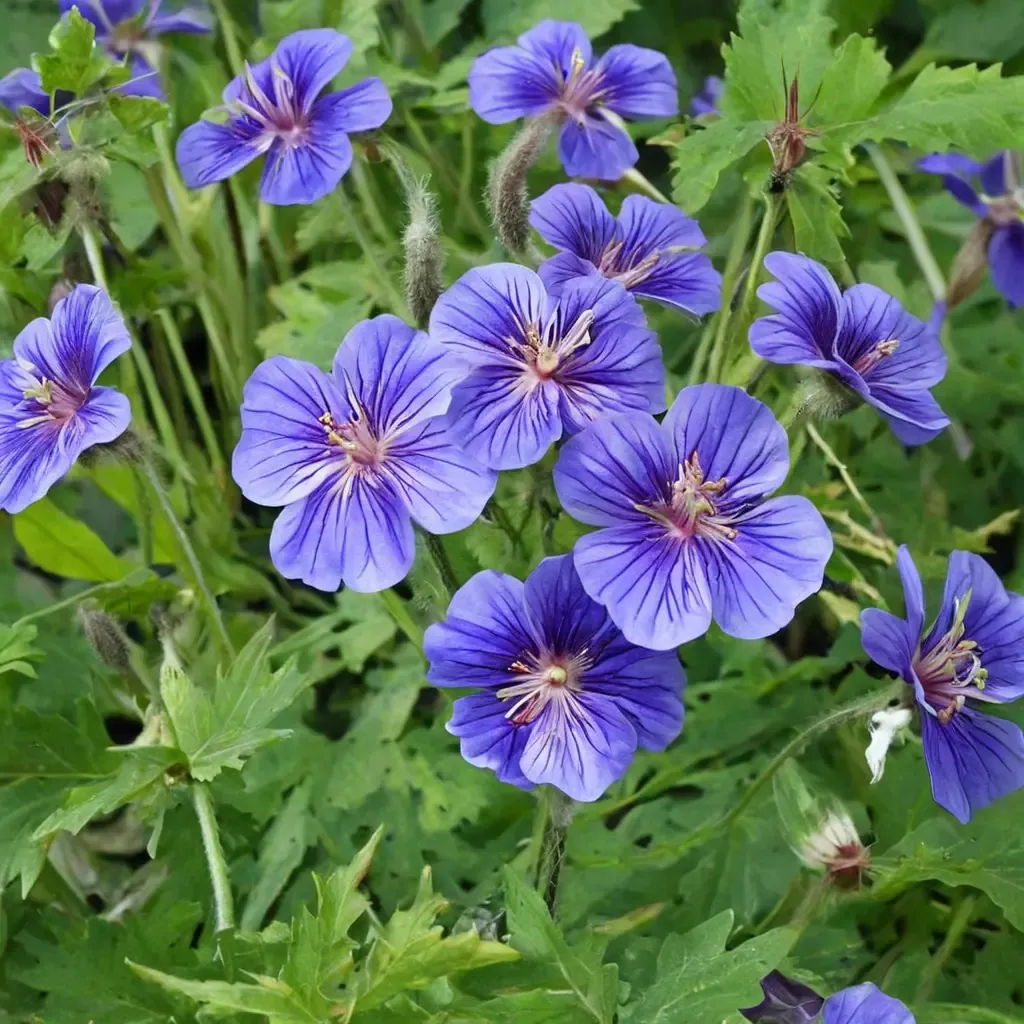
Cranesbill 'Rozanne'
Geranium x magnificum 'Rozanne'
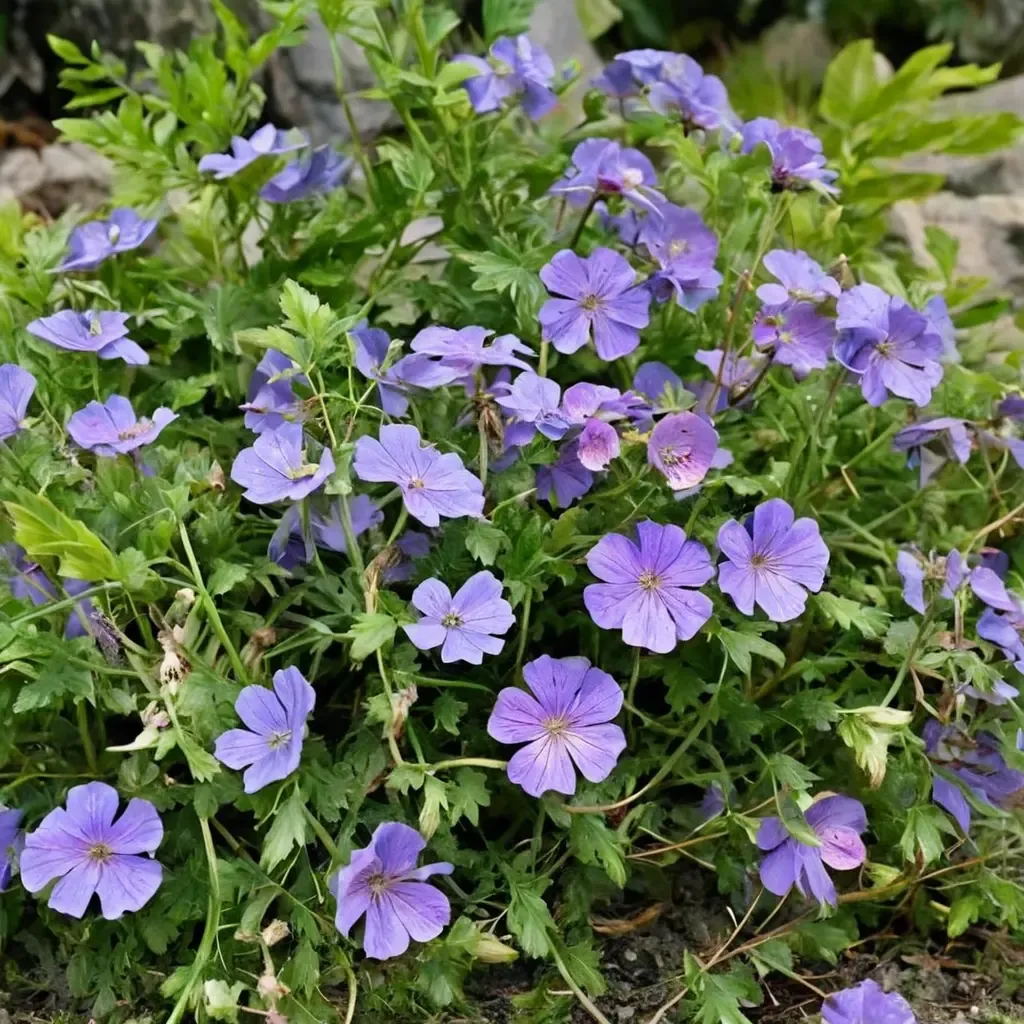
Azure Rush Geranium
Geranium incanum 'Azure Rush'
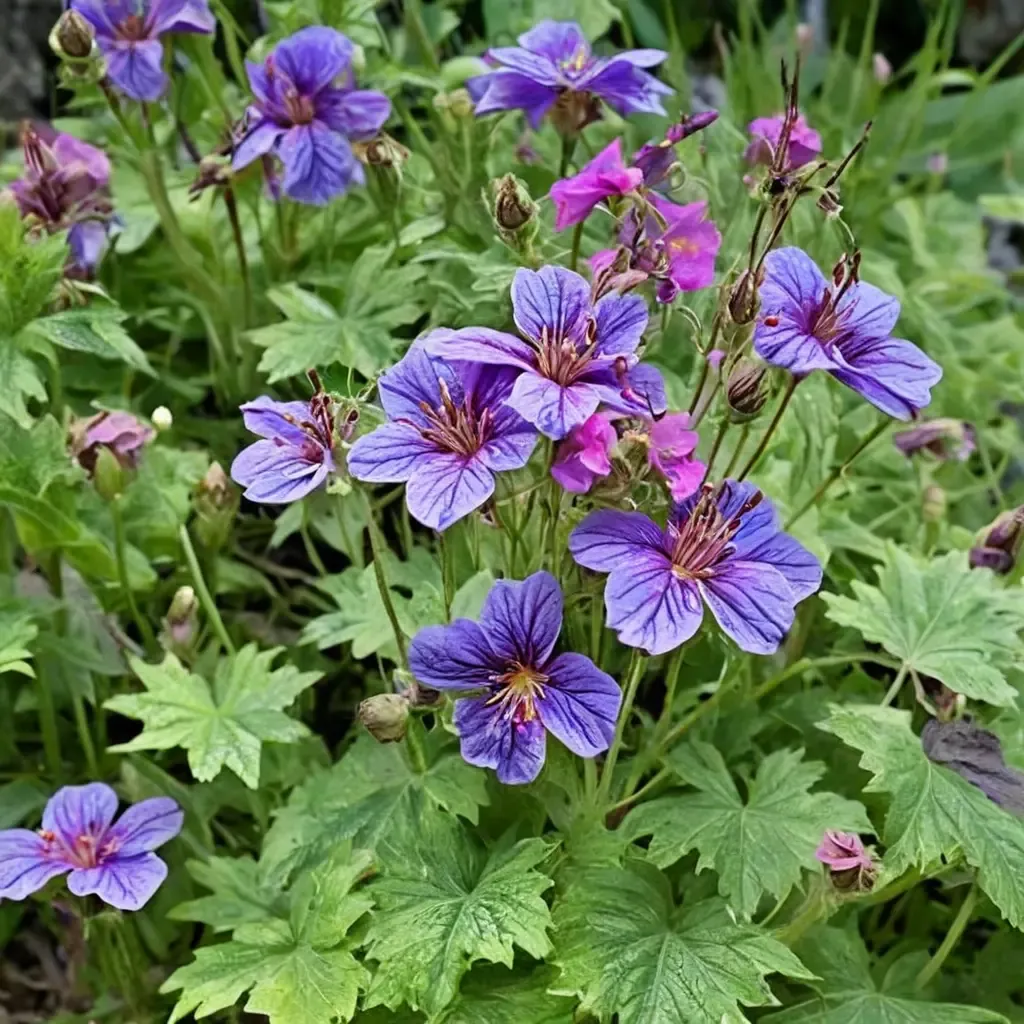
Showy Cranesbill
Geranium x magnificum 'Bevan's Variety'
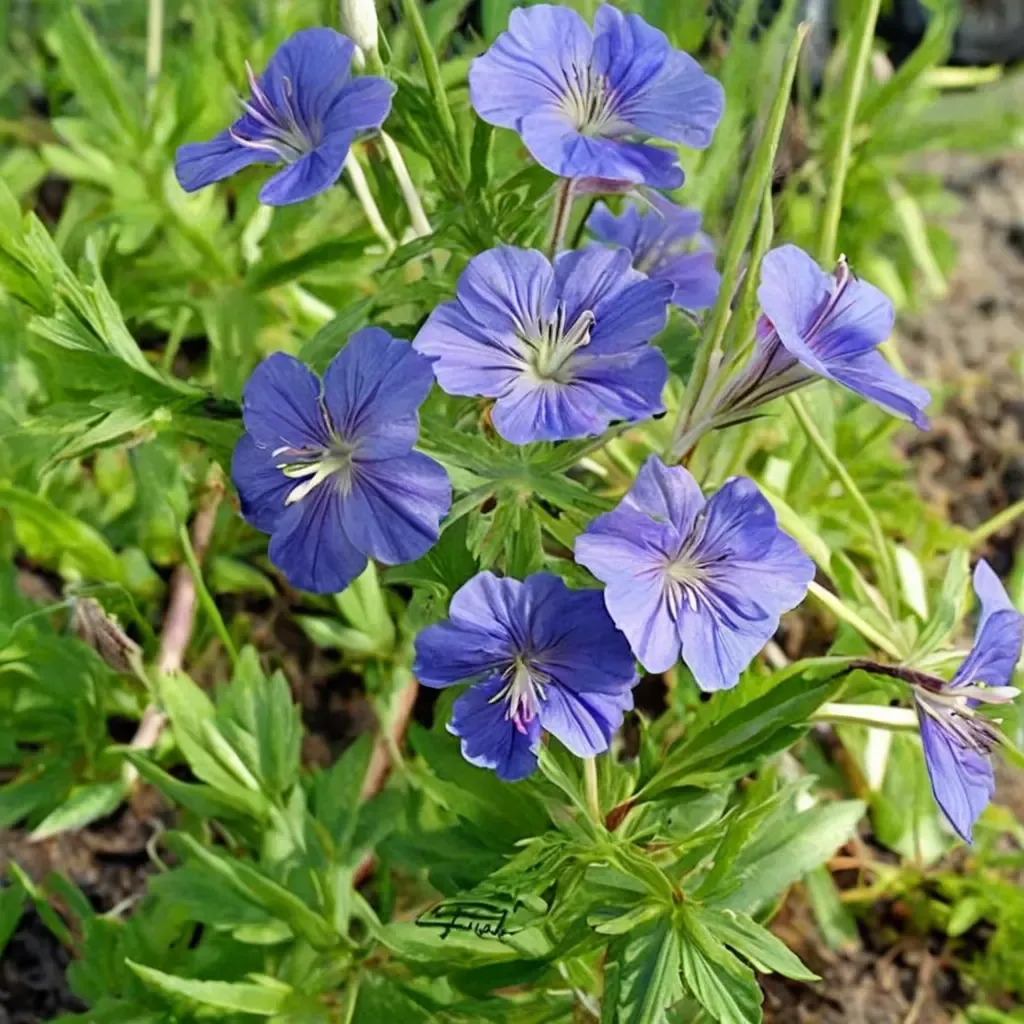
Cranesbill 'Orion'
Geranium maculatum 'Orion'
Keep exploring
Explore the genus
Hardy in your zone?
Grow Broad-petaled Cranesbill with confidence
See it in a design of your actual yard, get zone-matched care reminders, and track it season by season in your garden journal.