The Story
Plant Bio
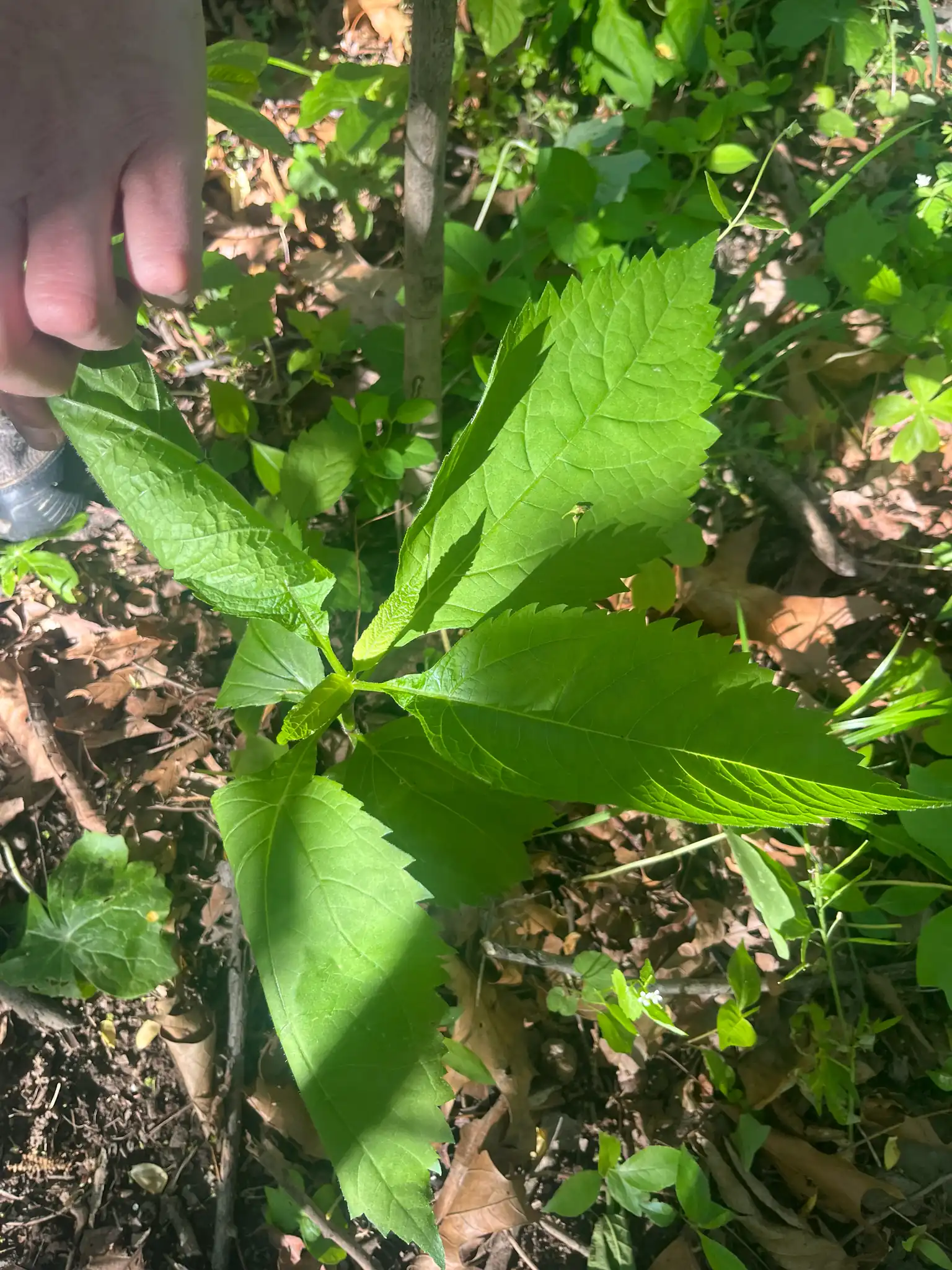
Collinsonia canadensis, commonly known as richweed or horsebalm, is an erect herbaceous perennial native to moist woodlands of eastern North America. It grows two to four feet high on sturdy, square stems bearing large, opposite leaves that release a strong lemon fragrance when crushed.
From mid to late summer, terminal panicles produce two-lipped, pale yellow flowers with prominent stamens that attract hummingbirds and native bees. Unlike many mint-family relatives, this species forms a non-aggressive, slow-expanding clump from a thick subterranean rhizome.
Uses & Benefits:
Essentials
At a Glance
Plant Type
Perennial
Height
48"
Width
36"
Light
Partial Sun, Shade
Zones
4, 5, 6, 7, 8
Water
Medium to high
Humidity
High
Lifespan
Perennial
Native To
Eastern North America
Toxicity
Non-toxic
Bloom period
Mid summer – Late summer
In flower about 2 months of the year
Planting
How to Grow
- Select a site with partial shade to full shade and moist, organic-rich soil.
- Amend light or compacted soil with composted leaf mold to increase moisture retention.
- Space plants 18 to 36 inches apart, setting the crown level with the surrounding soil.
- Water thoroughly after planting and maintain damp soil conditions through summer.
Pro Tip
Provide filtered shade and humus-rich soil that stays consistently moist; full sun or dry conditions trigger severe leaf scorch and wilting.
Keep It Thriving
Care Guide
Do
- Keep soil consistently moist, especially during hot summer periods.
- Mulch with leaf mold to replicate native woodland understory conditions.
- Cut dead stems back to ground level in late winter before spring growth begins.
Don't
- Do not plant in full, baking sun where foliage will scorch and collapse.
- Do not apply concentrated synthetic fertilizers, as rich organic soil is sufficient.
- Avoid summer pruning, which weakens the rhizomes.
Seasonal Care Calendar
| Task | Jan | Feb | Mar | Apr | May | Jun | Jul | Aug | Sep | Oct | Nov | Dec |
|---|---|---|---|---|---|---|---|---|---|---|---|---|
| Mulch | ||||||||||||
| Pest Check | ||||||||||||
| Spring Cleanup | ||||||||||||
| Winter Prep |
Watch Out For
Pests & Diseases
Common Pests
Common Diseases
In the Garden
Landscape Uses & Companions
Landscape Uses
Multiply
Propagation Methods
Good to Know
Common Questions
Richweed questions
What zones can Richweed grow in?
Richweed is hardy in USDA Zones 4–8. Inside that range it survives winter in the ground; outside it, grow it as an annual or a container plant you protect.
Is Richweed deer resistant?
Not reliably. Deer may browse Richweed, especially tender spring growth — plan on repellents or fencing where pressure is high.
When does Richweed bloom?
Richweed typically blooms in mid summer through late summer. Exact timing shifts a week or two with your zone — Sow's bloom calendar maps it to your garden.
Does Richweed need full sun?
Richweed does best in part shade.
Keep exploring
Explore the genus
Hardy in your zone?
Grow Richweed with confidence
See it in a design of your actual yard, get zone-matched care reminders, and track it season by season in your garden journal.