The Story
Plant Bio
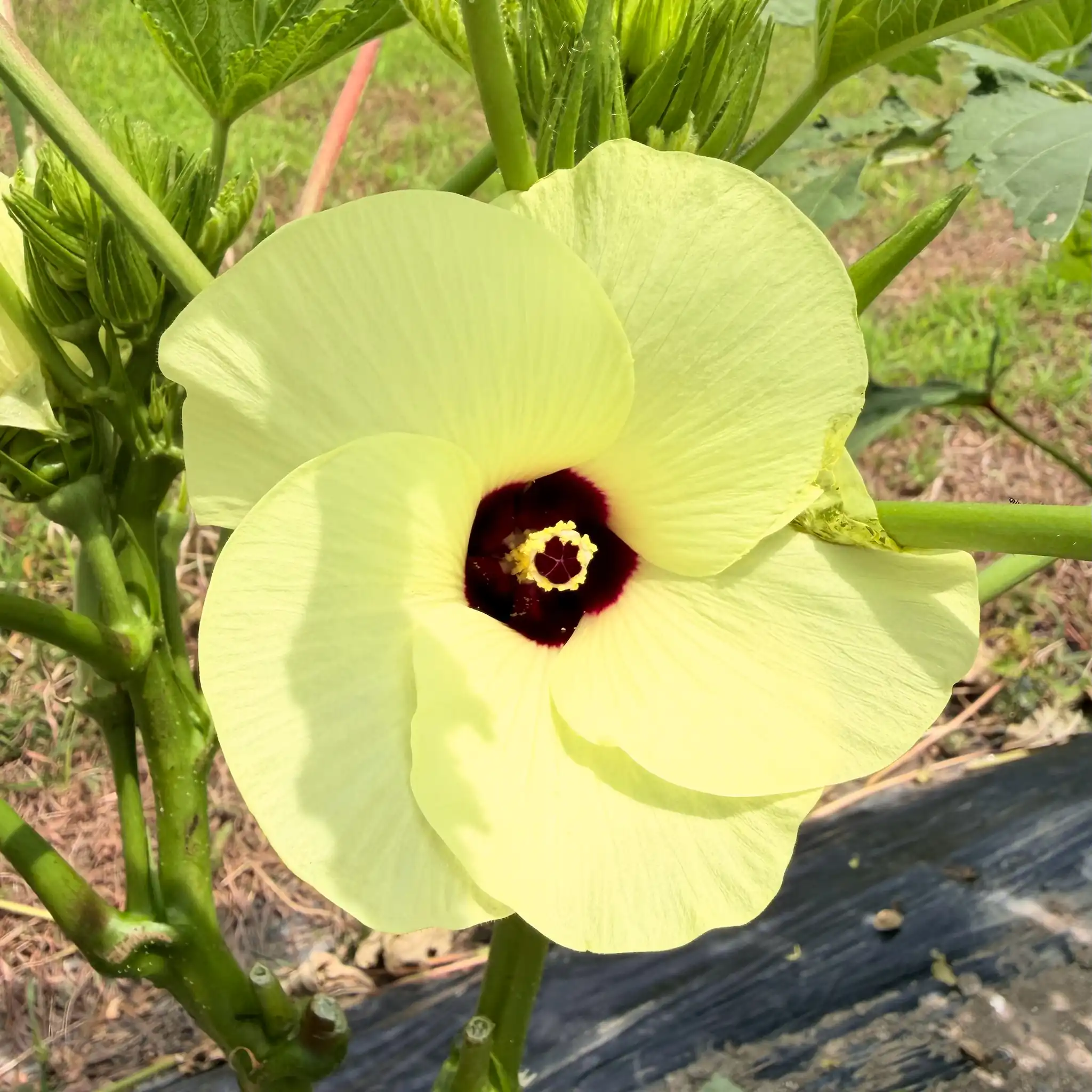
Abelmoschus esculentus, commonly known as okra, is an upright, stiffly branched herbaceous annual featuring a robust central stem and rough, deeply lobed dark green leaves. The solitary, hibiscus-like flowers display five pale yellow petals surrounding a deep crimson or purplish central eye.
This warm-season vegetable produces elongated, mucilaginous seed pods that are harvested young for culinary use. The entire plant is covered in stiff, abrasive hairs that can cause contact dermatitis or skin irritation during handling.
Uses & Benefits:
Essentials
At a Glance
Plant Type
Fruit Vegetable
Height
48"
Width
30"
Light
Full Sun
Zones
4, 5, 6, 7, 8, 9, 10
Water
Moderate
Humidity
High
Lifespan
Annual
Native To
Africa
Toxicity
Non-toxic (hairs may irritate skin)
Bloom period
Summer – Fall
In flower about 6 months of the year
Planting
How to Grow
- Select a planting site in full sun with fertile, well-drained loamy soil.
- Sow seeds directly into the ground 1/2 inch deep once soil temperatures reach 60°F, or transplant young seedlings in biodegradable pots to avoid root disturbance.
- Water deeply once a week during dry spells, maintaining consistent moisture to encourage steady pod development.
- Side-dress plants with a balanced, moderate-nitrogen fertilizer every three to four weeks throughout the active growing season.
Pro Tip
Sow seeds only after soil temperatures consistently exceed 60°F; planting into cold, damp spring soil causes seeds to rot or stall permanently.
Keep It Thriving
Care Guide
Do
- Wear gloves and long sleeves when harvesting to avoid skin irritation from abrasive plant hairs.
- Harvest pods continuously when they are two to three inches long to signal the plant to keep producing.
- Remove lower yellowing leaves selectively to improve air circulation around the base of the plant.
Don't
- Do not plant seeds too early into cold, wet spring soil.
- Do not allow pods to grow larger than four inches, as they quickly become woody, fibrous, and unpalatable.
- Do not overwater or plant in heavy, poorly drained soil where roots are prone to rotting.
Seasonal Care Calendar
| Task | Jan | Feb | Mar | Apr | May | Jun | Jul | Aug | Sep | Oct | Nov | Dec |
|---|---|---|---|---|---|---|---|---|---|---|---|---|
| Fertilize | ||||||||||||
| Harvest | ||||||||||||
| Pest Check | ||||||||||||
| Plant |
Watch Out For
Pests & Diseases
Common Pests
Common Diseases
In the Garden
Landscape Uses & Companions
Landscape Uses
Multiply
Propagation Methods
Good to Know
Common Questions
Okra questions
What zones can Okra grow in?
Okra is hardy in USDA Zones 4–10. Inside that range it survives winter in the ground; outside it, grow it as an annual or a container plant you protect.
Is Okra deer resistant?
Not reliably. Deer may browse Okra, especially tender spring growth — plan on repellents or fencing where pressure is high.
When does Okra bloom?
Okra typically blooms in summer through fall. Exact timing shifts a week or two with your zone — Sow's bloom calendar maps it to your garden.
Does Okra need full sun?
Okra does best in full sun (6+ hours).
Is Okra drought tolerant?
Yes — once established (usually after the first full season), Okra handles dry spells with minimal watering. Water deeply its first year to build the root system that makes that possible.
Keep exploring
Explore the genus
Grow Okra with confidence
See it in a design of your actual yard, get zone-matched care reminders, and track it season by season in your garden journal.