The Story
Plant Bio
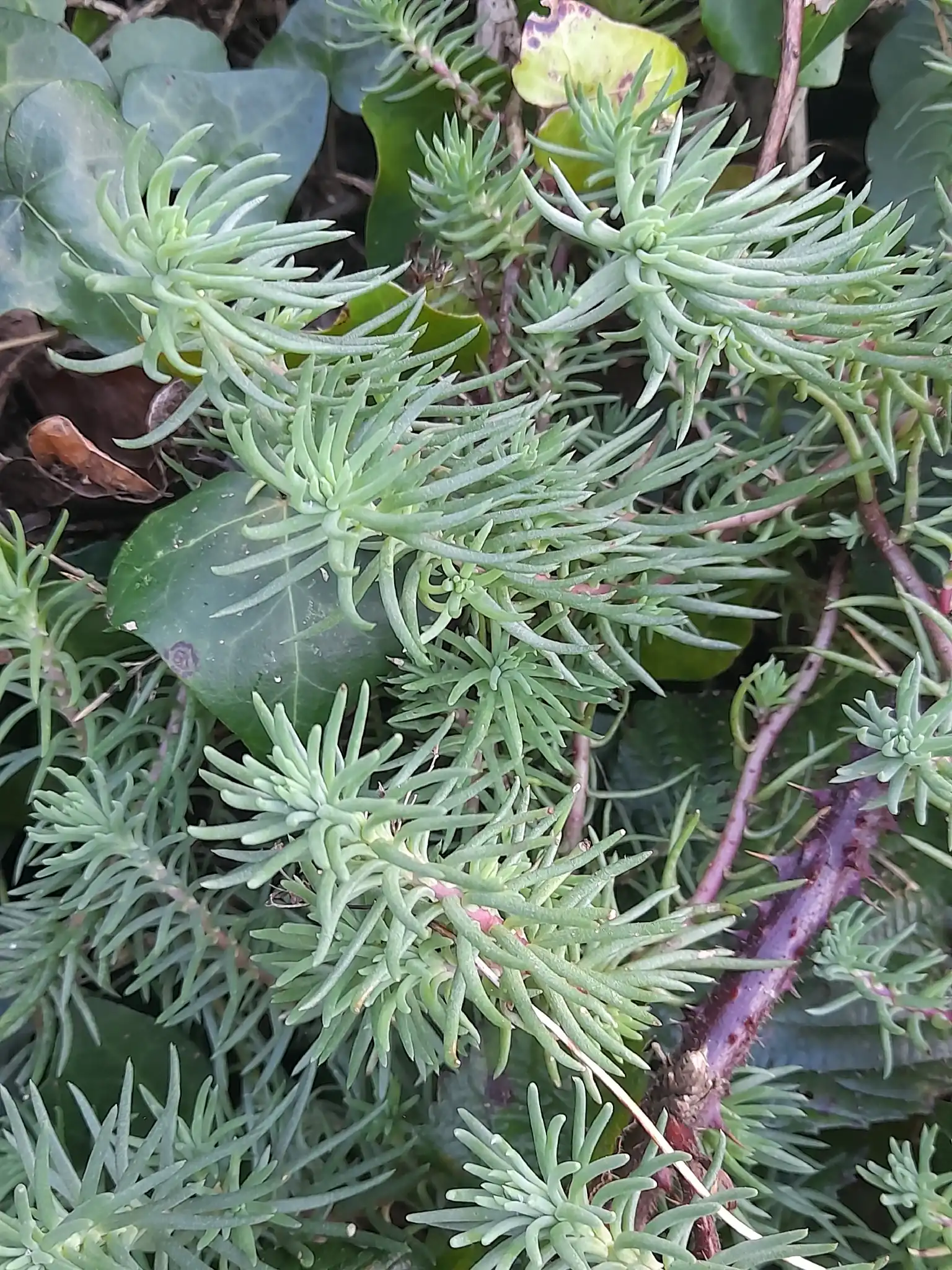
Petrosedum rupestre, commonly known as reflexed stonecrop, is a low-growing, mat-forming succulent perennial native to rocky mountainsides and dry slopes across Europe. Its sprawling stems are densely clothed in fleshy, blue-gray, needle-like leaves that resemble miniature conifer branches, topped in summer by flat clusters of golden-yellow, star-shaped flowers.
This species is distinguished by its terminal flower clusters, which feature nodding buds that straighten upright as the bright yellow blossoms open. The evergreen foliage maintains its structural interest year-round, often taking on warm, amber tones during cold winter weather.
Uses & Benefits:
Essentials
At a Glance
Plant Type
Cactus Succulent
Height
12"
Width
24"
Light
Full Sun, Partial Sun
Zones
4, 5, 6, 7, 8, 9
Water
Low
Humidity
Low to moderate
Lifespan
Perennial
Native To
Europe, Western Asia, Macaronesia
Toxicity
Mildly toxic (sap irritant, ingestion causes stomach upset)
Bloom period
Summer
In flower about 3 months of the year
Planting
How to Grow
- Select a planting site that receives full sun and has exceptionally well-drained, gritty, or sandy soil.
- Dig a shallow hole just deep enough to accommodate the root ball, ensuring the crown sits level with or slightly above the surrounding soil.
- Water sparingly after planting to settle the soil, then withhold water until the top few inches of soil are completely dry.
- Mulch with gravel or pea shingle rather than organic bark to keep moisture away from the foliage and prevent rot.
Pro Tip
Plant in poor, gritty, sharp-draining soil under intense sunlight; excess moisture or rich loam causes the stems to rot and the tight foliage color to fade.
Keep It Thriving
Care Guide
Do
- Grow in full sun to maintain tight, compact growth and vivid foliage color.
- Ensure excellent soil drainage, especially during the cold winter dormancy period.
- Prune back spent flower stems in late summer to maintain a neat, tidy mat.
Don't
- Do not plant in heavy clay, rich loam, or waterlogged soils.
- Do not overwater or apply heavy fertilizers, which lead to weak, leggy stems and root rot.
- Do not cut back into old, leafless wood, as it will not readily sprout new growth.
Seasonal Care Calendar
| Task | Jan | Feb | Mar | Apr | May | Jun | Jul | Aug | Sep | Oct | Nov | Dec |
|---|---|---|---|---|---|---|---|---|---|---|---|---|
| Pest Check | ||||||||||||
| Propagate | ||||||||||||
| Prune | ||||||||||||
| Spring Cleanup |
Watch Out For
Pests & Diseases
Common Pests
Common Diseases
In the Garden
Landscape Uses & Companions
Landscape Uses
Multiply
Propagation Methods
Good to Know
Common Questions
Reflexed Stonecrop questions
What zones can Reflexed Stonecrop grow in?
Reflexed Stonecrop is hardy in USDA Zones 4–9. Inside that range it survives winter in the ground; outside it, grow it as an annual or a container plant you protect.
Is Reflexed Stonecrop deer resistant?
Yes — Reflexed Stonecrop is rated deer-resistant. Deer typically pass it over, though extreme hunger can override any plant's defenses.
When does Reflexed Stonecrop bloom?
Reflexed Stonecrop typically blooms in summer through summer. Exact timing shifts a week or two with your zone — Sow's bloom calendar maps it to your garden.
Does Reflexed Stonecrop need full sun?
Reflexed Stonecrop does best in full sun to part shade. In hot climates, afternoon shade keeps blooms fresher longer.
Is Reflexed Stonecrop drought tolerant?
Yes — once established (usually after the first full season), Reflexed Stonecrop handles dry spells with minimal watering. Water deeply its first year to build the root system that makes that possible.
Keep exploring
Explore the genus
Grow Reflexed Stonecrop with confidence
See it in a design of your actual yard, get zone-matched care reminders, and track it season by season in your garden journal.