The Story
Plant Bio
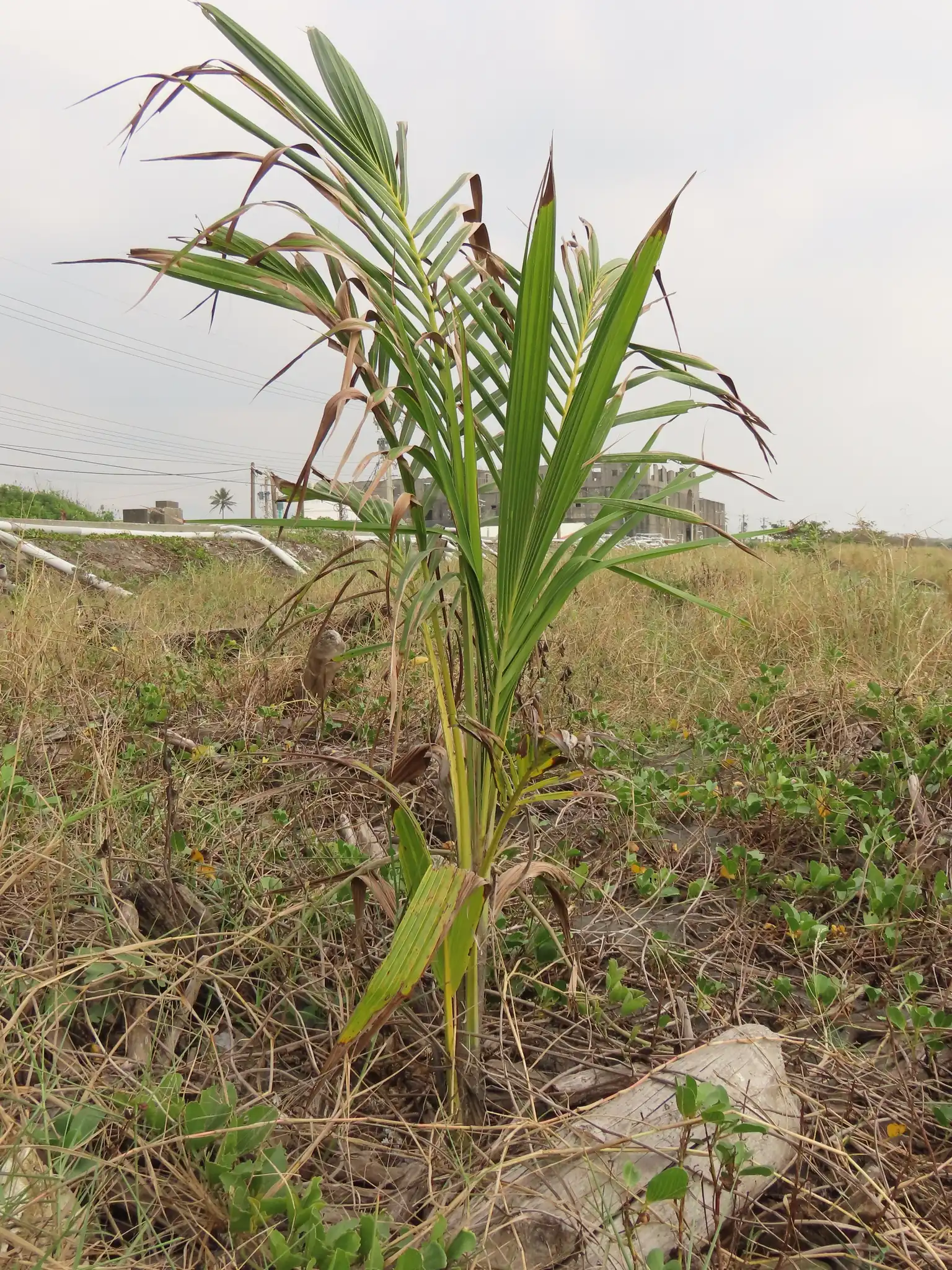
Cocos nucifera, the coconut palm, is a tall, single-trunked tropical palm characterized by a slender, often curved gray trunk swollen at the base and topped with a spreading crown of arching pinnate fronds. It thrives in full sun and highly drained, sandy coastal soils, producing creamy-white to yellow branching inflorescences continuously throughout the year.
This species is exceptionally tolerant of salt spray and maritime winds, making it a defining feature of tropical coastlines. The massive pinnate fronds reach up to twenty feet in length, bearing heavy, fibrous-husked drupes that present a significant falling hazard when mature.
Uses & Benefits:
Essentials
At a Glance
Plant Type
Tropical
Height
1200"
Width
480"
Light
Full Sun
Zones
10
Water
Moderate
Humidity
High
Lifespan
Long-lived
Native To
Indo-Malaya, Western Pacific
Toxicity
Non-toxic
Bloom period
Year round
In flower about 12 months of the year
Marketplace
Where to Buy
Shipping costs Year-round shipping Free shipping
Planting
How to Grow
- Select a site in full sun with deep, rapidly draining sandy or loamy soil.
- Dig a hole twice the width of the root ball and plant at the same depth as the nursery container.
- Water deeply and regularly during the first year to establish a deep root system.
- Apply a specialized slow-release palm fertilizer with micronutrients three times per year.
Pro Tip
Never prune green, horizontal, or drooping fronds; palms redistribute essential potassium from older foliage to new growth, and premature removal causes severe deficiency, necrotic tip-burn, and increased disease susceptibility.
Keep It Thriving
Care Guide
Do
- Apply a slow-release palm fertilizer containing magnesium, manganese, and iron three times a year.
- Allow dead, completely brown fronds to drop naturally or cut them very close to the trunk.
- Water deeply during dry spells to maintain consistent fruit production.
Don't
- Do not prune green or yellowing fronds, as this starves the palm of potassium.
- Do not plant near walkways, driveways, or play areas where falling coconuts could cause injury.
- Do not allow soil to become waterlogged or stagnant.
Seasonal Care Calendar
| Task | Jan | Feb | Mar | Apr | May | Jun | Jul | Aug | Sep | Oct | Nov | Dec |
|---|---|---|---|---|---|---|---|---|---|---|---|---|
| Fertilize | ||||||||||||
| Pest Check | ||||||||||||
| Prune | ||||||||||||
| Winter Prep |
Watch Out For
Pests & Diseases
Common Pests
Common Diseases
In the Garden
Landscape Uses & Companions
Landscape Uses
Companion Plants
Multiply
Propagation Methods
Good to Know
Common Questions
Coconut Palm questions
What zones can Coconut Palm grow in?
Coconut Palm is hardy in USDA Zone 10. Inside that range it survives winter in the ground; outside it, grow it as an annual or a container plant you protect.
When does Coconut Palm bloom?
Coconut Palm typically blooms in year round through year round. Exact timing shifts a week or two with your zone — Sow's bloom calendar maps it to your garden.
Does Coconut Palm need full sun?
Coconut Palm does best in full sun (6+ hours).
Is Coconut Palm drought tolerant?
Yes — once established (usually after the first full season), Coconut Palm handles dry spells with minimal watering. Water deeply its first year to build the root system that makes that possible.
Keep exploring
Explore the genus
Hardy in your zone?
Grow Coconut Palm with confidence
See it in a design of your actual yard, get zone-matched care reminders, and track it season by season in your garden journal.