The Story
Plant Bio
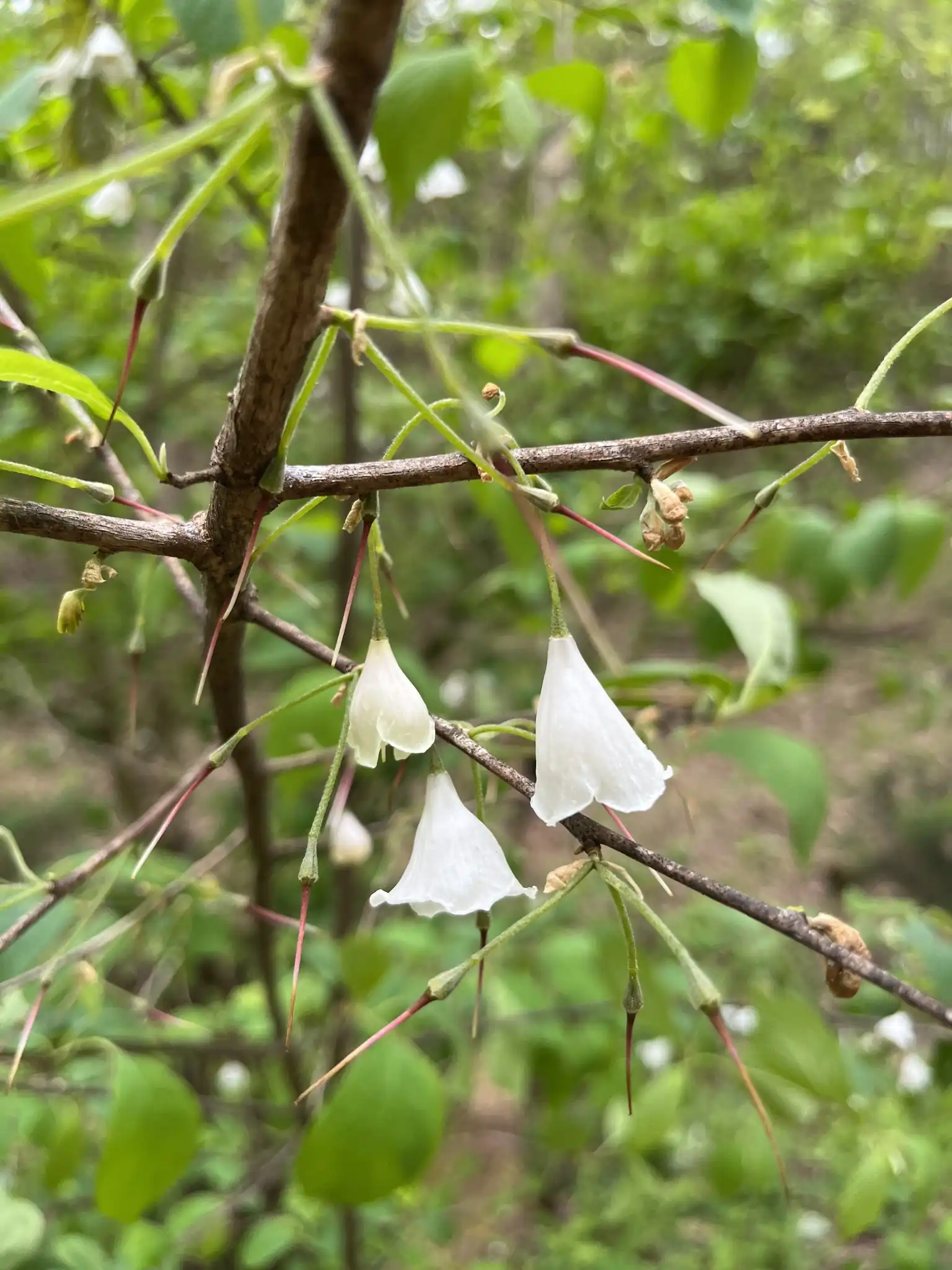
Halesia carolina is a graceful, small to medium-sized understory tree native to the southeastern United States. It is celebrated for its profuse, pendulous clusters of delicate, bell-shaped white flowers that appear in spring before the leaves.
The species itself is prized for its four-winged, greenish-brown seed pods that persist into winter, adding subtle interest. Its bark becomes ridged and furrowed with age, providing a rugged texture.
Uses & Benefits:
Essentials
At a Glance
Plant Type
Tree
Height
360"
Width
300"
Light
Full Sun, Partial Sun
Zones
4, 5, 6, 7, 8
Water
Medium
Humidity
Average to high
Lifespan
50+ years
Native To
Southeastern United States
Toxicity
Non-toxic to humans and pets
Bloom period
Mid-spring – Late spring
In flower about 2 months of the year
Marketplace
Where to Buy
Shipping costs Year-round shipping Free shipping
Planting
How to Grow
- Select a site with acidic, well-drained soil and partial shade.
- Dig a hole two to three times wider than the root ball.
- Position the tree so the top of the root ball is level with the soil.
- Backfill with the original soil, gently firming it around the roots.
- Water thoroughly after planting to settle the soil.
- Apply a 2-3 inch layer of mulch, keeping it away from the trunk.
Pro Tip
Provide afternoon shade in hotter climates and ensure acidic soil for best performance and to prevent chlorosis.
Keep It Thriving
Care Guide
Do
- Maintain consistent moisture, especially during dry spells.
- Test soil pH and amend if necessary to keep it acidic.
- Mulch annually to conserve moisture and suppress weeds.
- Allow the natural, graceful form to develop with minimal pruning.
Don't
- Don't plant in heavy, compacted clay or alkaline soils.
- Avoid letting the soil dry out completely.
- Don't fertilize heavily; a light application in spring is sufficient.
- Avoid planting in windy, exposed sites.
Seasonal Care Calendar
| Task | Jan | Feb | Mar | Apr | May | Jun | Jul | Aug | Sep | Oct | Nov | Dec |
|---|---|---|---|---|---|---|---|---|---|---|---|---|
| Mulch | ||||||||||||
| Plant | ||||||||||||
| Prune |
Watch Out For
Pests & Diseases
Common Pests
Common Diseases
In the Garden
Landscape Uses & Companions
Landscape Uses
Companion Plants
Multiply
Propagation Methods
Good to Know
Common Questions
Carolina Silverbell questions
What zones can Carolina Silverbell grow in?
Carolina Silverbell is hardy in USDA Zones 4–8. Inside that range it survives winter in the ground; outside it, grow it as an annual or a container plant you protect.
Is Carolina Silverbell deer resistant?
Yes — Carolina Silverbell is rated deer-resistant. Deer typically pass it over, though extreme hunger can override any plant's defenses.
When does Carolina Silverbell bloom?
Carolina Silverbell typically blooms in mid-spring through late spring. Exact timing shifts a week or two with your zone — Sow's bloom calendar maps it to your garden.
Does Carolina Silverbell need full sun?
Carolina Silverbell does best in full sun to part shade. In hot climates, afternoon shade keeps blooms fresher longer.
Keep exploring
Explore the genus
Hardy in your zone?
Grow Carolina Silverbell with confidence
See it in a design of your actual yard, get zone-matched care reminders, and track it season by season in your garden journal.