The Story
Plant Bio
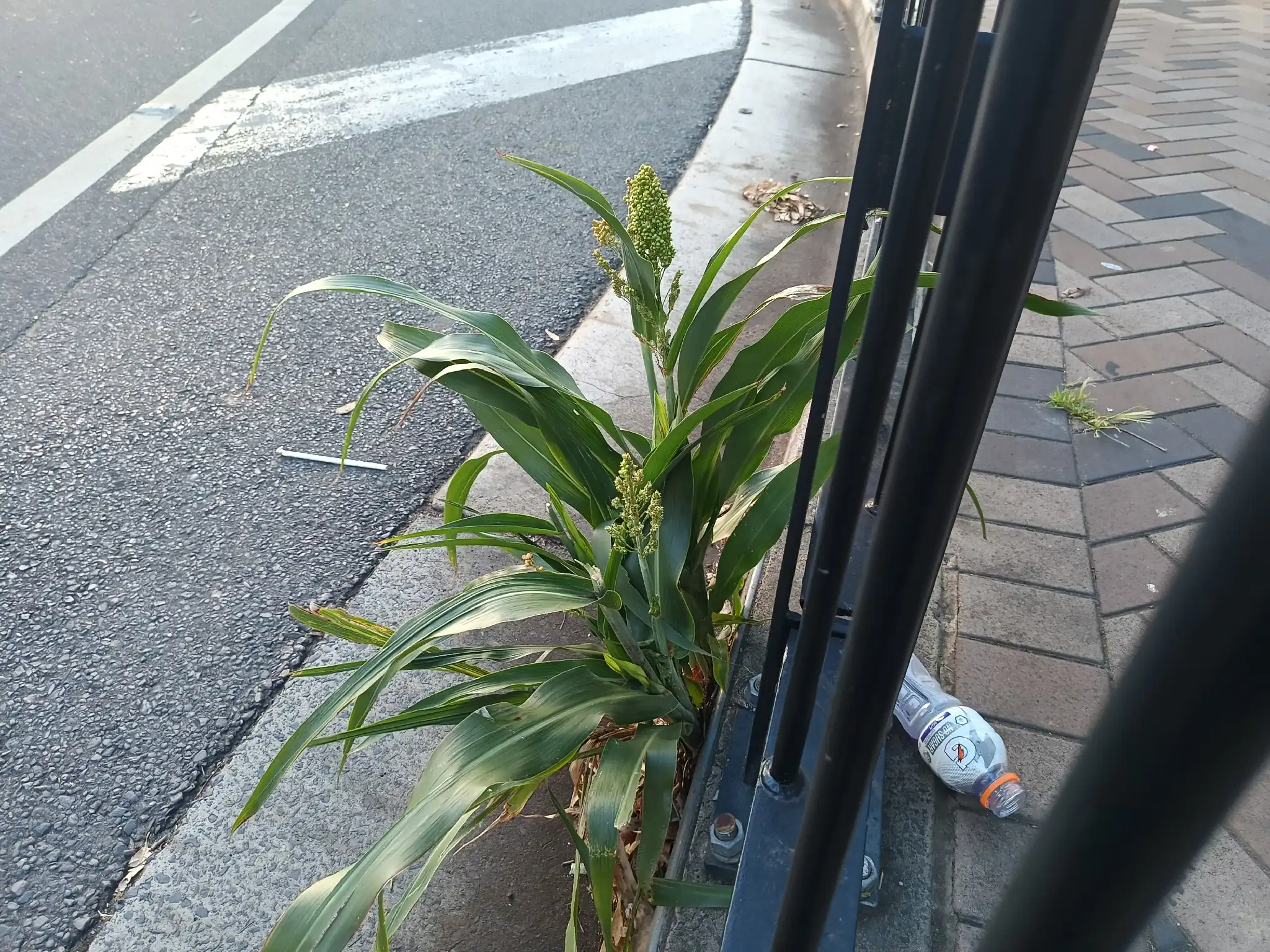
Sorghum bicolor is an upright, robust annual grass native to Africa that forms stout, cane-like stems with broad, corn-like leaves. The plant produces terminal panicles of inconspicuous flowers that mature into dense, decorative seed heads.
This species is exceptionally drought-tolerant once established and can develop deep red, purple, or bronze pigmentations on its bright green foliage. It contains dhurrin, a cyanogenic glycoside that makes young shoots and regrowth highly toxic to grazing livestock.
Uses & Benefits:
Essentials
At a Glance
Plant Type
Grass
Height
157"
Width
35"
Light
Full Sun
Zones
4, 5, 6, 7, 8, 9, 10
Water
Low
Humidity
Moderate to High
Lifespan
Annual
Native To
Africa
Toxicity
Toxic to livestock
Bloom period
Summer – Fall
In flower about 6 months of the year
Planting
How to Grow
- Sow seeds directly into warm soil in spring after all danger of frost has passed.
- Choose a planting site that receives full sun and has well-drained soil.
- Provide moderate water during establishment, ensuring the soil does not become waterlogged.
- Monitor for pests like aphids and armyworms during the active summer growing season.
Pro Tip
Avoid applying excessive nitrogen fertilizer late in the season, as this increases the risk of lodging and elevates toxic prussic acid levels in the foliage.
Keep It Thriving
Care Guide
Do
- Sow seeds directly into warm soil during spring.
- Ensure the planting site has excellent drainage to prevent root rot.
- Cut the plants down completely at the end of the growing season.
Don't
- Do not allow livestock or pets to graze on young shoots or stressed regrowth due to cyanide poisoning risks.
- Do not apply excessive nitrogen fertilizer late in the season.
- Do not plant in areas prone to prolonged waterlogging.
Seasonal Care Calendar
| Task | Jan | Feb | Mar | Apr | May | Jun | Jul | Aug | Sep | Oct | Nov | Dec |
|---|---|---|---|---|---|---|---|---|---|---|---|---|
| Fertilize | ||||||||||||
| Harvest | ||||||||||||
| Pest Check | ||||||||||||
| Plant | ||||||||||||
| Winter Prep |
Watch Out For
Pests & Diseases
Common Pests
Common Diseases
In the Garden
Landscape Uses & Companions
Landscape Uses
Multiply
Propagation Methods
Good to Know
Common Questions
Sorghum questions
What zones can Sorghum grow in?
Sorghum is hardy in USDA Zones 4–10. Inside that range it survives winter in the ground; outside it, grow it as an annual or a container plant you protect.
When does Sorghum bloom?
Sorghum typically blooms in summer through fall. Exact timing shifts a week or two with your zone — Sow's bloom calendar maps it to your garden.
Does Sorghum need full sun?
Sorghum does best in full sun (6+ hours).
Is Sorghum drought tolerant?
Yes — once established (usually after the first full season), Sorghum handles dry spells with minimal watering. Water deeply its first year to build the root system that makes that possible.
Keep exploring
Explore the genus
Grow Sorghum with confidence
See it in a design of your actual yard, get zone-matched care reminders, and track it season by season in your garden journal.