The Story
Plant Bio
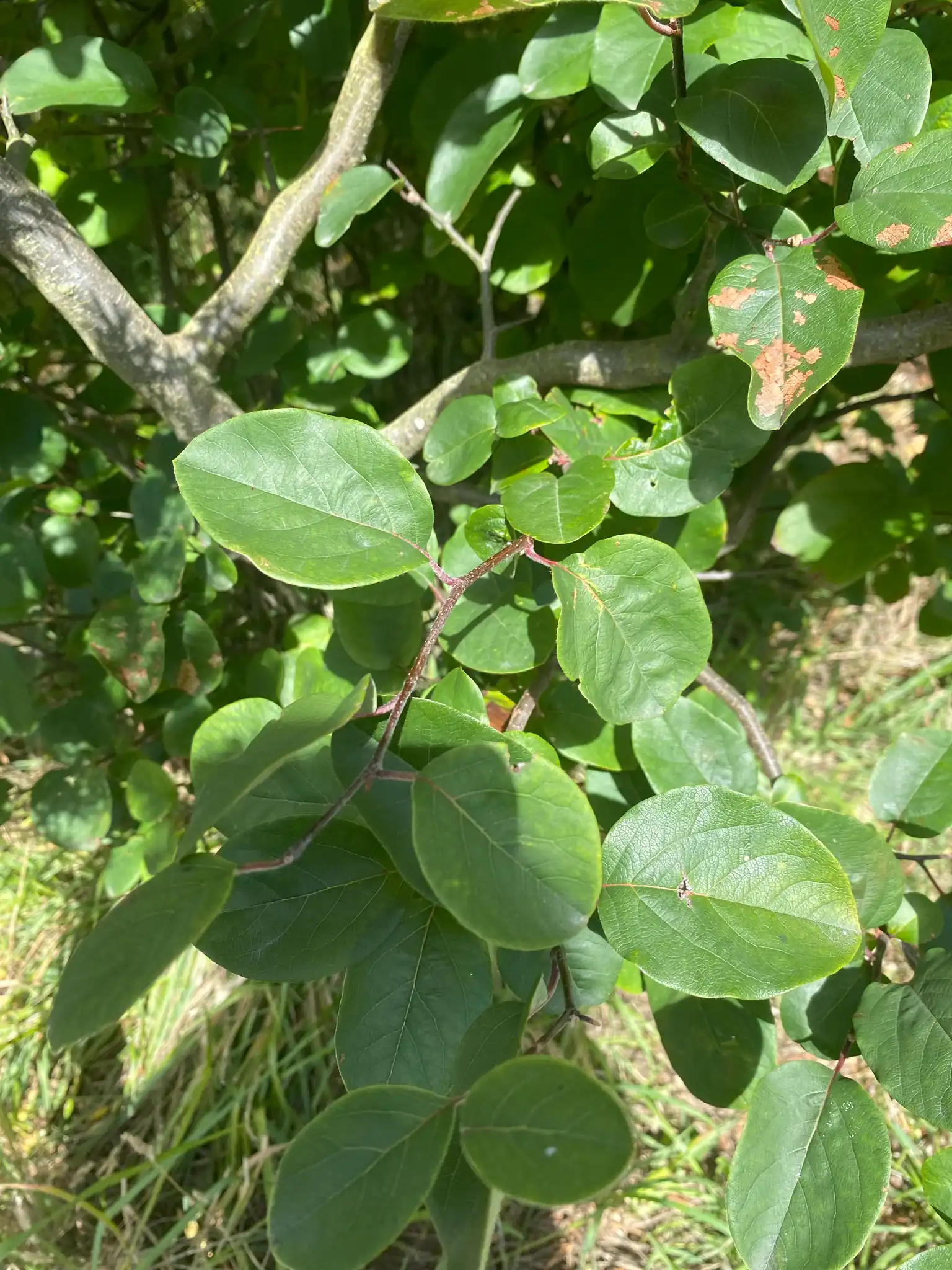
Cydonia oblonga, the common quince, is a deciduous small tree or large shrub forming a broad, rounded crown of crooked branches clothed in pale green leaves with densely felted, grey-white undersides. Solitary white to soft pink flowers open in late spring, followed by fragrant, hard yellow fruits that soften and sweeten only when cooked.
Unlike ornamental flowering quinces, this species lacks thorns and produces large, pear-shaped edible fruits on the current season's growth. The new foliage emerges covered in distinctive white velvety hairs, providing early-season texture before the large, bowl-shaped blossoms unfold.
Uses & Benefits:
Essentials
At a Glance
Plant Type
Tree
Height
236"
Width
236"
Light
Full Sun, Partial Sun
Zones
5, 6, 7, 8, 9
Water
Moderate
Humidity
Moderate
Lifespan
Long
Native To
Southwest Asia
Toxicity
Non-toxic (cooked fruit)
Bloom period
Late spring
In flower about 1 month of the year
Planting
How to Grow
- Select a planting site in full sun with fertile, well-drained loamy soil to ensure optimal flowering and fruit production.
- Plant bare-root whips in late winter or early spring while the tree is dormant, keeping the graft union above the soil line.
- Water deeply and regularly during the first two growing seasons to establish a deep, drought-tolerant root system.
- Apply a balanced organic mulch or fertilizer around the root zone each spring to support healthy new growth.
Pro Tip
Remove root suckers promptly at the base each winter to prevent the plant from reverting to a dense, multi-stemmed thicket, and avoid pruning into thick, leafless structural wood which struggles to regenerate.
Keep It Thriving
Care Guide
Do
- Prune annually during winter dormancy to maintain an open, light-penetrating branch framework.
- Remove root suckers promptly at the base to prevent the plant from forming a dense thicket.
- Provide consistent soil moisture during summer to ensure high-quality fruit development.
- Protect young spring blossoms from late frosts if cold weather threatens after bud break.
Don't
- Do not plant in poorly drained or waterlogged soils, which can lead to winter root rot.
- Do not prune heavily into old, thick, leafless structural wood unless performing emergency rejuvenation.
- Do not apply high-nitrogen fertilizers, which promote excessive vegetative growth at the expense of fruit.
Seasonal Care Calendar
| Task | Jan | Feb | Mar | Apr | May | Jun | Jul | Aug | Sep | Oct | Nov | Dec |
|---|---|---|---|---|---|---|---|---|---|---|---|---|
| Fertilize | ||||||||||||
| Harvest | ||||||||||||
| Pest Check | ||||||||||||
| Prune |
Watch Out For
Pests & Diseases
Common Pests
Common Diseases
In the Garden
Landscape Uses & Companions
Landscape Uses
Multiply
Propagation Methods
Good to Know
Common Questions
Common Quince questions
What zones can Common Quince grow in?
Common Quince is hardy in USDA Zones 5–9. Inside that range it survives winter in the ground; outside it, grow it as an annual or a container plant you protect.
When does Common Quince bloom?
Common Quince typically blooms in late spring through late spring. Exact timing shifts a week or two with your zone — Sow's bloom calendar maps it to your garden.
Does Common Quince need full sun?
Common Quince does best in full sun to part shade. In hot climates, afternoon shade keeps blooms fresher longer.
Is Common Quince drought tolerant?
Yes — once established (usually after the first full season), Common Quince handles dry spells with minimal watering. Water deeply its first year to build the root system that makes that possible.
Keep exploring
Explore the genus
Hardy in your zone?
Grow Common Quince with confidence
See it in a design of your actual yard, get zone-matched care reminders, and track it season by season in your garden journal.