The Story
Plant Bio
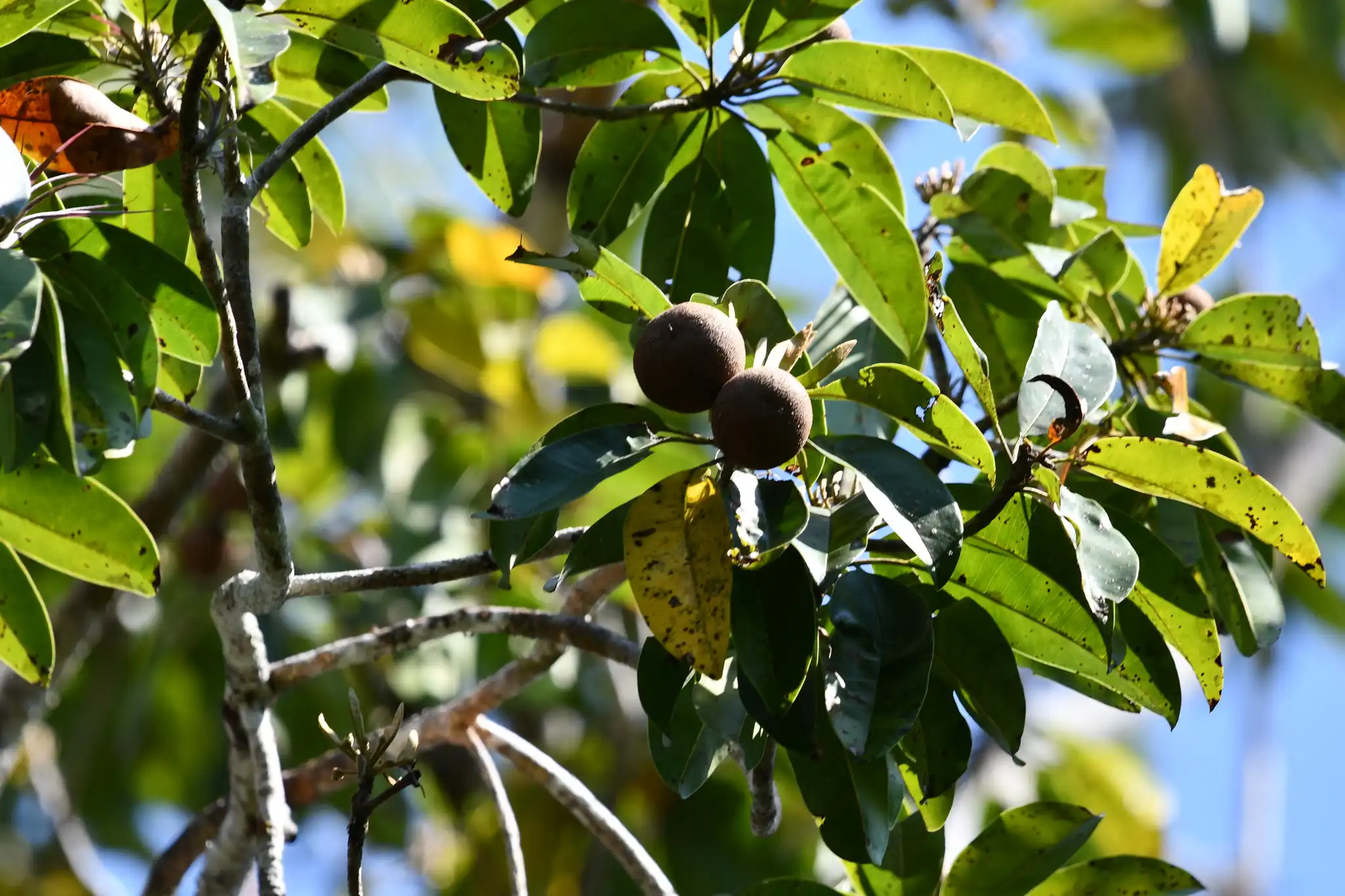
Manilkara zapota, the sapodilla, is a slow-growing, long-lived evergreen tree that develops a dense, rounded crown and a stout trunk exuding sticky white latex when cut. The leathery, deep green leaves cluster tightly at the branchlet tips, providing a glossy backdrop for the small, inconspicuous cream flowers that emerge in the leaf axils.
The species is highly valued for its sweet, edible fruit and its historical role as the source of chicle latex. In southern Florida, the tree has escaped cultivation to become an invasive threat in natural hardwood hammocks, where it outcompetes native understory plants.
Uses & Benefits:
Essentials
At a Glance
Plant Type
Tree
Height
708"
Width
531"
Light
Full Sun
Zones
10
Water
Low
Humidity
High
Lifespan
Long-lived
Native To
Central America, West Indies
Toxicity
Unripe fruit and vegetative parts contain irritating latex
Bloom period
Spring – Summer
In flower about 6 months of the year
Marketplace
Where to Buy
Shipping costs Year-round shipping Free shipping
Planting
How to Grow
- Select a planting site in full sun with excellent drainage, as the root system fails in permanently waterlogged soils.
- Dig a hole twice as wide as the root ball and plant at the same depth as the container mix.
- Water regularly to establish the young tree, then transition to deep, infrequent watering to leverage its natural drought tolerance.
- Apply a balanced, slow-release tropical fruit fertilizer sparingly during the active spring and summer growth periods.
Pro Tip
Prune only to remove damaged or crossing limbs; cutting back into old, leafless wood triggers weak water-spouts and severely reduces fruit yield.
Keep It Thriving
Care Guide
Do
- Grow in full sun to maximize flowering and fruit production.
- Ensure the soil drains rapidly, utilizing sandy or limestone-rich soils if available.
- Protect young trees from freezing temperatures, as they suffer damage below freezing.
Don't
- Do not top the tree or prune heavily, which stimulates weak vegetative growth.
- Do not plant in low-lying areas prone to standing water or slow drainage.
- Do not consume unripe fruit, which is highly astringent and contains irritating latex.
Seasonal Care Calendar
| Task | Jan | Feb | Mar | Apr | May | Jun | Jul | Aug | Sep | Oct | Nov | Dec |
|---|---|---|---|---|---|---|---|---|---|---|---|---|
| Fertilize | ||||||||||||
| Harvest | ||||||||||||
| Pest Check | ||||||||||||
| Prune |
Watch Out For
Pests & Diseases
Common Pests
Common Diseases
In the Garden
Landscape Uses & Companions
Landscape Uses
Multiply
Propagation Methods
Good to Know
Common Questions
Sapodilla questions
What zones can Sapodilla grow in?
Sapodilla is hardy in USDA Zone 10. Inside that range it survives winter in the ground; outside it, grow it as an annual or a container plant you protect.
When does Sapodilla bloom?
Sapodilla typically blooms in spring through summer. Exact timing shifts a week or two with your zone — Sow's bloom calendar maps it to your garden.
Does Sapodilla need full sun?
Sapodilla does best in full sun (6+ hours).
Is Sapodilla drought tolerant?
Yes — once established (usually after the first full season), Sapodilla handles dry spells with minimal watering. Water deeply its first year to build the root system that makes that possible.
Keep exploring
Explore the genus
Hardy in your zone?
Grow Sapodilla with confidence
See it in a design of your actual yard, get zone-matched care reminders, and track it season by season in your garden journal.