The Story
Plant Bio
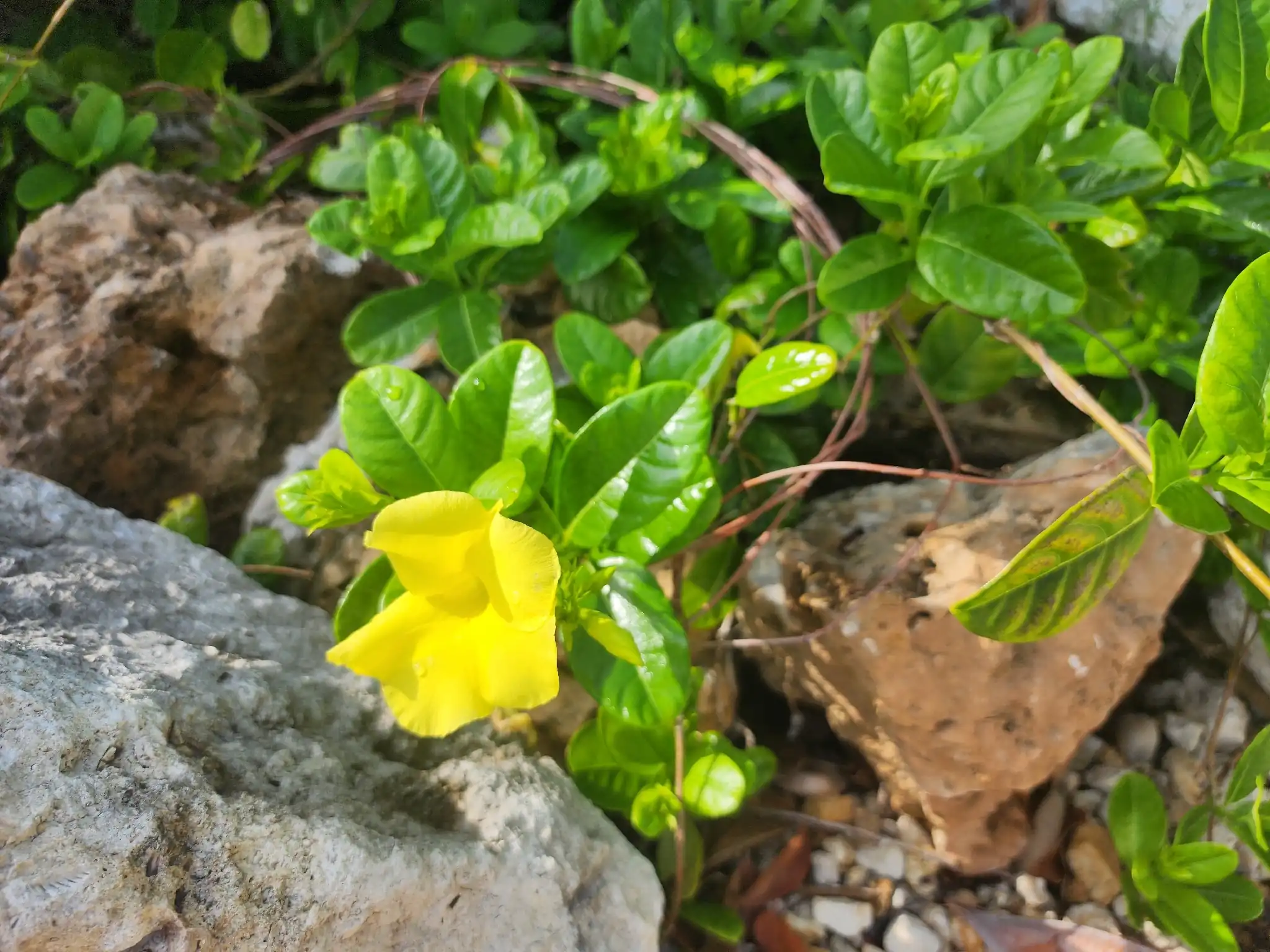
Pentalinon luteum, commonly known as wild allamanda, is an evergreen woody vine native to Florida, Central America, and the Caribbean. It begins as a sprawling shrub before developing twining stems that climb over adjacent vegetation or support structures.
This species features glossy, dark green, opposite leaves and produces bright yellow, trumpet-shaped flowers measuring up to two and a half inches across. The blooms appear in terminal clusters primarily from spring through fall, and can persist year-round in completely frost-free climates.
Uses & Benefits:
Essentials
At a Glance
Plant Type
Vine
Height
144"
Width
72"
Light
Full Sun, Partial Sun
Zones
10
Water
Low (once established)
Humidity
High
Lifespan
Perennial
Native To
North America (Florida), Central America, Caribbean
Toxicity
Toxic sap; causes skin irritation if touched and toxic if ingested
Bloom period
Spring – Winter
In flower about 12 months of the year
Planting
How to Grow
- Select a planting site in full sun to partial shade with sandy, rapidly draining soil.
- Install a sturdy trellis, fence, or support structure to guide the twining stems as they mature.
- Water regularly after planting to establish a deep root system, then reduce watering once the plant is established.
- Apply a balanced, slow-release fertilizer sparingly during the active spring and summer growing season.
Pro Tip
Prune only active, leafy branches immediately after a heavy flowering flush; cutting back severely into old, leafless woody stems impairs the plant's ability to recover and regrow.
Keep It Thriving
Care Guide
Do
- Provide strong structural support to prevent the vine from smothering nearby shrubs and trees.
- Wear gloves when handling or pruning to avoid skin irritation from the toxic milky latex sap.
- Ensure the soil drains rapidly to prevent waterlogging and root rot.
Don't
- Do not plant in low-lying areas or heavy clay soils that hold standing water.
- Avoid severe pruning into old, leafless wood during routine maintenance.
- Do not grow outdoors in regions that experience freezing winter temperatures.
Seasonal Care Calendar
| Task | Jan | Feb | Mar | Apr | May | Jun | Jul | Aug | Sep | Oct | Nov | Dec |
|---|---|---|---|---|---|---|---|---|---|---|---|---|
| Fertilize | ||||||||||||
| Pest Check | ||||||||||||
| Prune | ||||||||||||
| Winter Prep |
Watch Out For
Pests & Diseases
Common Pests
Common Diseases
In the Garden
Landscape Uses & Companions
Landscape Uses
Companion Plants
Multiply
Propagation Methods
Good to Know
Common Questions
Wild Allamanda questions
What zones can Wild Allamanda grow in?
Wild Allamanda is hardy in USDA Zone 10. Inside that range it survives winter in the ground; outside it, grow it as an annual or a container plant you protect.
When does Wild Allamanda bloom?
Wild Allamanda typically blooms in spring through winter. Exact timing shifts a week or two with your zone — Sow's bloom calendar maps it to your garden.
Does Wild Allamanda need full sun?
Wild Allamanda does best in full sun to part shade. In hot climates, afternoon shade keeps blooms fresher longer.
Is Wild Allamanda drought tolerant?
Yes — once established (usually after the first full season), Wild Allamanda handles dry spells with minimal watering. Water deeply its first year to build the root system that makes that possible.
Keep exploring
Explore the genus
Hardy in your zone?
Grow Wild Allamanda with confidence
See it in a design of your actual yard, get zone-matched care reminders, and track it season by season in your garden journal.