The Story
Plant Bio
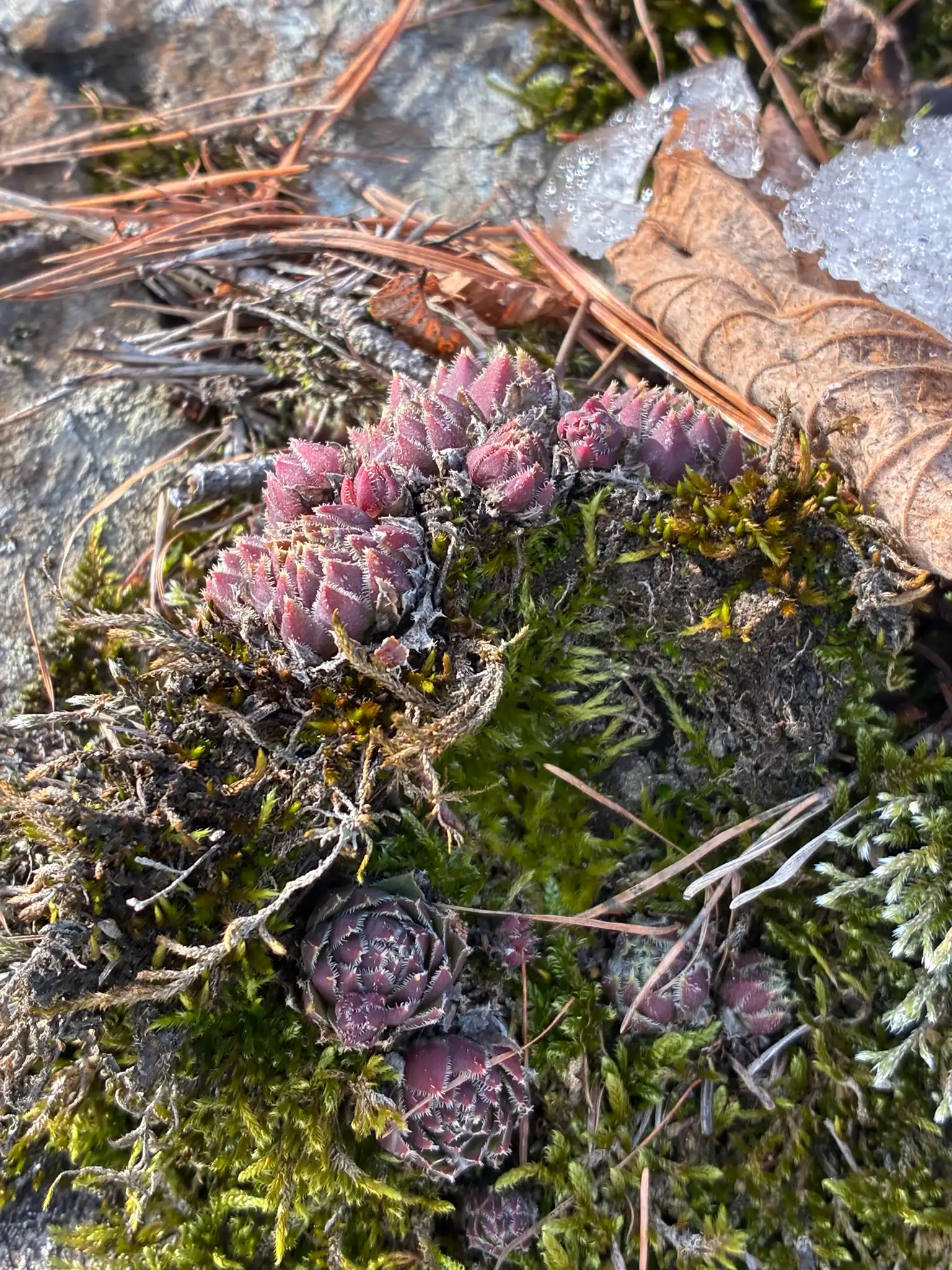
Sempervivum globiferum is a cold-hardy succulent perennial that forms tight, pale green to blue-green rosettes with reddish-brown tips. In summer, mature rosettes produce erect, leafy stalks topped with dense clusters of pale yellow flowers before dying, a natural monocarpic cycle offset by the continuous production of offsets.
This species is distinguished by its globose, loosely attached offsets, or 'rollers,' which easily detach from the parent plant and roll away to root in nearby crevices. The fleshy, obovate leaves feature finely ciliate margins, adding subtle texture to the dense, mat-forming clumps.
Uses & Benefits:
Essentials
At a Glance
Plant Type
Cactus Succulent
Height
8"
Width
12"
Light
Full Sun, Partial Sun
Zones
4, 5, 6, 7, 8
Water
Low
Humidity
Low
Lifespan
Perennial
Native To
Europe
Toxicity
Non-toxic
Bloom period
Summer
In flower about 3 months of the year
Planting
How to Grow
- Select a planting site in full sun with exceptionally well-draining, sandy, or rocky soil.
- Press the base of the rosette gently into the gritty substrate, leaving the foliage resting on the surface.
- Surround the plant collar with a layer of gravel or grit to prevent moisture contact with the lower leaves.
- Water sparingly only when the soil is completely dry, and withhold water entirely during freezing winter months.
Pro Tip
Plant in poor, gritty soil with sharp drainage and maximum sun exposure; rich loam or indoor cultivation causes rapid etiolation and fatal crown rot.
Keep It Thriving
Care Guide
Do
- Grow in poor, sandy, or rocky soils to maintain tight, compact rosette forms.
- Provide maximum sun exposure to prevent stretching and preserve the red leaf tips.
- Remove spent, dried flowering rosettes at the base once the seed head is completely dry.
- Ensure exceptional drainage to protect the root system from winter wet rot.
Don't
- Do not plant in rich, moisture-retentive garden loam or heavy clay.
- Do not overwater or allow water to pool in the center of the rosettes.
- Do not apply high-nitrogen fertilizers, which cause weak, soft, and bloated growth.
- Do not grow indoors without direct, intense sunlight.
Seasonal Care Calendar
| Task | Jan | Feb | Mar | Apr | May | Jun | Jul | Aug | Sep | Oct | Nov | Dec |
|---|---|---|---|---|---|---|---|---|---|---|---|---|
| Deadhead | ||||||||||||
| Fertilize | ||||||||||||
| Pest Check | ||||||||||||
| Propagate | ||||||||||||
| Spring Cleanup |
Watch Out For
Pests & Diseases
Common Pests
Common Diseases
In the Garden
Landscape Uses & Companions
Landscape Uses
Companion Plants
Multiply
Propagation Methods
Good to Know
Common Questions
Rolling Hen and Chicks questions
What zones can Rolling Hen and Chicks grow in?
Rolling Hen and Chicks is hardy in USDA Zones 4–8. Inside that range it survives winter in the ground; outside it, grow it as an annual or a container plant you protect.
Is Rolling Hen and Chicks deer resistant?
Not reliably. Deer may browse Rolling Hen and Chicks, especially tender spring growth — plan on repellents or fencing where pressure is high.
When does Rolling Hen and Chicks bloom?
Rolling Hen and Chicks typically blooms in summer through summer. Exact timing shifts a week or two with your zone — Sow's bloom calendar maps it to your garden.
Does Rolling Hen and Chicks need full sun?
Rolling Hen and Chicks does best in full sun to part shade. In hot climates, afternoon shade keeps blooms fresher longer.
Is Rolling Hen and Chicks drought tolerant?
Yes — once established (usually after the first full season), Rolling Hen and Chicks handles dry spells with minimal watering. Water deeply its first year to build the root system that makes that possible.
More Sempervivum to compare
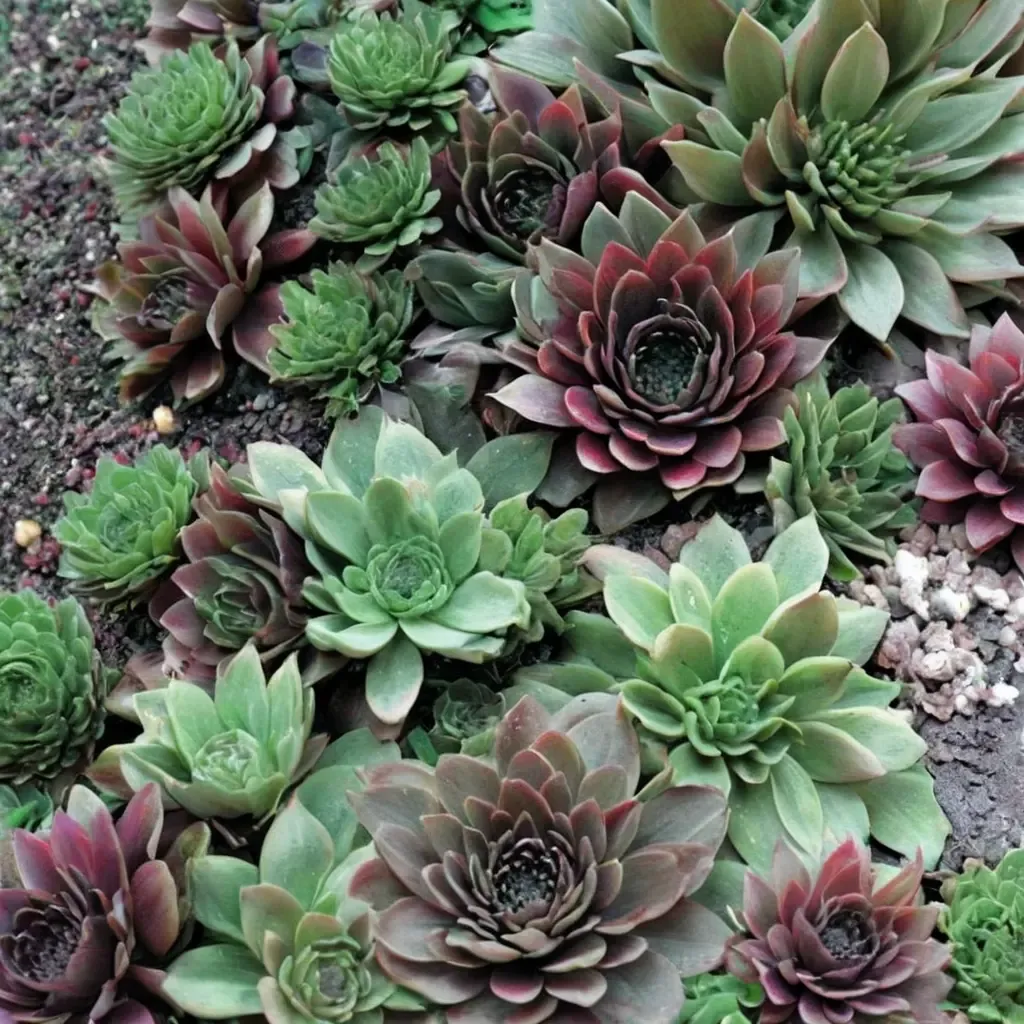
Hens and Chicks
Sempervivum tectorum 'Mix'
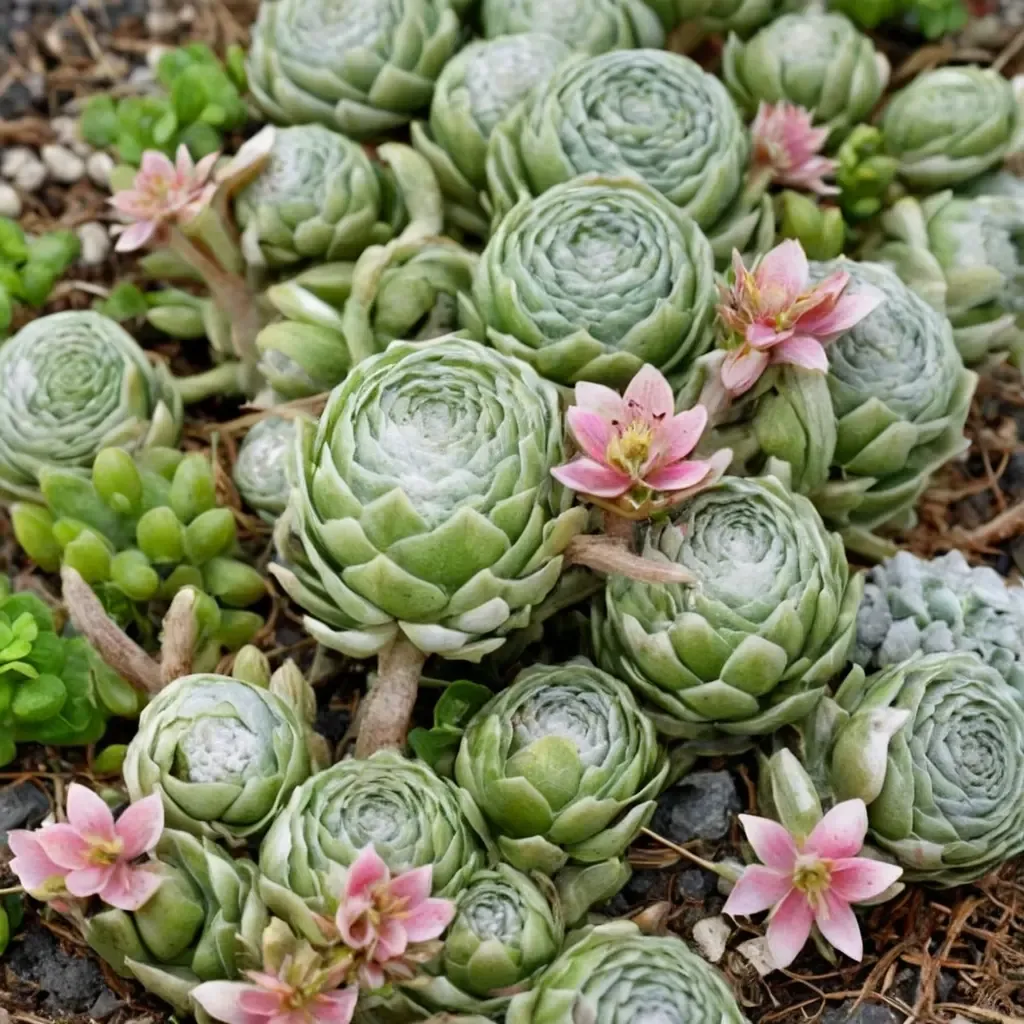
Cobweb Houseleek
Sempervivum tectorum 'Cobweb'
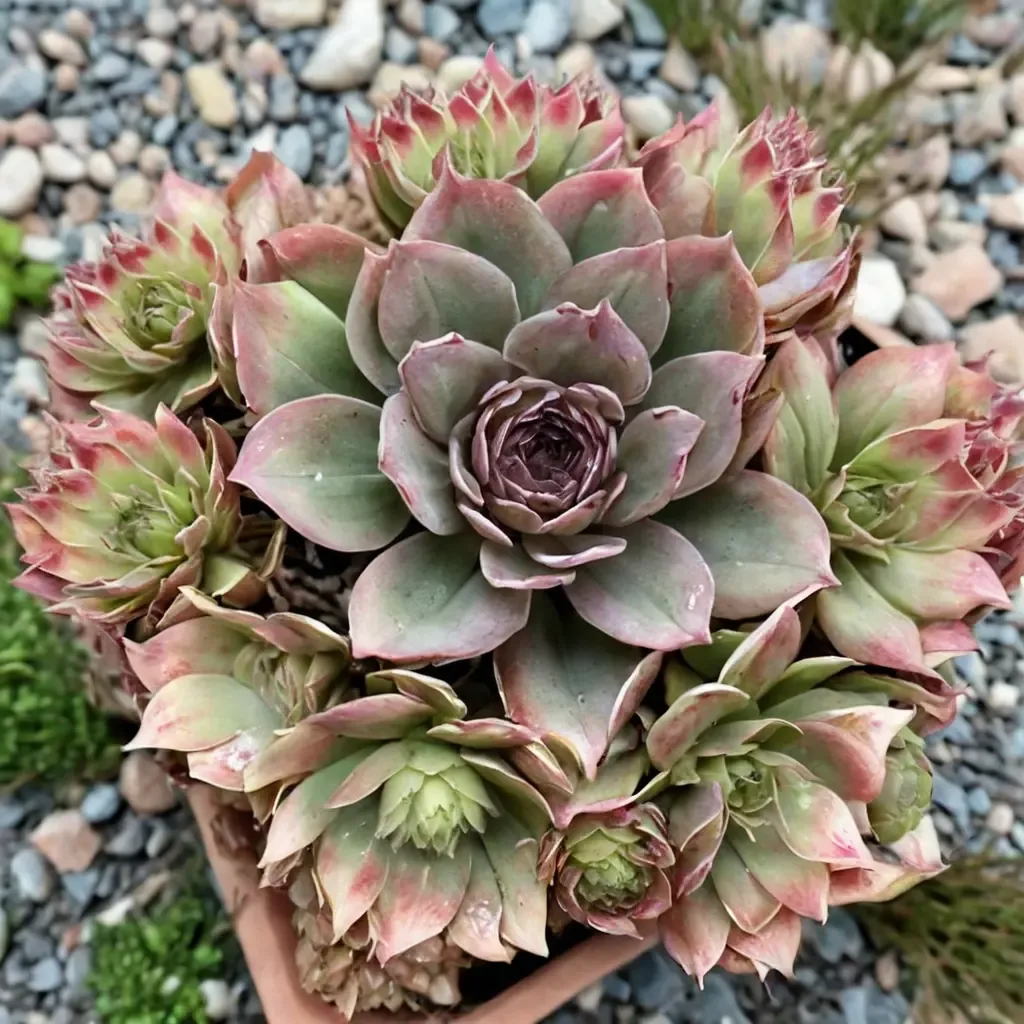
Dynamo Hens and Chicks
Sempervivum tectorum 'Dynamo Hens n Chicks'
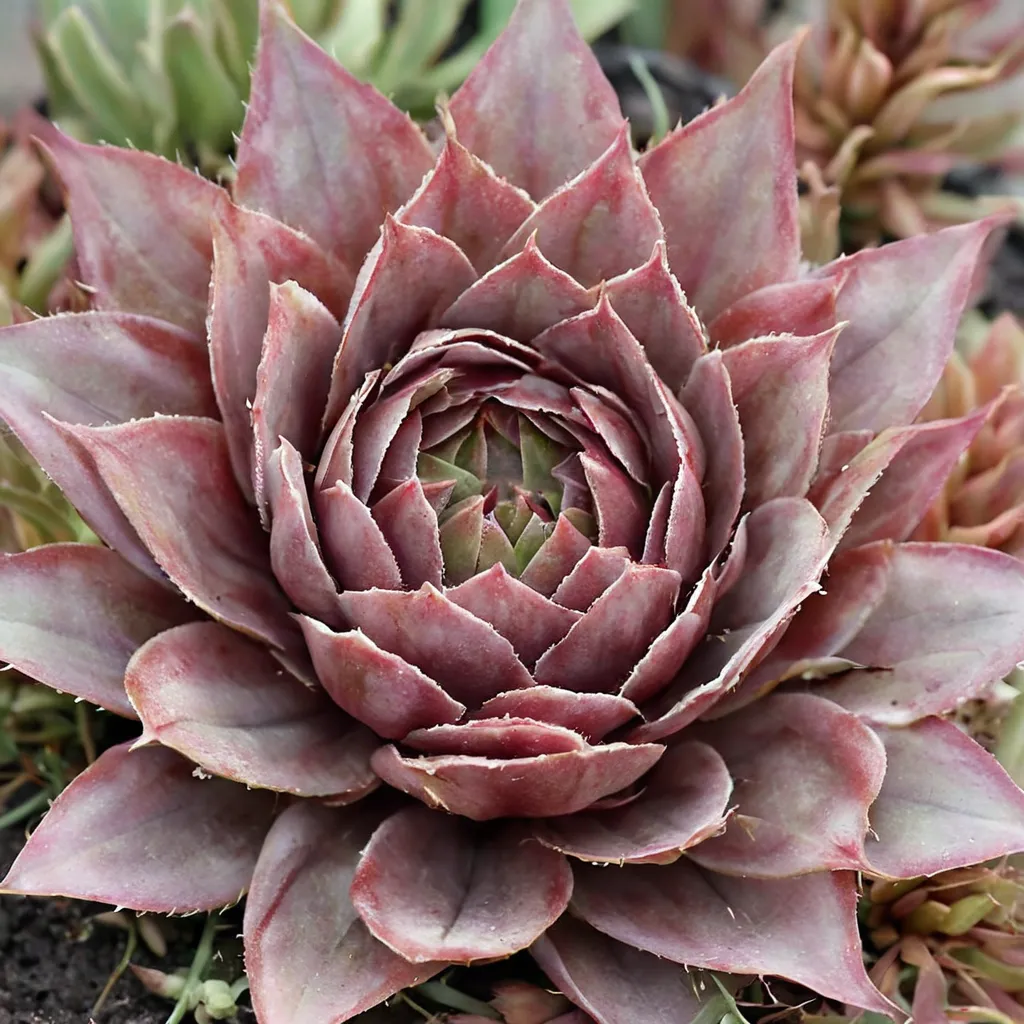
Sempervivum Red Beauty
Sempervivum x hybrida 'Red Beauty'
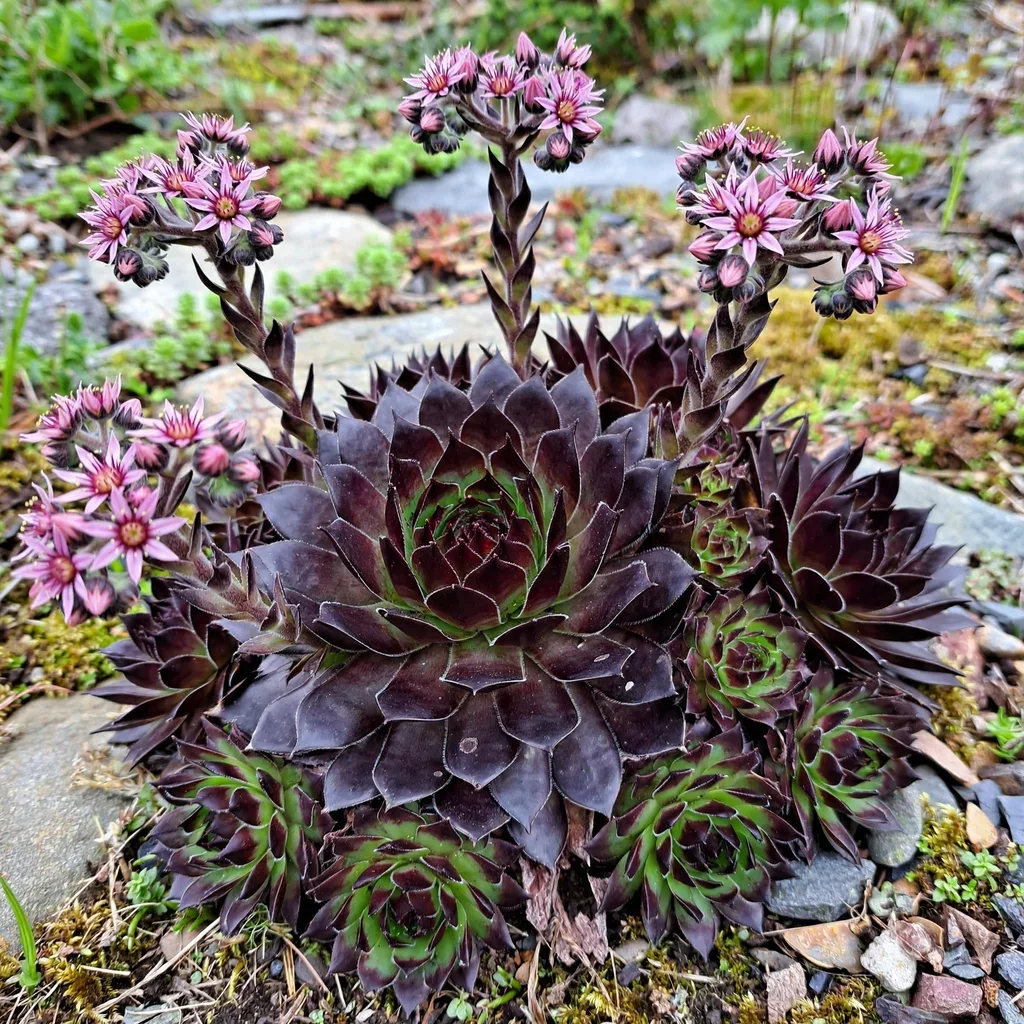
Black Hens and Chicks
Sempervivum tectorum 'Black'
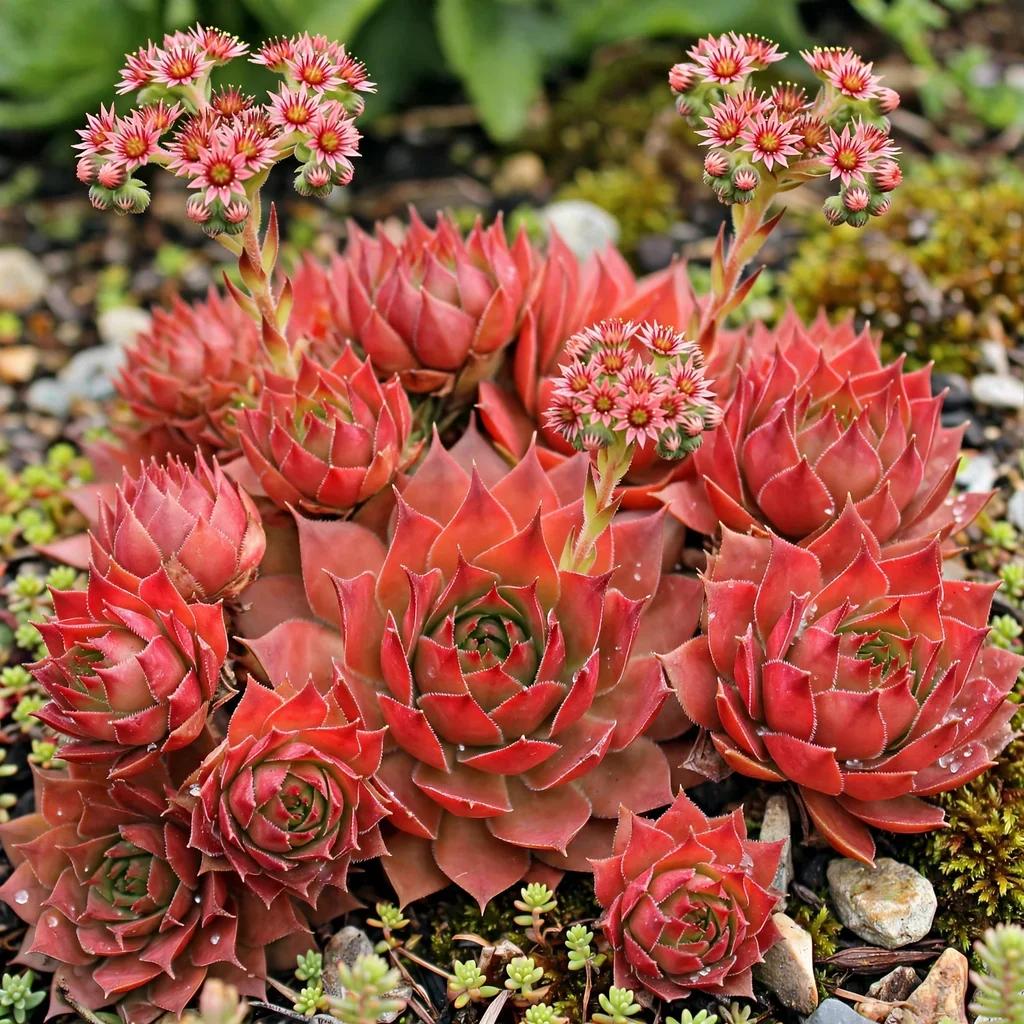
Coral Red Hens and Chicks
Sempervivum tectorum 'Coral Red'
Keep exploring
Explore the genus
Hardy in your zone?
Grow Rolling Hen and Chicks with confidence
See it in a design of your actual yard, get zone-matched care reminders, and track it season by season in your garden journal.