
The Story
Plant Bio
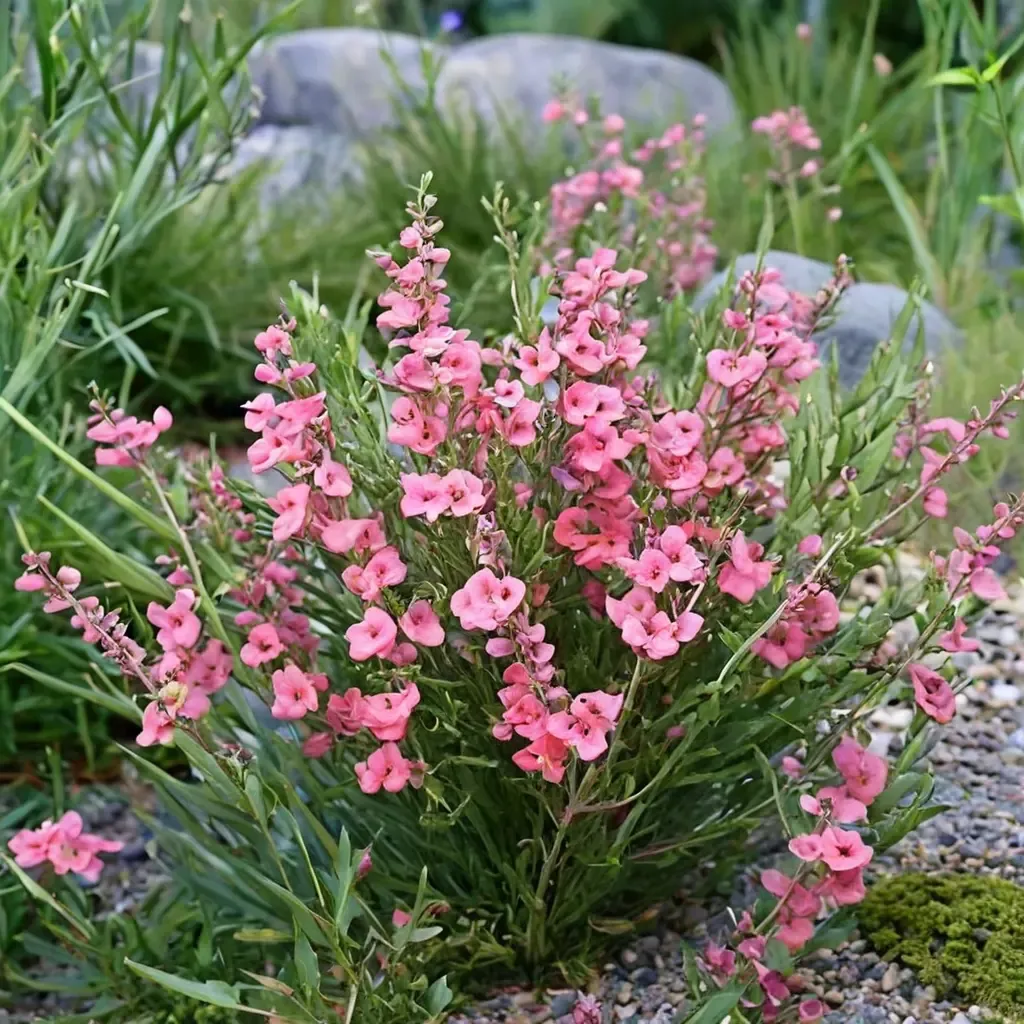
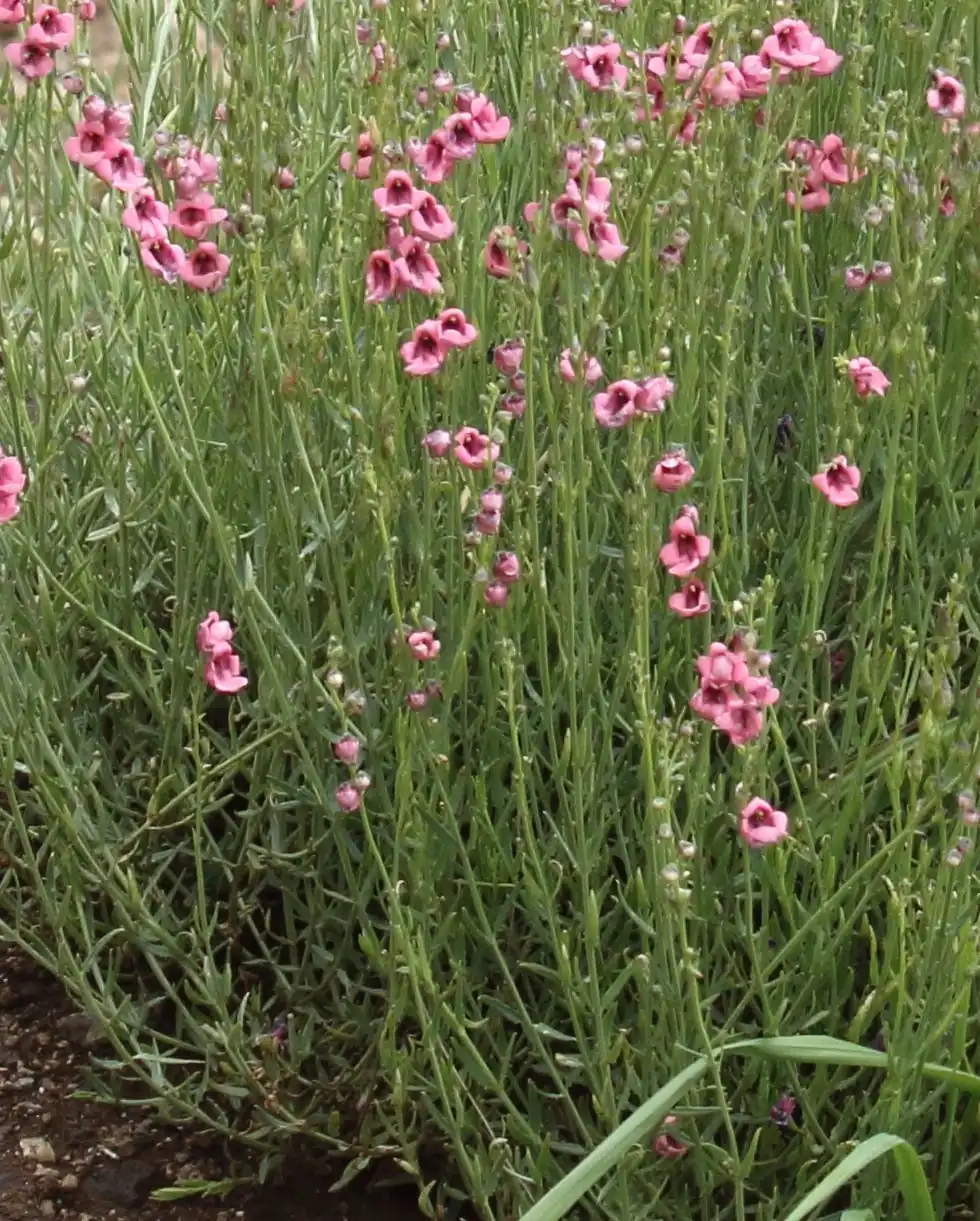
Diascia rigescens, the stiff twinspur, is a semi-evergreen perennial forming a low, spreading mat of branching, four-angled stems. The foliage consists of thick-textured, heart-shaped leaves with sharply serrated margins, which remain dense at the base of the plant.
The species is distinguished by its upright terminal racemes of pink to salmon flowers, each featuring two prominent downward-pointing spurs. Unlike many trailing diascias, this species maintains a more rigid, clumping structure that can sprawl over rock walls or banks.
Uses & Benefits:
Essentials
At a Glance
Plant Type
Perennial
Height
12"
Width
18"
Light
Full Sun, Partial Sun
Zones
8, 9, 10
Water
Moderate
Humidity
Moderate to Low
Lifespan
Short-lived Perennial
Native To
Southern Africa
Toxicity
Non-toxic
Bloom period
Summer – Fall
In flower about 6 months of the year
Planting
How to Grow
- Select a planting site with full sun and exceptionally well-drained, sandy or loamy soil.
- Space plants 12 to 18 inches apart to allow the trailing stems room to spread into a dense mat.
- Water regularly during the active growing season, keeping the soil consistently moist but never waterlogged.
- Apply a balanced liquid fertilizer every two weeks during summer if growing in containers to sustain flower production.
Pro Tip
Prune back the stems by half immediately after the first summer bloom flush declines; this stimulates fresh basal nodes to produce a robust second crop of flowers in the fall.
Keep It Thriving
Care Guide
Do
- Deadhead spent flower spikes regularly to encourage continuous blooming.
- Ensure sharp drainage in winter to prevent root and crown rot.
- Shear the plant back by one-third to one-half if it becomes straggly in mid-summer.
Don't
- Do not prune heavily into old, leafless, woody base stems as they fail to regenerate.
- Do not allow the soil to remain waterlogged, especially during cold winter months.
- Do not plant in heavy, poorly drained clay soils.
Seasonal Care Calendar
| Task | Jan | Feb | Mar | Apr | May | Jun | Jul | Aug | Sep | Oct | Nov | Dec |
|---|---|---|---|---|---|---|---|---|---|---|---|---|
| Deadhead | ||||||||||||
| Fertilize | ||||||||||||
| Propagate | ||||||||||||
| Prune | ||||||||||||
| Winter Prep |
Watch Out For
Pests & Diseases
Common Pests
Common Diseases
In the Garden
Landscape Uses & Companions
Landscape Uses
Companion Plants
Multiply
Propagation Methods
Good to Know
Common Questions
Stiff Twinspur questions
What zones can Stiff Twinspur grow in?
Stiff Twinspur is hardy in USDA Zones 8–10. Inside that range it survives winter in the ground; outside it, grow it as an annual or a container plant you protect.
When does Stiff Twinspur bloom?
Stiff Twinspur typically blooms in summer through fall. Exact timing shifts a week or two with your zone — Sow's bloom calendar maps it to your garden.
Does Stiff Twinspur need full sun?
Stiff Twinspur does best in full sun to part shade. In hot climates, afternoon shade keeps blooms fresher longer.
More Diascia to compare
Keep exploring
Explore the genus
Hardy in your zone?
Grow Stiff Twinspur with confidence
See it in a design of your actual yard, get zone-matched care reminders, and track it season by season in your garden journal.