The Story
Plant Bio
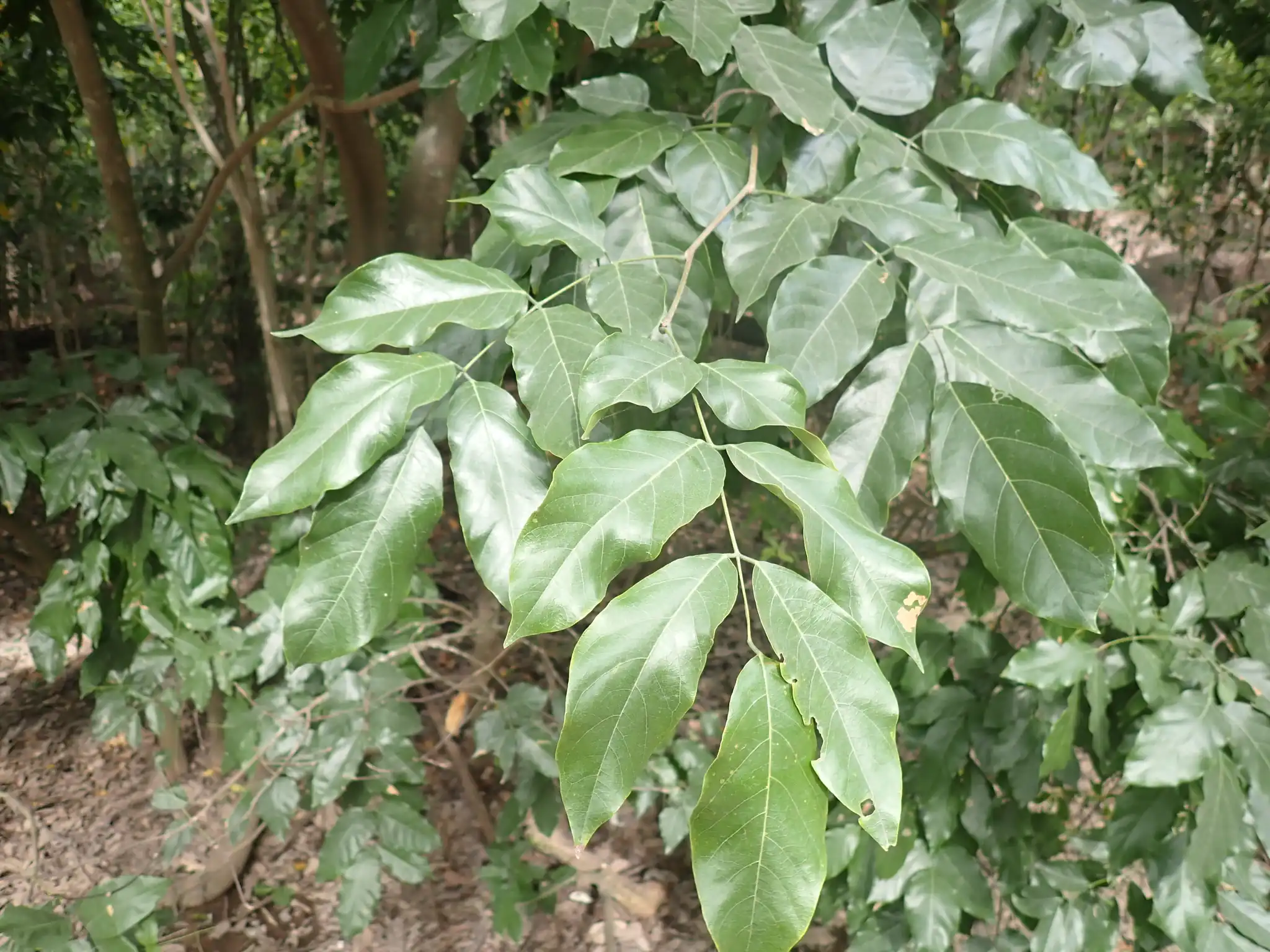
Millettia pinnata, widely known as the Indian beech, is a fast-growing, medium-sized evergreen tree with a broad, rounded, spreading canopy and a short trunk. The alternate, pinnately compound leaves consist of five to seven smooth, glossy, dark green leaflets that emerge with a tender, lighter bronze-green hue.
This species produces axillary racemes of fragrant, pea-like flowers in shades of white, pink, or purplish-lavender during spring. It is highly adaptable, tolerating saline and alkaline soils, coastal salt spray, and periodic flooding.
Uses & Benefits:
Essentials
At a Glance
Plant Type
Tree
Height
472"
Width
660"
Light
Full Sun, Partial Sun
Zones
10
Water
Low to Moderate
Humidity
High
Lifespan
Long
Native To
Asia and Australasia
Toxicity
Toxic to humans and livestock if ingested
Bloom period
Spring – Summer
In flower about 6 months of the year
Planting
How to Grow
- Select a planting site in full sun to partial shade with ample room for the wide canopy and extensive root system.
- Dig a hole twice as wide as the root ball and of equal depth, placing the tree so the root flare sits level with the soil surface.
- Backfill with native soil and water deeply to settle the ground around the roots.
- Apply a layer of mulch around the base to retain moisture, keeping it several inches away from the trunk to prevent rot.
Pro Tip
Avoid planting near sidewalks or foundations, as the massive surface root system spreads aggressively and can disrupt nearby hardscaping.
Keep It Thriving
Care Guide
Do
- Prune in late winter or early spring to shape the canopy and remove low-hanging branches.
- Water regularly during the first growing season to establish a deep, resilient root system.
- Wear gloves when handling pruned branches to avoid potential skin irritation from the sap.
Don't
- Do not apply supplemental nitrogen fertilizers, as this legume fixes its own nitrogen.
- Do not plant near waterways or natural areas where the water-dispersed seeds can escape and naturalize.
- Do not perform severe, unneeded stubbing cuts when pruning.
Seasonal Care Calendar
| Task | Jan | Feb | Mar | Apr | May | Jun | Jul | Aug | Sep | Oct | Nov | Dec |
|---|---|---|---|---|---|---|---|---|---|---|---|---|
| Pest Check | ||||||||||||
| Propagate | ||||||||||||
| Prune | ||||||||||||
| Spring Cleanup |
Watch Out For
Pests & Diseases
Common Pests
Common Diseases
In the Garden
Landscape Uses & Companions
Landscape Uses
Companion Plants
Multiply
Propagation Methods
Good to Know
Common Questions
Indian Beech questions
What zones can Indian Beech grow in?
Indian Beech is hardy in USDA Zone 10. Inside that range it survives winter in the ground; outside it, grow it as an annual or a container plant you protect.
When does Indian Beech bloom?
Indian Beech typically blooms in spring through summer. Exact timing shifts a week or two with your zone — Sow's bloom calendar maps it to your garden.
Does Indian Beech need full sun?
Indian Beech does best in full sun to part shade. In hot climates, afternoon shade keeps blooms fresher longer.
Is Indian Beech drought tolerant?
Yes — once established (usually after the first full season), Indian Beech handles dry spells with minimal watering. Water deeply its first year to build the root system that makes that possible.
Keep exploring
Explore the genus
Hardy in your zone?
Grow Indian Beech with confidence
See it in a design of your actual yard, get zone-matched care reminders, and track it season by season in your garden journal.