The Story
Plant Bio
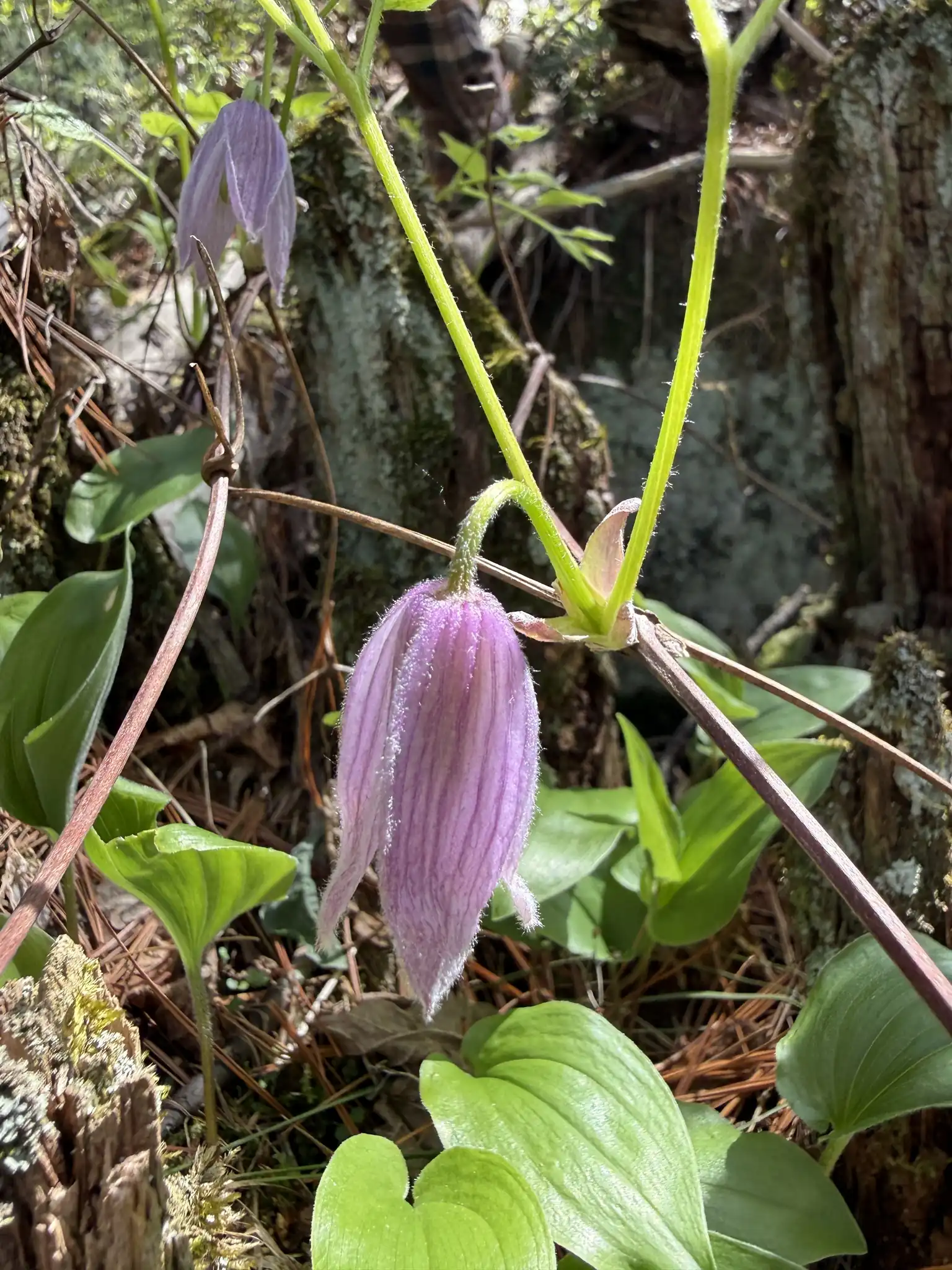
Clematis occidentalis, commonly known as purple clematis, is a deciduous woody vine native to North American forests and rocky slopes, climbing up to twenty feet by twining its leaf petioles around supporting structures. The solitary, bell-shaped flowers feature four blue-violet to pinkish-purple petaloid sepals surrounding a cluster of creamy-white stamens, blooming from spring into early summer.
Following the bloom, this species produces silvery, feathery seed heads that persist on the vine and provide nesting material for songbirds. Unlike many large-flowered garden hybrids, this native vine thrives in cool, shaded understory conditions and rocky talus slopes.
Uses & Benefits:
Essentials
At a Glance
Plant Type
Vine
Height
236"
Width
71"
Light
Partial Sun, Shade
Zones
4, 5, 6, 7, 8
Water
Medium
Humidity
Moderate
Lifespan
Perennial
Native To
North America
Toxicity
Toxic if Ingested, Skin Irritant
Bloom period
Spring – Early summer
In flower about 4 months of the year
Planting
How to Grow
- Select a planting site with moist, humus-rich, well-draining soil and partial to full shade.
- Install a trellis, arbor, or allow the vine to climb through adjacent sturdy shrubs.
- Plant the crown slightly below the soil surface and apply a thick layer of organic mulch to keep roots cool.
- Water consistently to maintain even soil moisture, avoiding waterlogged conditions that lead to root rot.
Pro Tip
Keep the root zone heavily shaded, cool, and mulched while allowing the climbing stems to grow upward toward partial light, as baking the soil in full afternoon sun will quickly kill the plant.
Keep It Thriving
Care Guide
Do
- Mulch the root zone heavily to maintain a cool, damp environment.
- Prune lightly immediately after flowering to shape the vine and remove dead wood.
- Provide a climbing support for the twining leafstalks to grasp.
Don't
- Do not prune heavily in late winter or early spring, as this removes the old wood where flower buds form.
- Do not allow the soil to dry out completely during hot summer spells.
- Do not plant in heavy, poorly draining clay soils where water pools.
Seasonal Care Calendar
| Task | Jan | Feb | Mar | Apr | May | Jun | Jul | Aug | Sep | Oct | Nov | Dec |
|---|---|---|---|---|---|---|---|---|---|---|---|---|
| Fertilize | ||||||||||||
| Mulch | ||||||||||||
| Pest Check | ||||||||||||
| Prune |
Watch Out For
Pests & Diseases
Common Pests
Common Diseases
In the Garden
Landscape Uses & Companions
Landscape Uses
Companion Plants
Multiply
Propagation Methods
Good to Know
Common Questions
Purple Clematis questions
What zones can Purple Clematis grow in?
Purple Clematis is hardy in USDA Zones 4–8. Inside that range it survives winter in the ground; outside it, grow it as an annual or a container plant you protect.
Is Purple Clematis deer resistant?
Not reliably. Deer may browse Purple Clematis, especially tender spring growth — plan on repellents or fencing where pressure is high.
When does Purple Clematis bloom?
Purple Clematis typically blooms in spring through early summer. Exact timing shifts a week or two with your zone — Sow's bloom calendar maps it to your garden.
Does Purple Clematis need full sun?
Purple Clematis does best in part shade.
More Clematis to compare
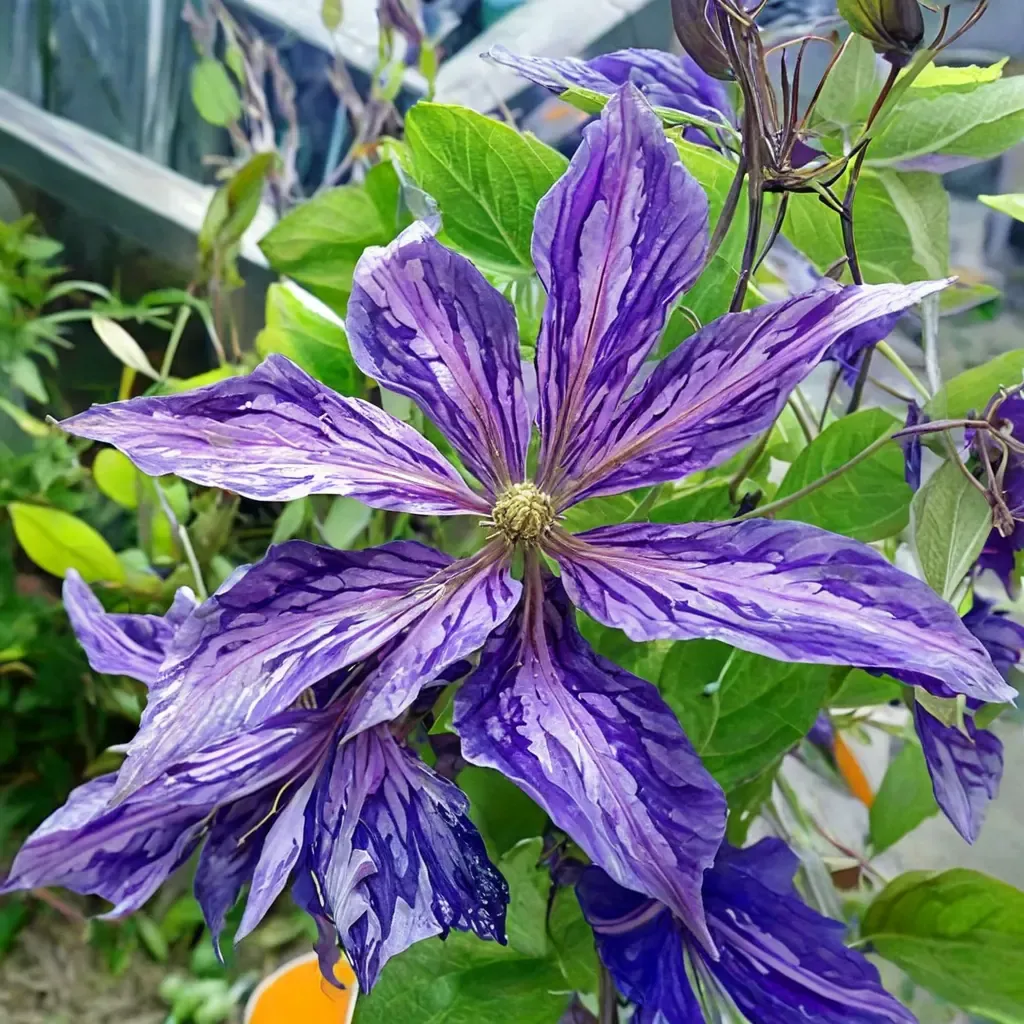
Tie Dye Clematis
Clematis viticella 'Tie Dye'
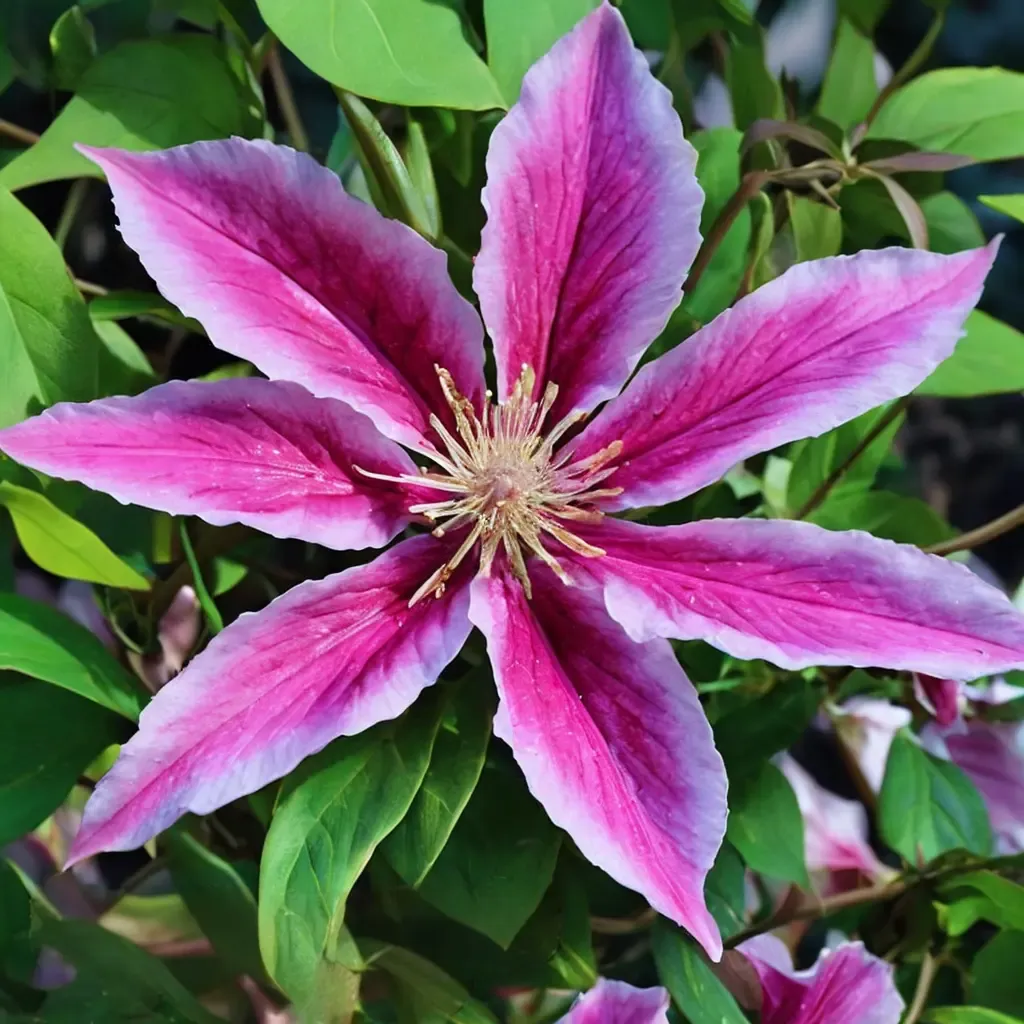
Dr. Ruppel Clematis
Clematis x jackmanii 'Dr Ruppel'
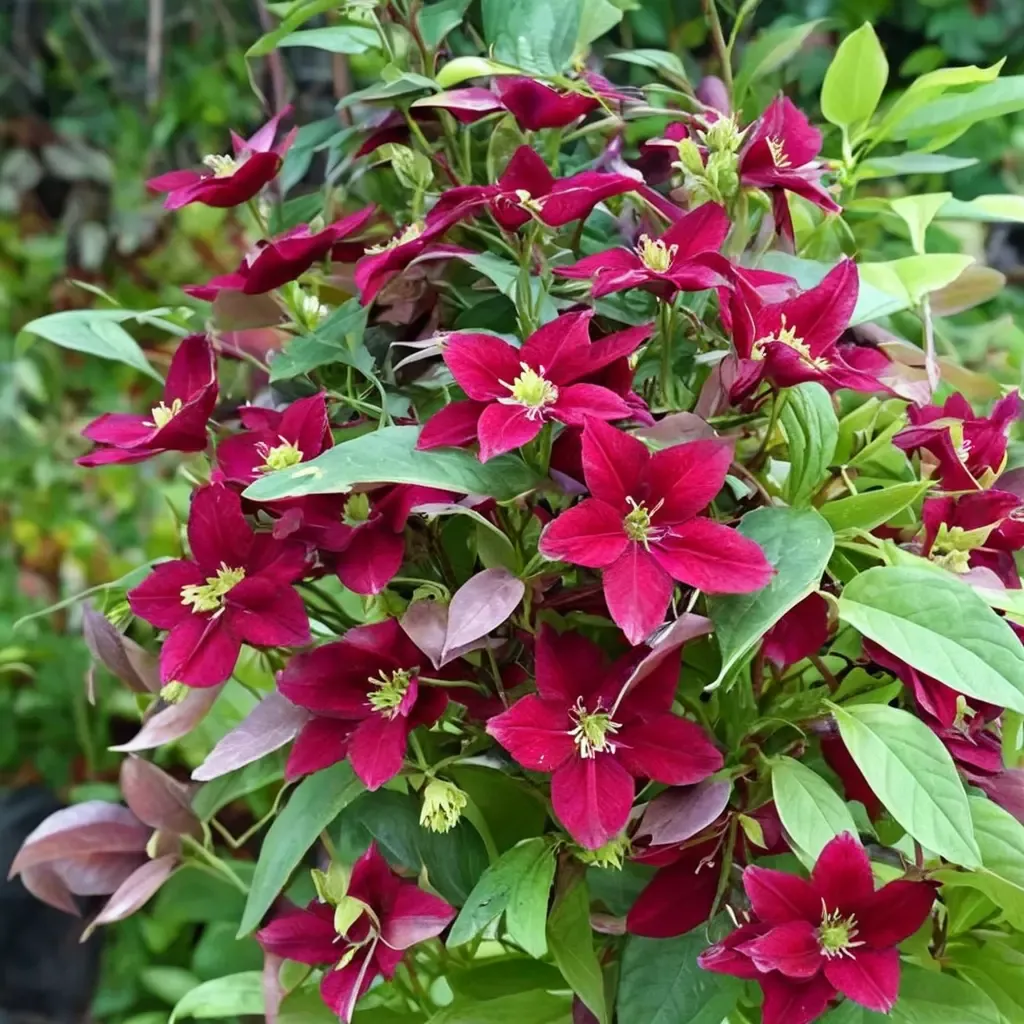
Burning Love Clematis
Clematis x cartmanii 'Burning Love'
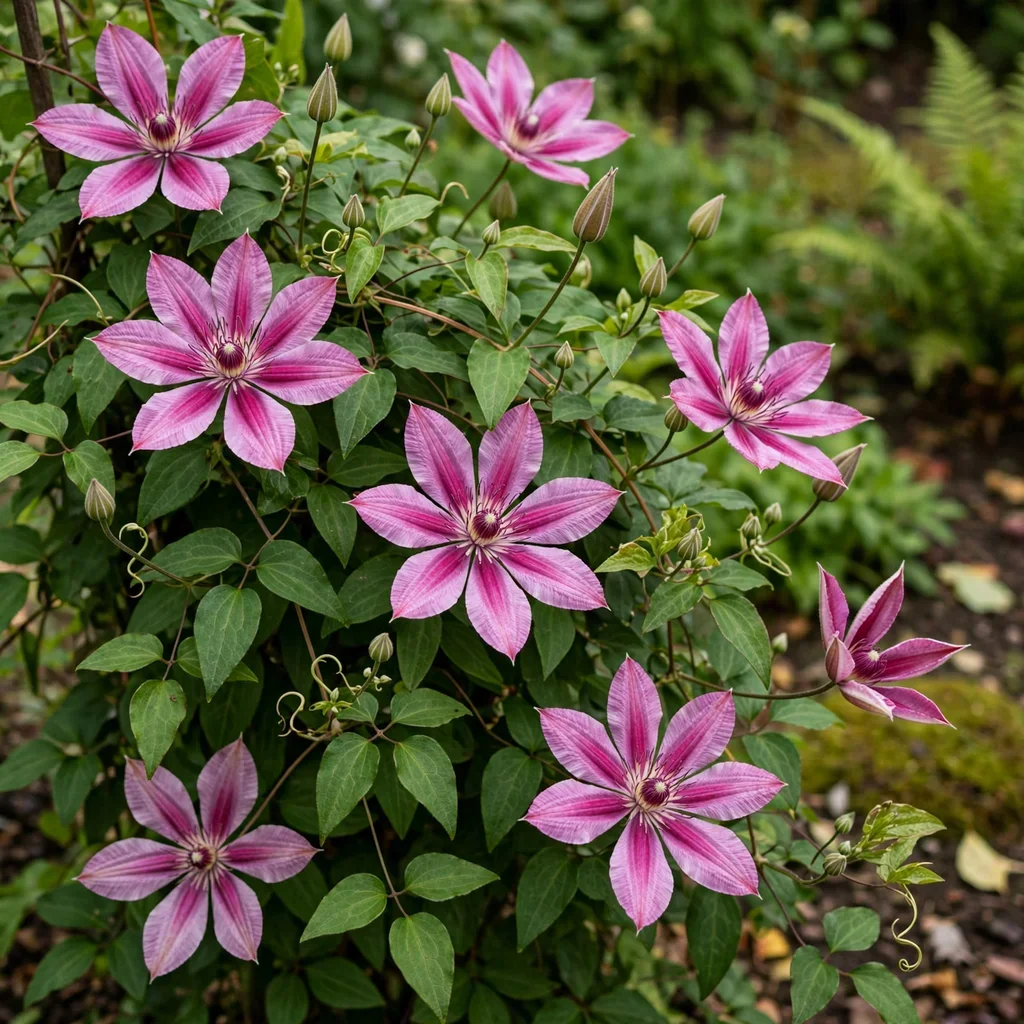
Yuan Clematis
Clematis viticella 'Yuan'
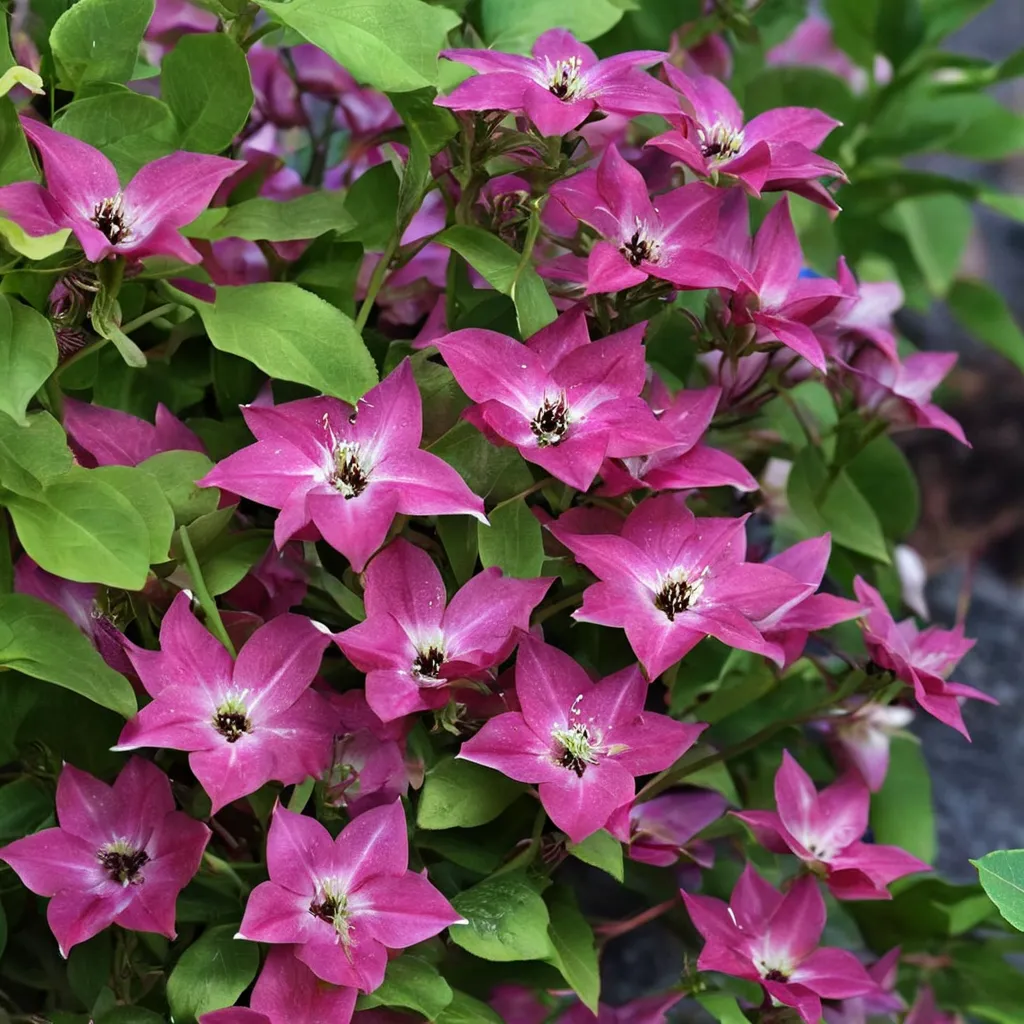
Viva Polonia Clematis
Clematis x hybrida 'Viva Polonia'
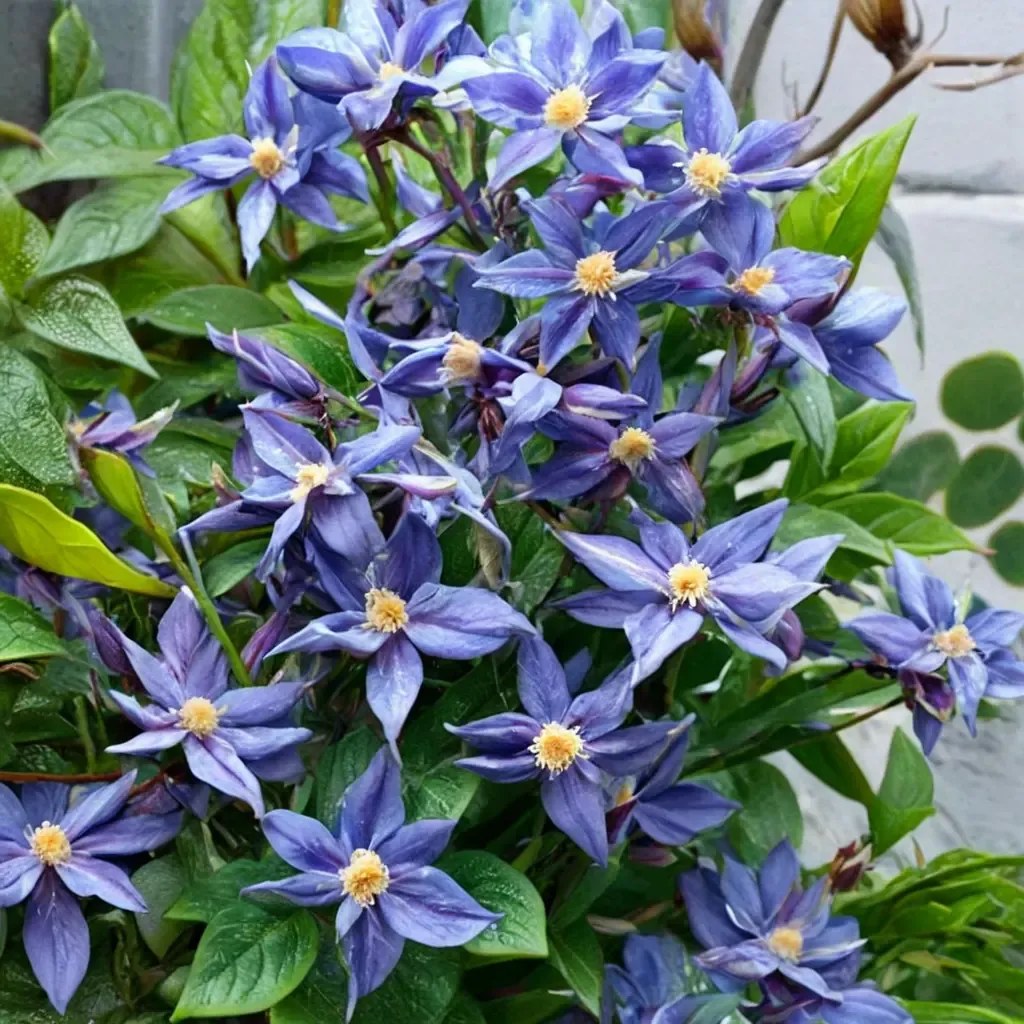
Tsukiko Clematis
Clematis x durandii 'Tsukiko'
Keep exploring
Explore the genus
Hardy in your zone?
Grow Purple Clematis with confidence
See it in a design of your actual yard, get zone-matched care reminders, and track it season by season in your garden journal.