The Story
Plant Bio
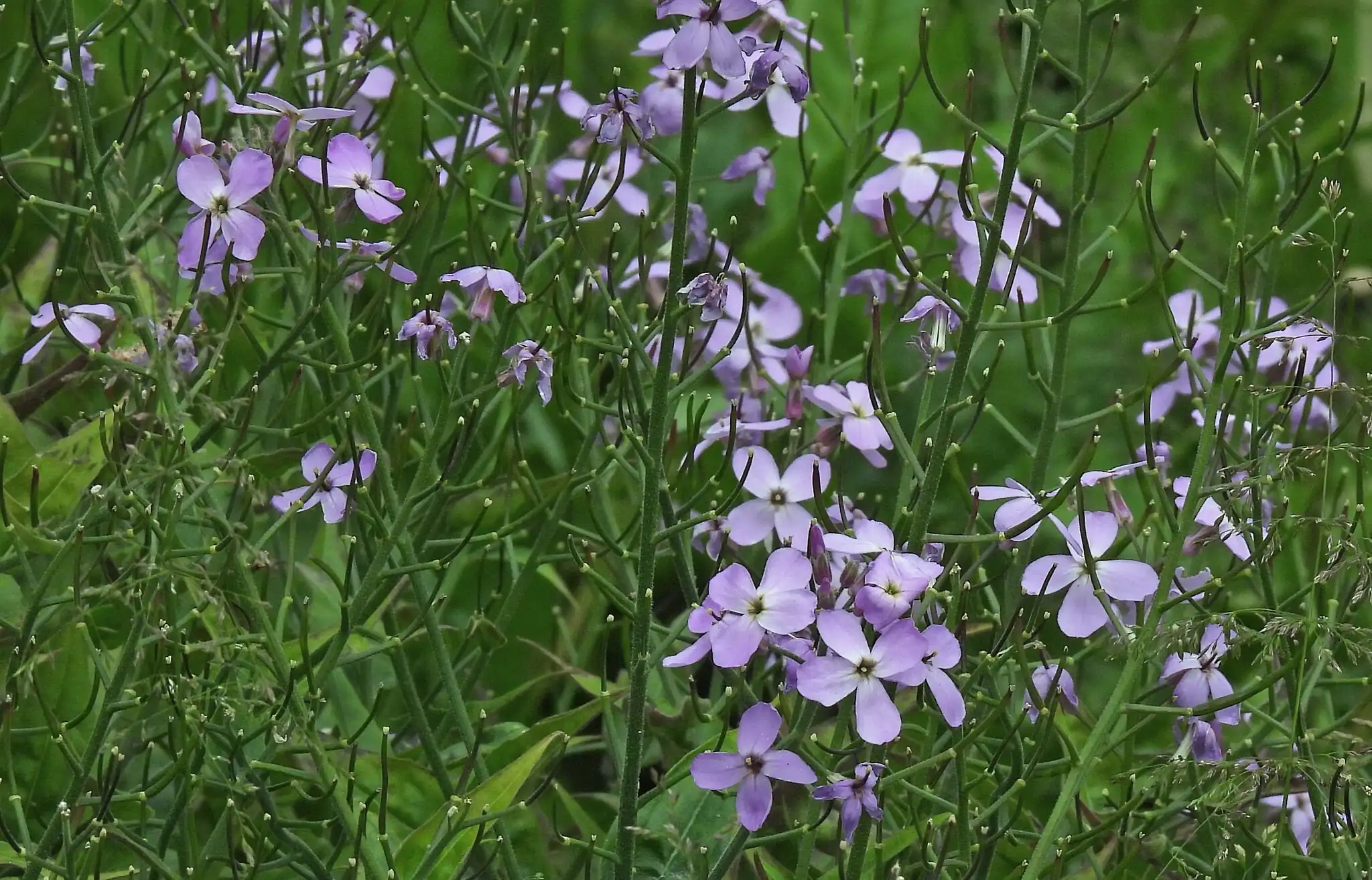
Hesperis matronalis, commonly known as Dame's rocket, is an upright, clump-forming biennial or short-lived perennial herb native to Eurasia. It features alternate, lance-shaped, dark green leaves with serrated margins along multi-branched stems that terminate in loose clusters of four-petaled flowers.
The highly fragrant blooms appear in shades of purple, pink, or white from late spring into early summer, releasing a sweet scent that intensifies significantly during the evening. While visually resembling native phlox, it is distinguished by its four-petaled flowers and its aggressive self-seeding habit in moist, open woodlands.
Uses & Benefits:
Essentials
At a Glance
Plant Type
Perennial
Height
36"
Width
18"
Light
Full Sun, Partial Sun
Zones
4, 5, 6, 7, 8, 9
Water
Moderate
Humidity
Moderate
Lifespan
Biennial or short-lived perennial
Native To
Eurasia
Toxicity
Mildly toxic if ingested in large quantities
Bloom period
Late spring – Early summer
In flower about 2 months of the year
Planting
How to Grow
- Select a planting site in full sun to partial shade with average, well-drained soil.
- Sow seeds directly in late summer or early autumn, or transplant container-grown starts in spring.
- Water regularly during the first growing season to establish a deep, healthy root system.
- Monitor the plants as they mature, ensuring they do not sit in waterlogged soil which triggers root rot.
Pro Tip
Deadhead flower spikes immediately after blooming to prevent aggressive self-seeding and to occasionally stimulate a minor secondary flush of flowers.
Keep It Thriving
Care Guide
Do
- Deadhead spent flower spikes immediately after blooming to limit aggressive self-seeding.
- Provide partial shade in regions with exceptionally hot summer climates to protect the foliage.
- Ensure excellent soil drainage to prevent fungal root and stem rots.
Don't
- Do not over-fertilize, as high nutrient levels lead to weak, floppy stems.
- Do not plant in heavy, poorly drained clay soils where water tends to pool.
- Do not mistake this plant for native woodland phlox, which has five petals instead of four.
Seasonal Care Calendar
| Task | Jan | Feb | Mar | Apr | May | Jun | Jul | Aug | Sep | Oct | Nov | Dec |
|---|---|---|---|---|---|---|---|---|---|---|---|---|
| Deadhead | ||||||||||||
| Pest Check | ||||||||||||
| Propagate | ||||||||||||
| Spring Cleanup |
Watch Out For
Pests & Diseases
Common Pests
Common Diseases
In the Garden
Landscape Uses & Companions
Landscape Uses
Companion Plants
Multiply
Propagation Methods
Good to Know
Common Questions
Dame's Rocket questions
What zones can Dame's Rocket grow in?
Dame's Rocket is hardy in USDA Zones 4–9. Inside that range it survives winter in the ground; outside it, grow it as an annual or a container plant you protect.
Is Dame's Rocket deer resistant?
Not reliably. Deer may browse Dame's Rocket, especially tender spring growth — plan on repellents or fencing where pressure is high.
When does Dame's Rocket bloom?
Dame's Rocket typically blooms in late spring through early summer. Exact timing shifts a week or two with your zone — Sow's bloom calendar maps it to your garden.
Does Dame's Rocket need full sun?
Dame's Rocket does best in full sun to part shade. In hot climates, afternoon shade keeps blooms fresher longer.
Is Dame's Rocket drought tolerant?
Yes — once established (usually after the first full season), Dame's Rocket handles dry spells with minimal watering. Water deeply its first year to build the root system that makes that possible.
Keep exploring
Explore the genus
Grow Dame's Rocket with confidence
See it in a design of your actual yard, get zone-matched care reminders, and track it season by season in your garden journal.