The Story
Plant Bio
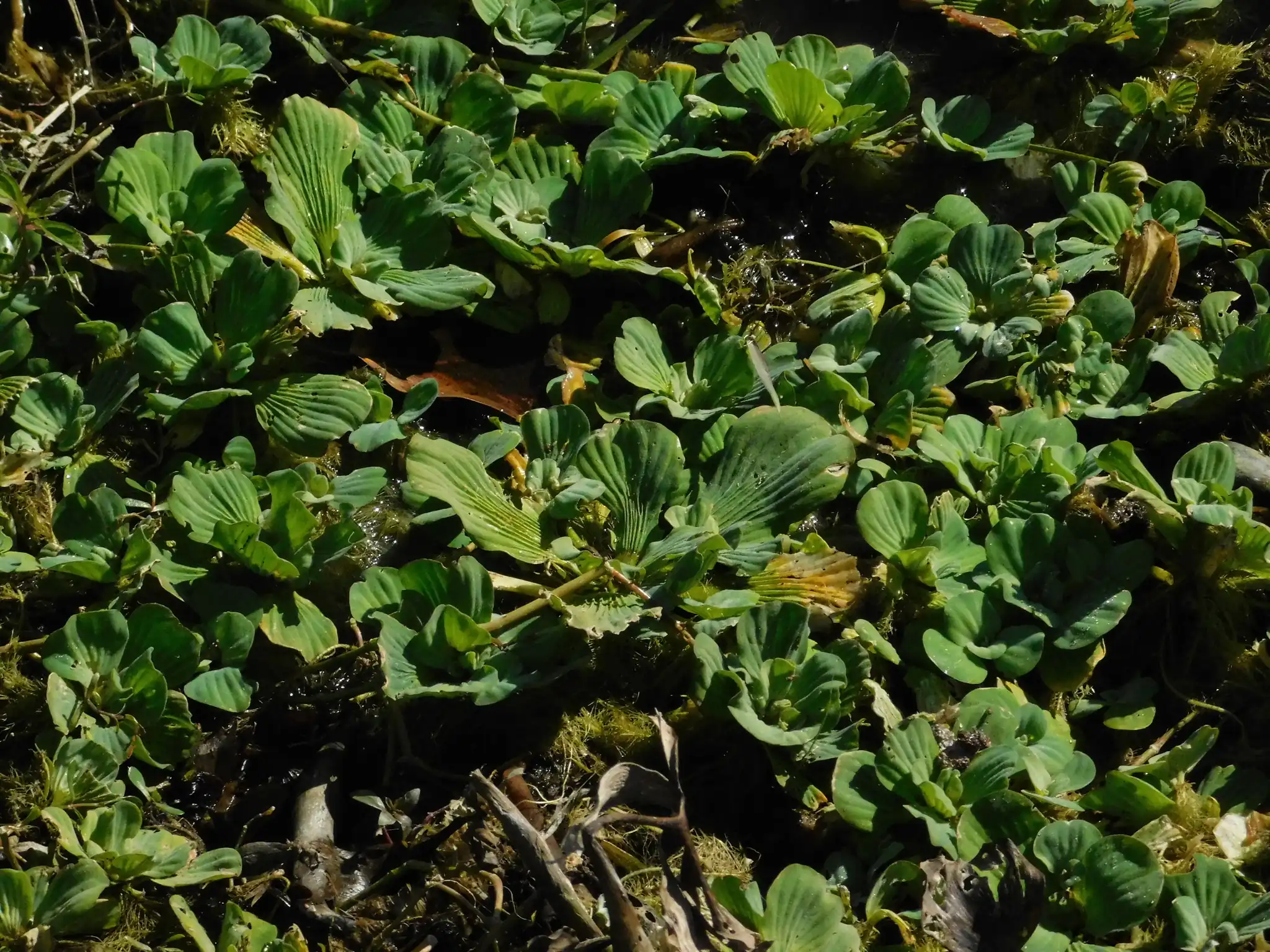
Pistia stratiotes is a free-floating aquatic perennial that forms dense, rosette-like mats resembling open heads of lettuce. The species is characterized by long, feathery, suspended root systems and short horizontal stolons that rapidly produce daughter plants.
The wedge-shaped, pale green leaves feature spongy bases that provide buoyancy and are covered in dense, water-repellent white hairs. Inconspicuous, yellowish-green to creamy white flowers are clustered in tiny spathes hidden deep within the leaf axils.
Uses & Benefits:
Essentials
At a Glance
Plant Type
Aquatic
Height
6"
Width
12"
Light
Full Sun, Partial Sun
Zones
9, 10
Water
Aquatic (standing water)
Humidity
High
Lifespan
Perennial
Native To
Paleotropics and Neotropics
Toxicity
Medium (calcium oxalate crystals)
Bloom period
Summer – Fall
In flower about 6 months of the year
Planting
How to Grow
- Place the floating rosettes directly onto the surface of still or slow-moving freshwater bodies.
- Position the plants in an area receiving full sun to partial shade with high nutrient levels.
- Maintain water temperatures above freezing, as the foliage collapses and dies back when exposed to frost.
- Manually scoop out and discard excess daughter plants regularly to maintain open water space.
Pro Tip
Thin the floating mats manually on a weekly basis during the summer to prevent complete surface coverage, which depletes dissolved oxygen and harms aquatic life. Never treat large infestations with chemical herbicides all at once, as the rapid organic decay triggers catastrophic fish kills.
Keep It Thriving
Care Guide
Do
- Manually thin out dense mats to maintain water circulation and light penetration.
- Completely dry and bin discarded plants to prevent them from entering local waterways.
- Grow in contained water features or lined ponds to control spread.
Don't
- Do not dump unwanted plants into natural streams, lakes, or stormwater systems.
- Do not prune individual leaves; remove the entire rosette instead.
- Do not allow the plants to dry out, as they die rapidly without standing water.
Seasonal Care Calendar
| Task | Jan | Feb | Mar | Apr | May | Jun | Jul | Aug | Sep | Oct | Nov | Dec |
|---|---|---|---|---|---|---|---|---|---|---|---|---|
| Pest Check | ||||||||||||
| Plant | ||||||||||||
| Prune | ||||||||||||
| Winter Prep |
Watch Out For
Pests & Diseases
Common Pests
Common Diseases
In the Garden
Landscape Uses & Companions
Landscape Uses
Companion Plants
Multiply
Propagation Methods
Good to Know
Common Questions
Water Lettuce questions
What zones can Water Lettuce grow in?
Water Lettuce is hardy in USDA Zones 9–10. Inside that range it survives winter in the ground; outside it, grow it as an annual or a container plant you protect.
When does Water Lettuce bloom?
Water Lettuce typically blooms in summer through fall. Exact timing shifts a week or two with your zone — Sow's bloom calendar maps it to your garden.
Does Water Lettuce need full sun?
Water Lettuce does best in full sun to part shade. In hot climates, afternoon shade keeps blooms fresher longer.
Keep exploring
Explore the genus
Hardy in your zone?
Grow Water Lettuce with confidence
See it in a design of your actual yard, get zone-matched care reminders, and track it season by season in your garden journal.