The Story
Plant Bio
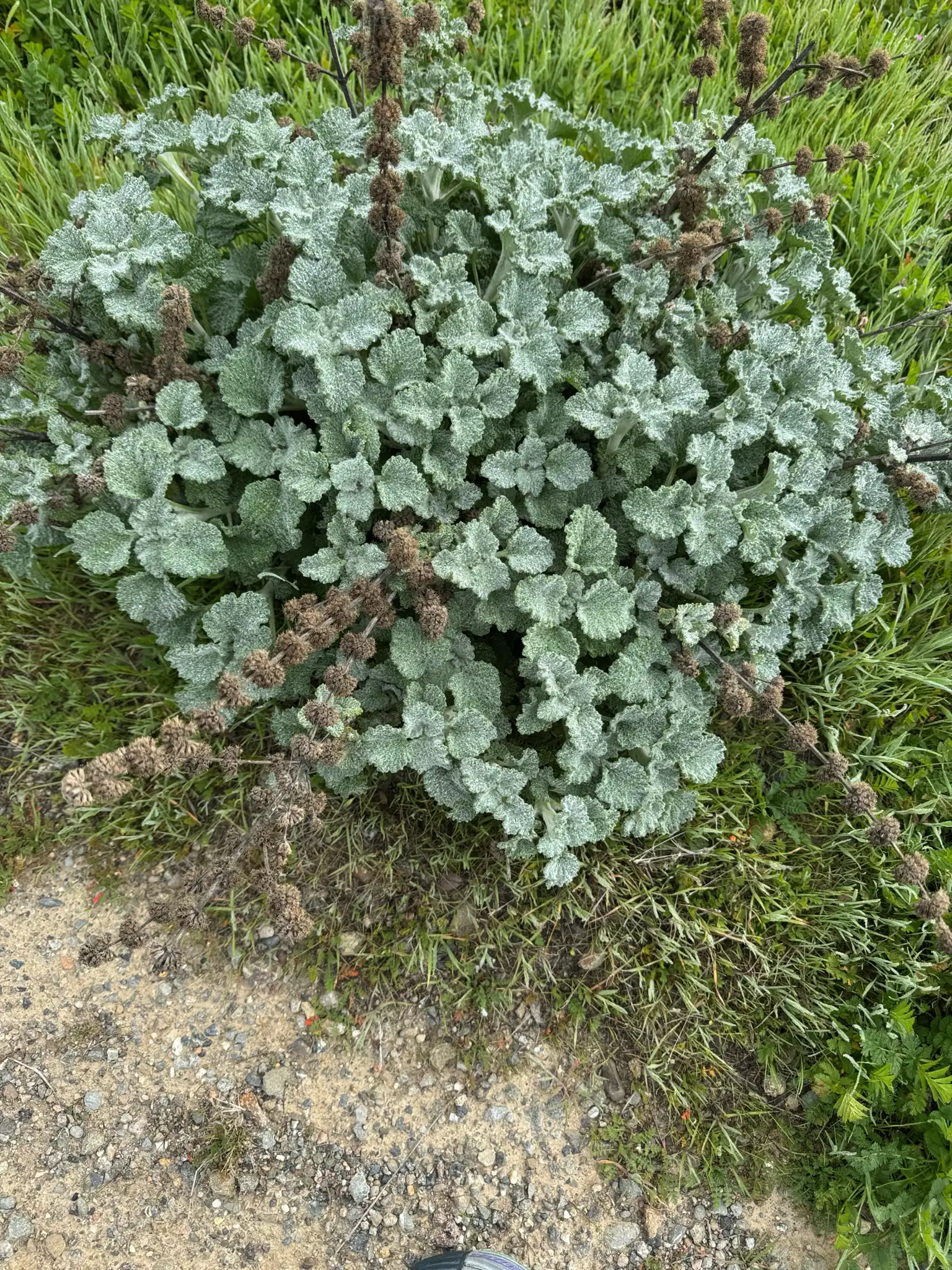
Marrubium vulgare, commonly known as horehound, is an erect, multi-stemmed perennial subshrub native to Europe, Asia, and North Africa, reaching one to two feet in height. The crinkled, grey-green leaves are covered in dense, white-woolly hairs and emit a bitter, musky aroma when bruised.
This species is distinguished by its dense, whorled clusters of small white flowers that emerge in the upper leaf axils, each supported by a calyx with ten stiff, hooked spines. The woolly foliage and bitter compounds protect the plant from grazing herbivores while attracting a diverse array of native bees and beneficial pollinators.
Uses & Benefits:
Essentials
At a Glance
Plant Type
Perennial
Height
24"
Width
24"
Light
Full Sun
Zones
4, 5, 6, 7, 8, 9
Water
Low
Humidity
Moderate
Lifespan
Perennial
Native To
Europe, Asia, North Africa
Toxicity
Non-toxic
Bloom period
Summer – Autumn
In flower about 6 months of the year
Planting
How to Grow
- Select a planting site in full sun with poor, sandy, or stony soil that drains rapidly.
- Sow seeds directly in spring, or transplant container-grown starts at the same depth they were in the nursery pot.
- Water sparingly after planting only until established, then cease regular irrigation.
- Prune the entire plant back to the ground in late winter to stimulate fresh, compact foliage.
Pro Tip
Cut the stems back hard to the basal crown in late winter or early spring; trimming into old, leafless wood prevents proper re-sprouting and leaves permanent dead stubs.
Keep It Thriving
Care Guide
Do
- Grow in poor, dry, or degraded soils to maintain a compact, aromatic habit.
- Prune hard annually to prevent the plant from becoming woody and sprawling.
- Deadhead spent flower spikes before seeds mature to prevent unwanted self-sowing.
Don't
- Do not plant in rich, heavily irrigated garden beds, which causes root rot and weak growth.
- Do not fertilize, as excess nutrients diminish the concentration of aromatic oils.
- Do not cut back into old, leafless wood when pruning.
Seasonal Care Calendar
| Task | Jan | Feb | Mar | Apr | May | Jun | Jul | Aug | Sep | Oct | Nov | Dec |
|---|---|---|---|---|---|---|---|---|---|---|---|---|
| Deadhead | ||||||||||||
| Pest Check | ||||||||||||
| Plant | ||||||||||||
| Propagate | ||||||||||||
| Prune |
Watch Out For
Pests & Diseases
Common Pests
Common Diseases
In the Garden
Landscape Uses & Companions
Landscape Uses
Companion Plants
Multiply
Propagation Methods
Good to Know
Common Questions
Horehound questions
What zones can Horehound grow in?
Horehound is hardy in USDA Zones 4–9. Inside that range it survives winter in the ground; outside it, grow it as an annual or a container plant you protect.
Is Horehound deer resistant?
Yes — Horehound is rated deer-resistant. Deer typically pass it over, though extreme hunger can override any plant's defenses.
When does Horehound bloom?
Horehound typically blooms in summer through autumn. Exact timing shifts a week or two with your zone — Sow's bloom calendar maps it to your garden.
Does Horehound need full sun?
Horehound does best in full sun (6+ hours).
Is Horehound drought tolerant?
Yes — once established (usually after the first full season), Horehound handles dry spells with minimal watering. Water deeply its first year to build the root system that makes that possible.
More Marrubium to compare
Keep exploring
Explore the genus
Grow Horehound with confidence
See it in a design of your actual yard, get zone-matched care reminders, and track it season by season in your garden journal.