1 named cultivar

The Story
Plant Bio
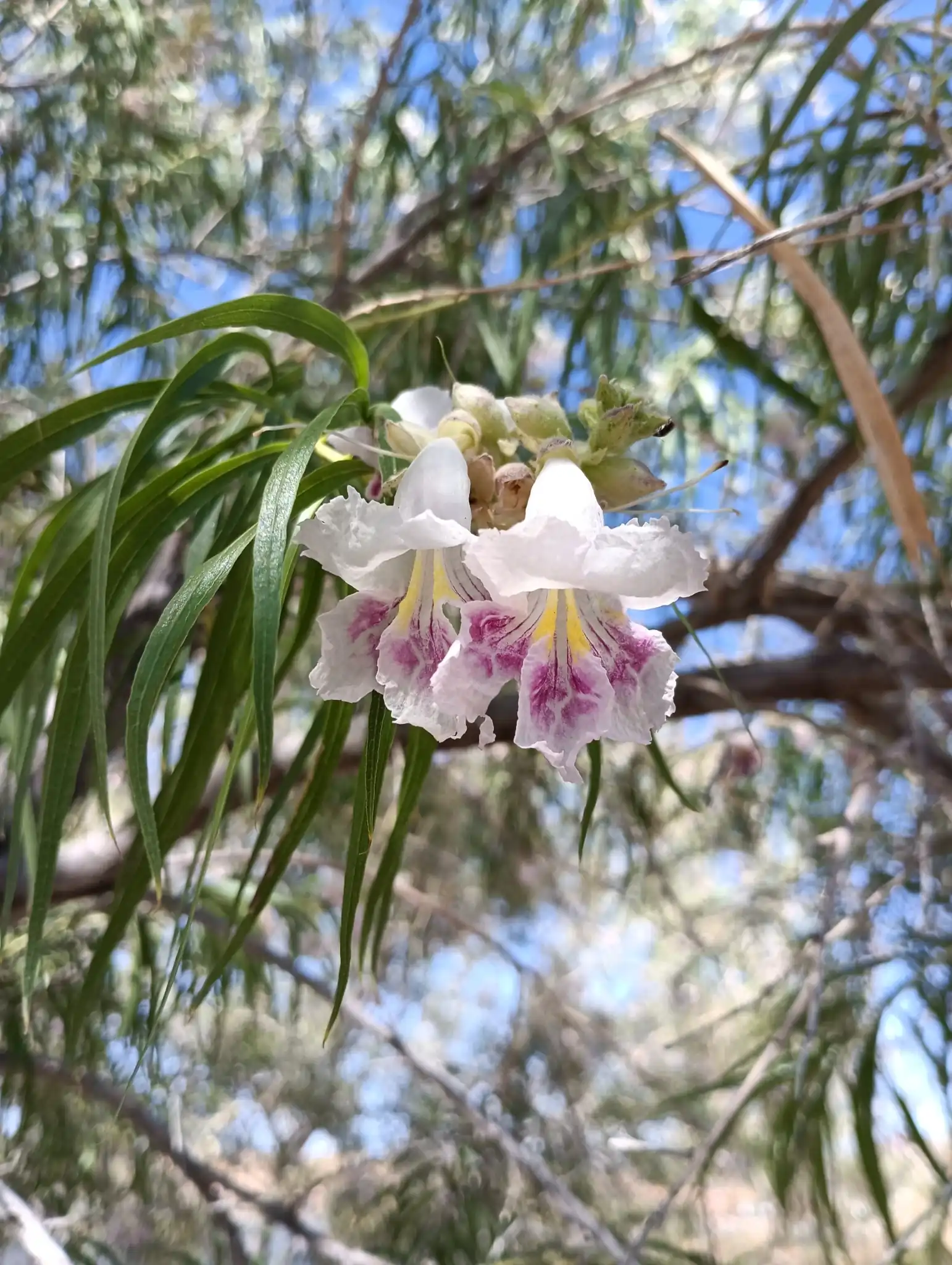
Chilopsis linearis, desert willow, is a small deciduous tree native to the central and southwestern United States and Mexico, reaching fifteen to twenty-five feet with an open multi-trunked habit. Narrow willow-like leaves give it its common name, but the flowers are trumpet-shaped and orchid-like in pink, lavender and white, opening from spring through autumn.
Despite the name it is not a willow at all but a relative of catalpa, and unlike a true willow it is thoroughly drought-adapted, growing in desert washes where water arrives only in flash floods. It flowers repeatedly through the season rather than once, and each flush follows rainfall or irrigation.
Uses & Benefits:
Essentials
At a Glance
Plant Type
Tree
Height
240"
Width
150"
Light
Full Sun
Zones
7, 8, 9
Water
Low
Humidity
Low
Lifespan
Perennial
Native To
Central and southwestern United States and Mexico
Toxicity
Non-toxic
Planting
How to Grow
- Plant in spring in sharply drained soil.
- Choose full sun; it will not flower in shade.
- Allow ten to fifteen feet of spread.
- Water deeply but infrequently to establish.
- Prune in late winter to shape the open habit.
- Deadhead spent pods to encourage repeat flowering.
Pro Tip
Water it deeply and rarely rather than little and often — desert willow flowers in flushes after real soakings, which is how its native washes behave.
Keep It Thriving
Care Guide
Do
- Plant in full sun and sharp drainage ☀️
- Water deeply but infrequently 💧
- Prune in late winter to shape it ✂️
- Use it for hummingbirds in dry gardens 🐦
Don't
- Plant in heavy wet soil ❌
- Water lightly and often ❌
- Expect flowers in shade ❌
Seasonal Care Calendar
| Task | Jan | Feb | Mar | Apr | May | Jun | Jul | Aug | Sep | Oct | Nov | Dec |
|---|---|---|---|---|---|---|---|---|---|---|---|---|
| Monitor | ||||||||||||
| Prune |
Watch Out For
Pests & Diseases
Common Pests
Common Diseases
In the Garden
Landscape Uses & Companions
Landscape Uses
Multiply
Propagation Methods
Good to Know
Common Questions
Desert Willow questions
What zones can Desert Willow grow in?
Desert Willow is hardy in USDA Zones 7–9. Inside that range it survives winter in the ground; outside it, grow it as an annual or a container plant you protect.
Is Desert Willow deer resistant?
Yes — Desert Willow is rated deer-resistant. Deer typically pass it over, though extreme hunger can override any plant's defenses.
When does Desert Willow bloom?
Desert Willow typically blooms in late spring to fall through early fall. Exact timing shifts a week or two with your zone — Sow's bloom calendar maps it to your garden.
Does Desert Willow need full sun?
Desert Willow does best in full sun (6+ hours).
Is Desert Willow drought tolerant?
Yes — once established (usually after the first full season), Desert Willow handles dry spells with minimal watering. Water deeply its first year to build the root system that makes that possible.
More Chilopsis to compare
Keep exploring
Explore the genus
Hardy in your zone?
Grow Desert Willow with confidence
See it in a design of your actual yard, get zone-matched care reminders, and track it season by season in your garden journal.