The Story
Plant Bio
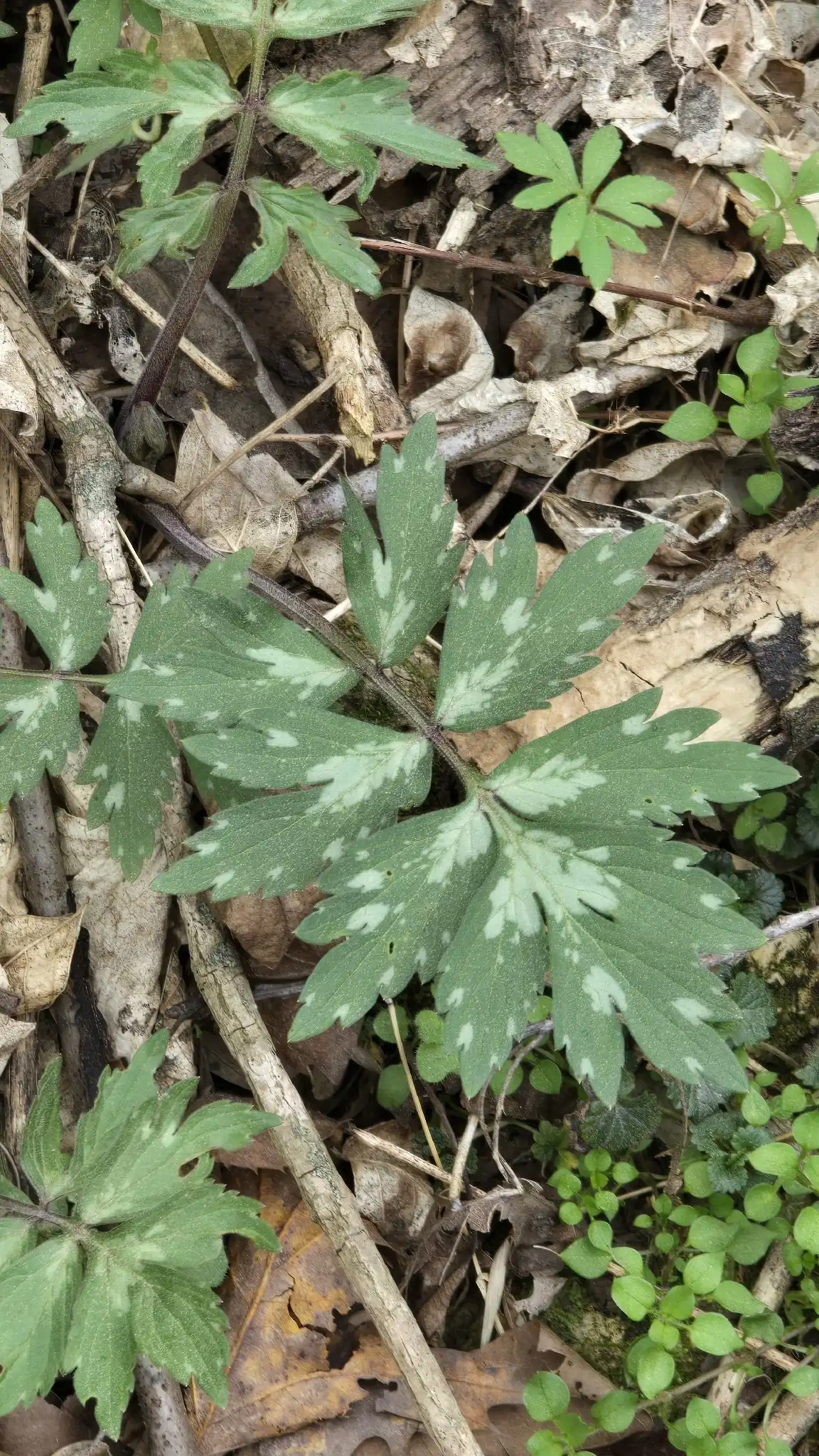
Hydrophyllum virginianum, the Virginia waterleaf, is an upright herbaceous perennial native to eastern North American woodlands, spreading via underground rhizomes to form dense colonies. The deeply divided, sharply toothed spring foliage features distinctive white, water-stain-like mottling that gradually fades to solid green by mid-summer.
This species is distinguished by its dense, rounded terminal clusters of white to pale lavender flowers held on long stalks well above the leaves. The individual blossoms feature prominent, long-protruding hairy stamens that give the inflorescence a distinctly bristly appearance.
Uses & Benefits:
Essentials
At a Glance
Plant Type
Perennial
Height
32"
Width
24"
Light
Partial Sun, Shade
Zones
4, 5, 6, 7, 8
Water
Medium to high
Humidity
Moderate to high
Lifespan
Perennial
Native To
Eastern North America
Toxicity
Non-toxic
Bloom period
Mid spring – Early summer
In flower about 3 months of the year
Planting
How to Grow
- Select a site in partial to full shade with moist, humus-rich, well-draining soil.
- Plant bare-root crowns or plugs in early spring, spacing them twelve to eighteen inches apart to allow for rhizomatous spread.
- Water thoroughly after planting and maintain consistent moisture throughout the first growing season.
- Apply an annual top-dressing of leaf mold or compost in fall to mimic natural forest floor conditions.
Pro Tip
Do not panic when the foliage loses its white mottling in summer or begins to die back early after setting seed; this is a natural woodland dormancy response rather than a sign of disease.
Keep It Thriving
Care Guide
Do
- Keep the soil consistently moist, especially during dry summer spells.
- Allow the plant to spread naturally into a colonial groundcover in woodland settings.
- Clear away dead foliage in late winter to make room for emerging spring growth.
Don't
- Do not plant in dry, baking soils or areas exposed to hot afternoon sun.
- Do not over-fertilize, as an annual top-dressing of organic matter is sufficient.
- Do not plant in poorly drained, waterlogged sites where roots are prone to rot.
Seasonal Care Calendar
| Task | Jan | Feb | Mar | Apr | May | Jun | Jul | Aug | Sep | Oct | Nov | Dec |
|---|---|---|---|---|---|---|---|---|---|---|---|---|
| Divide | ||||||||||||
| Mulch | ||||||||||||
| Pest Check | ||||||||||||
| Spring Cleanup |
Watch Out For
Pests & Diseases
Common Pests
Common Diseases
In the Garden
Landscape Uses & Companions
Landscape Uses
Multiply
Propagation Methods
Good to Know
Common Questions
Virginia Waterleaf questions
What zones can Virginia Waterleaf grow in?
Virginia Waterleaf is hardy in USDA Zones 4–8. Inside that range it survives winter in the ground; outside it, grow it as an annual or a container plant you protect.
Is Virginia Waterleaf deer resistant?
Not reliably. Deer may browse Virginia Waterleaf, especially tender spring growth — plan on repellents or fencing where pressure is high.
When does Virginia Waterleaf bloom?
Virginia Waterleaf typically blooms in mid spring through early summer. Exact timing shifts a week or two with your zone — Sow's bloom calendar maps it to your garden.
Does Virginia Waterleaf need full sun?
Virginia Waterleaf does best in part shade.
Keep exploring
Explore the genus
Hardy in your zone?
Grow Virginia Waterleaf with confidence
See it in a design of your actual yard, get zone-matched care reminders, and track it season by season in your garden journal.