The Story
Plant Bio
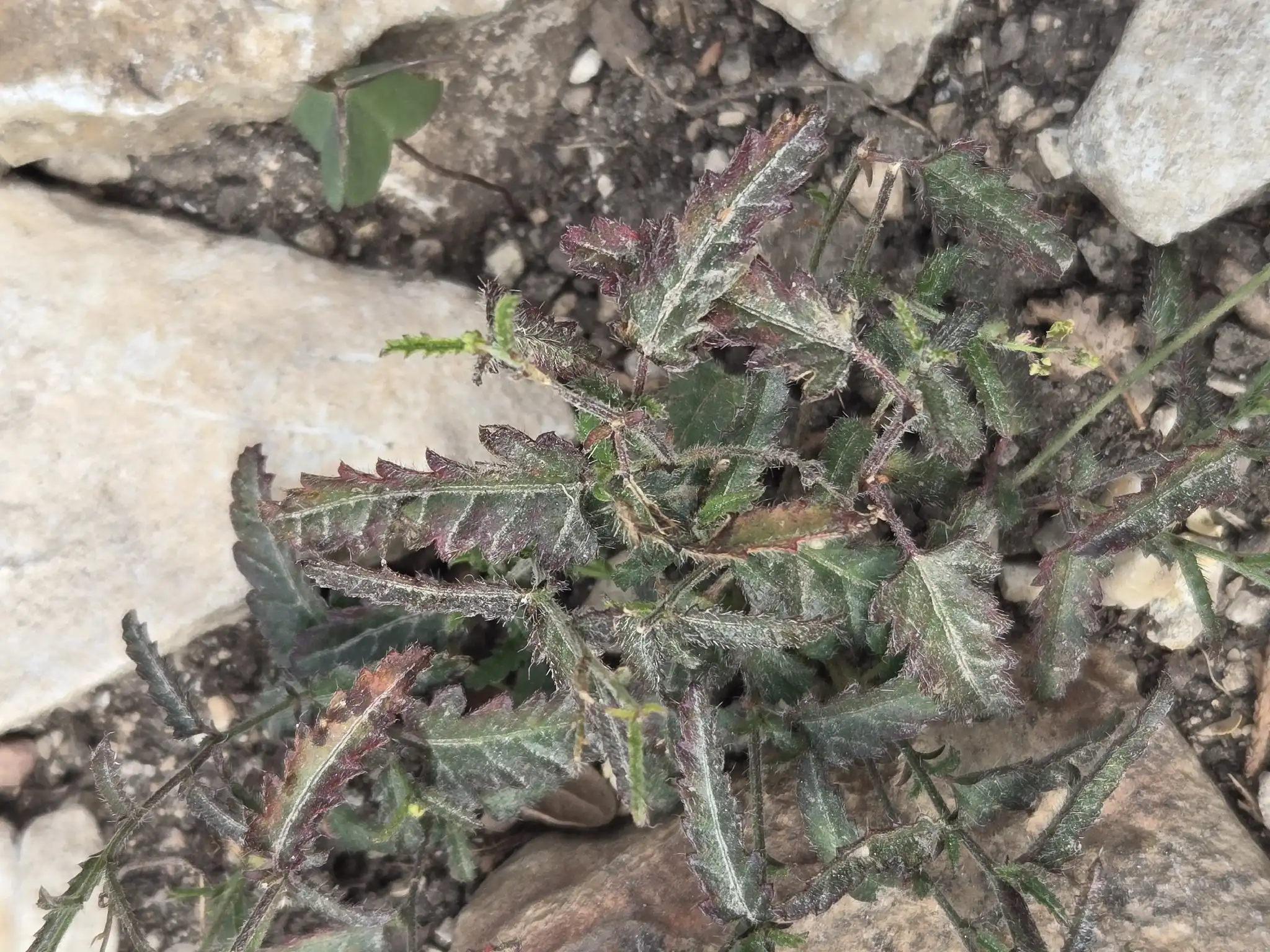
Tragia ramosa, the branched noseburn, is an erect perennial herb native to dry regions of North America, reaching four to twelve inches in height from a woody vertical rootstock. The entire plant is covered in long, stinging hairs containing calcium oxalate crystals that inject an irritating fluid upon contact.
Alternate leaves feature lance-shaped or narrowly oval blades with toothed margins and somewhat corrugated upper surfaces. The inconspicuous flowers lack petals entirely, consisting of small green sepals arranged in slender lateral racemes with male flowers above a single basal female flower.
Uses & Benefits:
Essentials
At a Glance
Plant Type
Perennial
Height
12"
Width
8"
Light
Full Sun, Partial Sun
Zones
6, 7, 8, 9, 10
Water
Low
Humidity
Low to moderate
Lifespan
Perennial
Native To
North America
Toxicity
Skin irritant
Bloom period
Summer – Fall
In flower about 6 months of the year
Planting
How to Grow
- Select a site with full sun to partial shade and exceptionally well-drained, sandy or rocky soil.
- Sow seeds in fall or plant dormant rootstocks in early spring, spacing them eight inches apart.
- Water sparingly during establishment, then cease supplemental irrigation once the root system is active.
- Avoid planting near pathways, garden borders, or high-traffic areas where physical contact is likely.
Pro Tip
Always wear heavy-duty protective gloves when handling this plant; the stinging trichomes cause immediate, severe skin irritation and localized dermatitis.
Keep It Thriving
Care Guide
Do
- Wear thick, puncture-resistant gloves whenever working near the plant.
- Ensure sharp drainage to prevent root rot in wet winter soils.
- Leave dead stems intact through winter to protect the crown.
Don't
- Do not plant in heavy clay or areas prone to standing water.
- Do not use overhead irrigation, which can encourage powdery mildew.
- Do not handle the plant with bare skin under any circumstances.
Seasonal Care Calendar
| Task | Jan | Feb | Mar | Apr | May | Jun | Jul | Aug | Sep | Oct | Nov | Dec |
|---|---|---|---|---|---|---|---|---|---|---|---|---|
| Pest Check | ||||||||||||
| Plant | ||||||||||||
| Propagate | ||||||||||||
| Spring Cleanup |
Watch Out For
Pests & Diseases
Common Pests
Common Diseases
In the Garden
Landscape Uses & Companions
Landscape Uses
Companion Plants
Multiply
Propagation Methods
Good to Know
Common Questions
Branched Noseburn questions
What zones can Branched Noseburn grow in?
Branched Noseburn is hardy in USDA Zones 6–10. Inside that range it survives winter in the ground; outside it, grow it as an annual or a container plant you protect.
Is Branched Noseburn deer resistant?
Yes — Branched Noseburn is rated deer-resistant. Deer typically pass it over, though extreme hunger can override any plant's defenses.
When does Branched Noseburn bloom?
Branched Noseburn typically blooms in summer through fall. Exact timing shifts a week or two with your zone — Sow's bloom calendar maps it to your garden.
Does Branched Noseburn need full sun?
Branched Noseburn does best in full sun to part shade. In hot climates, afternoon shade keeps blooms fresher longer.
Is Branched Noseburn drought tolerant?
Yes — once established (usually after the first full season), Branched Noseburn handles dry spells with minimal watering. Water deeply its first year to build the root system that makes that possible.
Keep exploring
Explore the genus
Hardy in your zone?
Grow Branched Noseburn with confidence
See it in a design of your actual yard, get zone-matched care reminders, and track it season by season in your garden journal.