The Story
Plant Bio
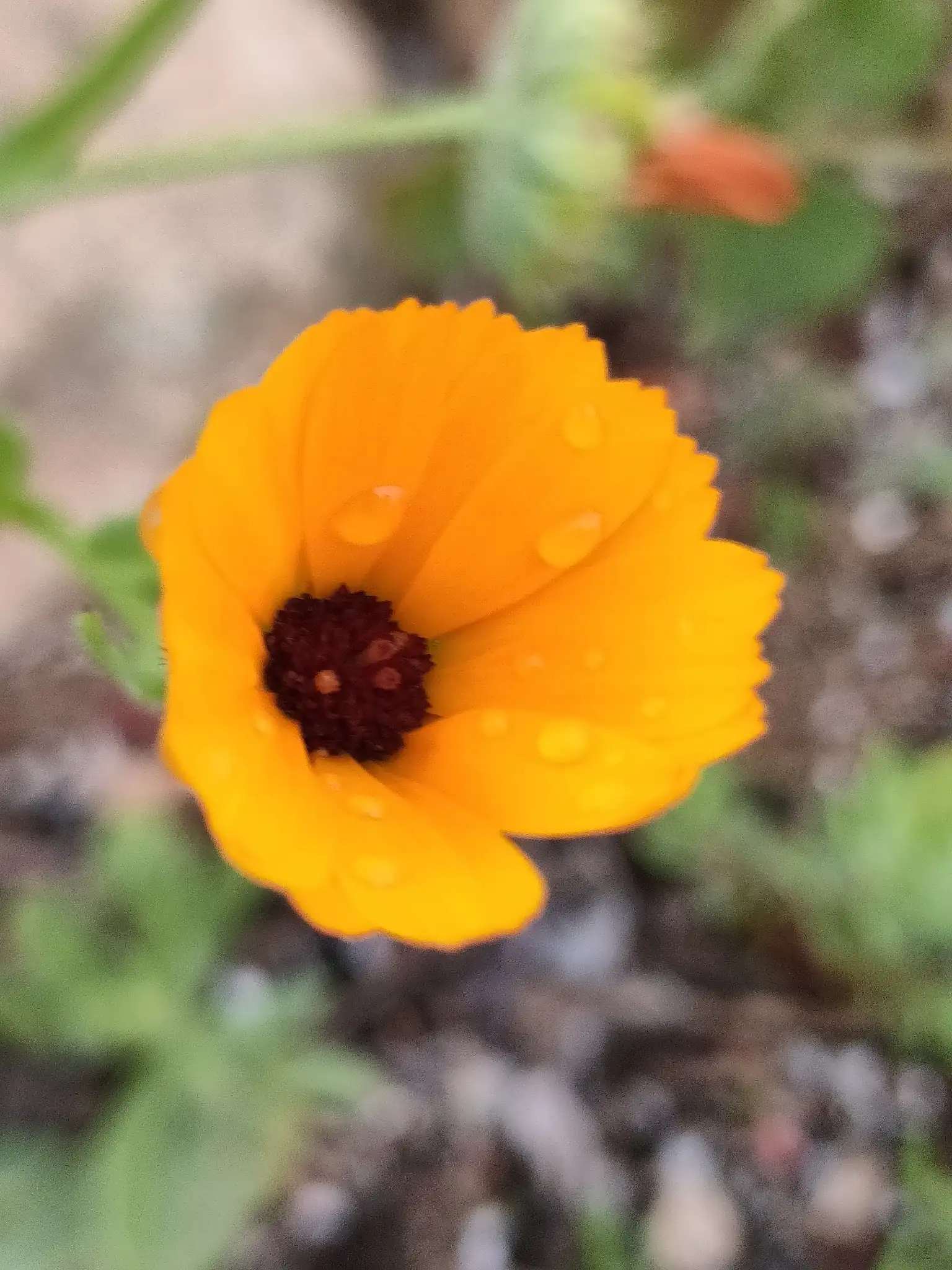
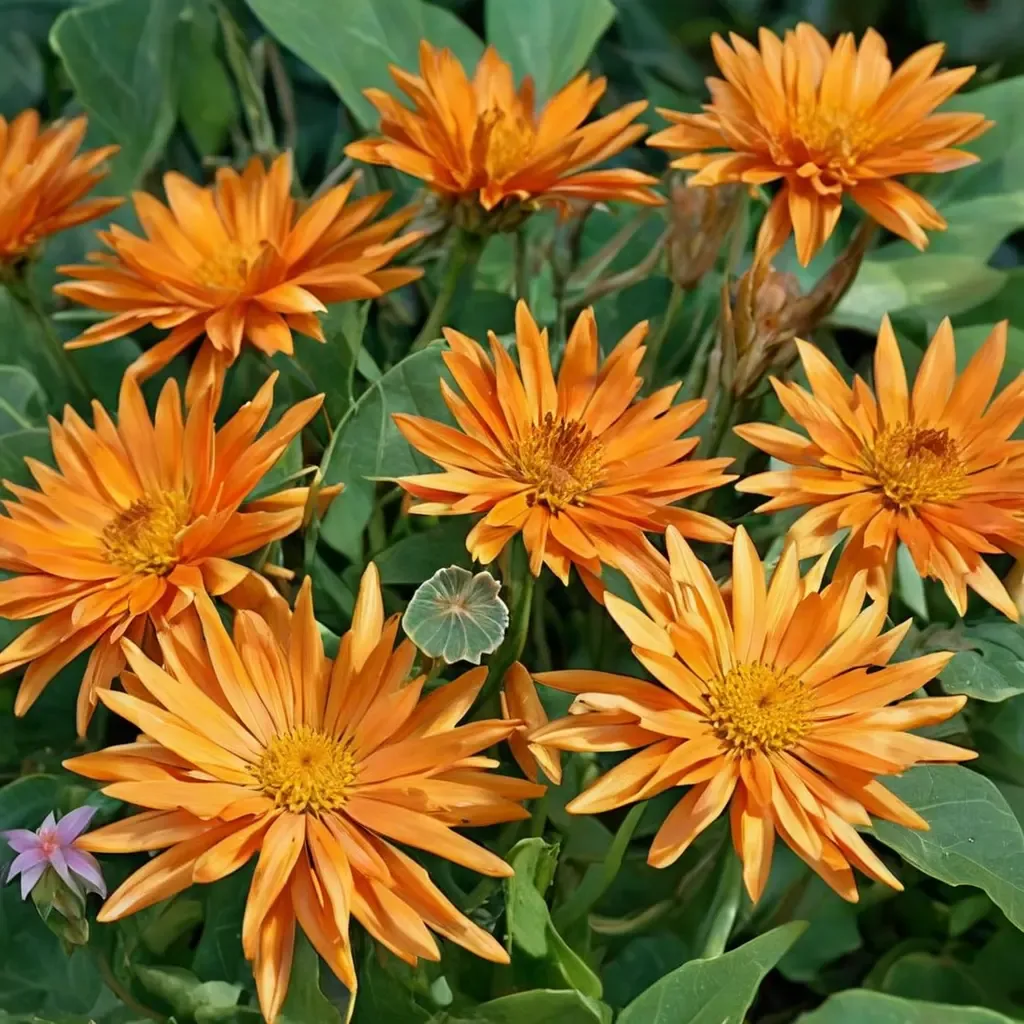
Calendula stellata, the star marigold, is a branching annual herb native to the Mediterranean basin, characterized by its grayish-green pubescent foliage and daisy-like yellow to orange flowers. It grows as an erect to slightly prostrate mound, thriving in sunny, well-drained locations where it blooms continuously from spring until the first autumn frost.
This species is distinguished from common pot marigold by its unique star-shaped outer fruiting structures and elongated involucral bracts. The edible petals serve as a traditional saffron substitute and make a colorful addition to salads.
Uses & Benefits:
Essentials
At a Glance
Plant Type
Annual
Height
24"
Width
18"
Light
Full Sun, Partial Sun
Zones
9, 10
Water
Moderate
Humidity
Low to Moderate
Lifespan
Annual
Native To
North Africa, Southern Europe, Macaronesia
Toxicity
Non-toxic
Bloom period
Spring – Fall
In flower about 9 months of the year
Planting
How to Grow
- Sow seeds directly into prepared garden beds after the last spring frost, covering them with a quarter-inch of fine soil.
- Thin emerging seedlings to stand twelve inches apart to allow adequate air circulation and prevent fungal diseases.
- Water deeply but infrequently, allowing the top two inches of soil to dry out completely between waterings.
- Deadhead spent blooms weekly to prevent early seed set and prolong the flowering period through autumn.
Pro Tip
Pinch out the growing tips of young plants early in the season to force lateral branching, which significantly increases the number of flower heads.
Keep It Thriving
Care Guide
Do
- Provide full sun to maximize flower production and maintain a compact growth habit.
- Ensure sharp soil drainage to prevent root rot in wet conditions.
- Pinch young shoots early in the season to encourage a bushier habit.
Don't
- Do not over-fertilize, as excess nitrogen stimulates foliage growth at the expense of flowers.
- Avoid overhead watering, which leaves foliage wet and encourages powdery mildew.
- Do not cut back into old, leafless woody stems when pruning.
Seasonal Care Calendar
| Task | Jan | Feb | Mar | Apr | May | Jun | Jul | Aug | Sep | Oct | Nov | Dec |
|---|---|---|---|---|---|---|---|---|---|---|---|---|
| Deadhead | ||||||||||||
| Fertilize | ||||||||||||
| Pest Check | ||||||||||||
| Pinch | ||||||||||||
| Propagate |
Watch Out For
Pests & Diseases
Common Pests
Common Diseases
In the Garden
Landscape Uses & Companions
Landscape Uses
Companion Plants
Multiply
Propagation Methods
Good to Know
Common Questions
Star marigold questions
What zones can Star marigold grow in?
Star marigold is hardy in USDA Zones 9–10. Inside that range it survives winter in the ground; outside it, grow it as an annual or a container plant you protect.
Is Star marigold deer resistant?
Not reliably. Deer may browse Star marigold, especially tender spring growth — plan on repellents or fencing where pressure is high.
When does Star marigold bloom?
Star marigold typically blooms in spring through fall. Exact timing shifts a week or two with your zone — Sow's bloom calendar maps it to your garden.
Does Star marigold need full sun?
Star marigold does best in full sun to part shade. In hot climates, afternoon shade keeps blooms fresher longer.
Is Star marigold drought tolerant?
Yes — once established (usually after the first full season), Star marigold handles dry spells with minimal watering. Water deeply its first year to build the root system that makes that possible.
More Calendula to compare
Keep exploring
Explore the genus
Hardy in your zone?
Grow Star marigold with confidence
See it in a design of your actual yard, get zone-matched care reminders, and track it season by season in your garden journal.