The Story
Plant Bio
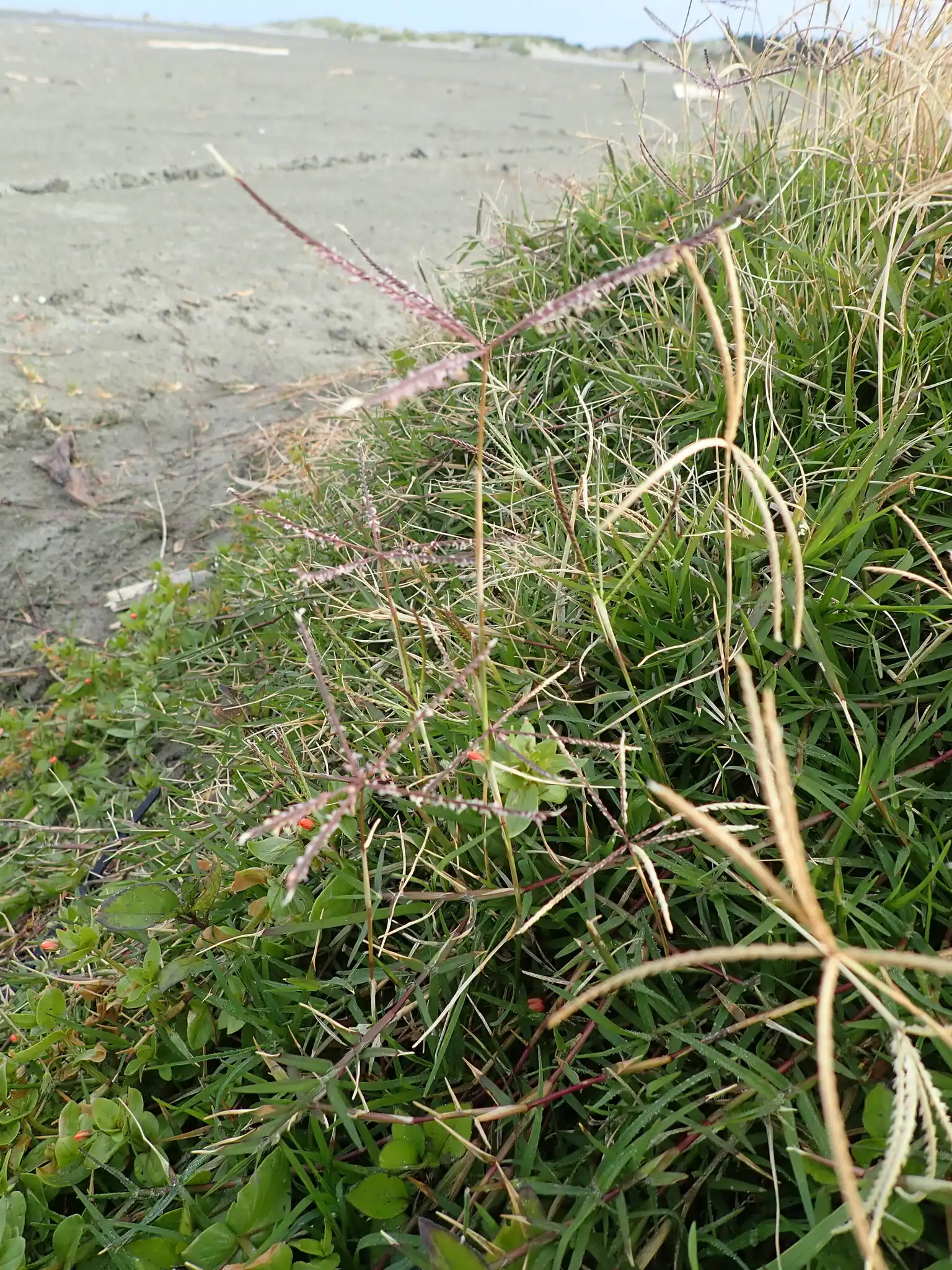
Cynodon dactylon is a low-growing, warm-season perennial grass that spreads indefinitely via tough, creeping stolons and scaly rhizomes to form a dense turf mat. The grayish-green to blue-green leaves are flat or folded, arising from stems that produce small, finger-like spikes of inconspicuous flowers from spring through fall.
This species is highly resilient, entering dormancy and turning brown during severe winter frost or extreme summer drought, only to green up rapidly when moisture and warmth return. Its aggressive growth makes it an effective groundcover for erosion control, though it can quickly invade adjacent garden beds if not contained.
Uses & Benefits:
Essentials
At a Glance
Plant Type
Grass
Height
16"
Width
120"
Light
Full Sun
Zones
6, 7, 8, 9, 10
Water
Low
Humidity
Medium
Lifespan
Perennial
Native To
Africa, Asia, southern Europe, Australia
Toxicity
Non-toxic
Bloom period
Spring – Autumn
In flower about 9 months of the year
Planting
How to Grow
- Select a site in full sun with well-draining soil, as this grass is highly intolerant of shade.
- Clear the area of all existing weeds and debris, then till the top few inches of soil to prepare a smooth seedbed or planting surface.
- Plant plugs or sprigs spaced 6 to 12 inches apart, or lay sod rolls tightly together, ensuring good soil contact.
- Water deeply and frequently until the root system is established, then transition to infrequent, deep watering to encourage deep root growth.
Pro Tip
To prevent the grass from invading garden borders, install physical edging at least six inches deep to block the underground rhizomes, and hand-pull any stolons that attempt to creep over the top.
Keep It Thriving
Care Guide
Do
- Mow regularly during the active spring and summer growing season to maintain a height of 1 to 2 inches.
- Dethatch or scarify the lawn annually to prevent thick thatch buildup from choking out new growth.
- Apply a balanced, nitrogen-rich fertilizer during active growth phases in spring and summer.
Don't
- Do not plant this grass in heavily shaded areas, as it will thin out and fail to thrive.
- Avoid overwatering or leaving the soil constantly waterlogged, which encourages fungal root rot.
- Do not apply high-nitrogen fertilizers late in the fall, as this stimulates tender growth susceptible to winter injury.
Seasonal Care Calendar
| Task | Jan | Feb | Mar | Apr | May | Jun | Jul | Aug | Sep | Oct | Nov | Dec |
|---|---|---|---|---|---|---|---|---|---|---|---|---|
| Fertilize | ||||||||||||
| Pest Check | ||||||||||||
| Prune | ||||||||||||
| Spring Cleanup |
Watch Out For
Pests & Diseases
Common Pests
Common Diseases
In the Garden
Landscape Uses & Companions
Landscape Uses
Companion Plants
Multiply
Propagation Methods
Good to Know
Common Questions
Bermuda Grass questions
What zones can Bermuda Grass grow in?
Bermuda Grass is hardy in USDA Zones 6–10. Inside that range it survives winter in the ground; outside it, grow it as an annual or a container plant you protect.
When does Bermuda Grass bloom?
Bermuda Grass typically blooms in spring through autumn. Exact timing shifts a week or two with your zone — Sow's bloom calendar maps it to your garden.
Does Bermuda Grass need full sun?
Bermuda Grass does best in full sun (6+ hours).
Is Bermuda Grass drought tolerant?
Yes — once established (usually after the first full season), Bermuda Grass handles dry spells with minimal watering. Water deeply its first year to build the root system that makes that possible.
Keep exploring
Explore the genus
Hardy in your zone?
Grow Bermuda Grass with confidence
See it in a design of your actual yard, get zone-matched care reminders, and track it season by season in your garden journal.