The Story
Plant Bio
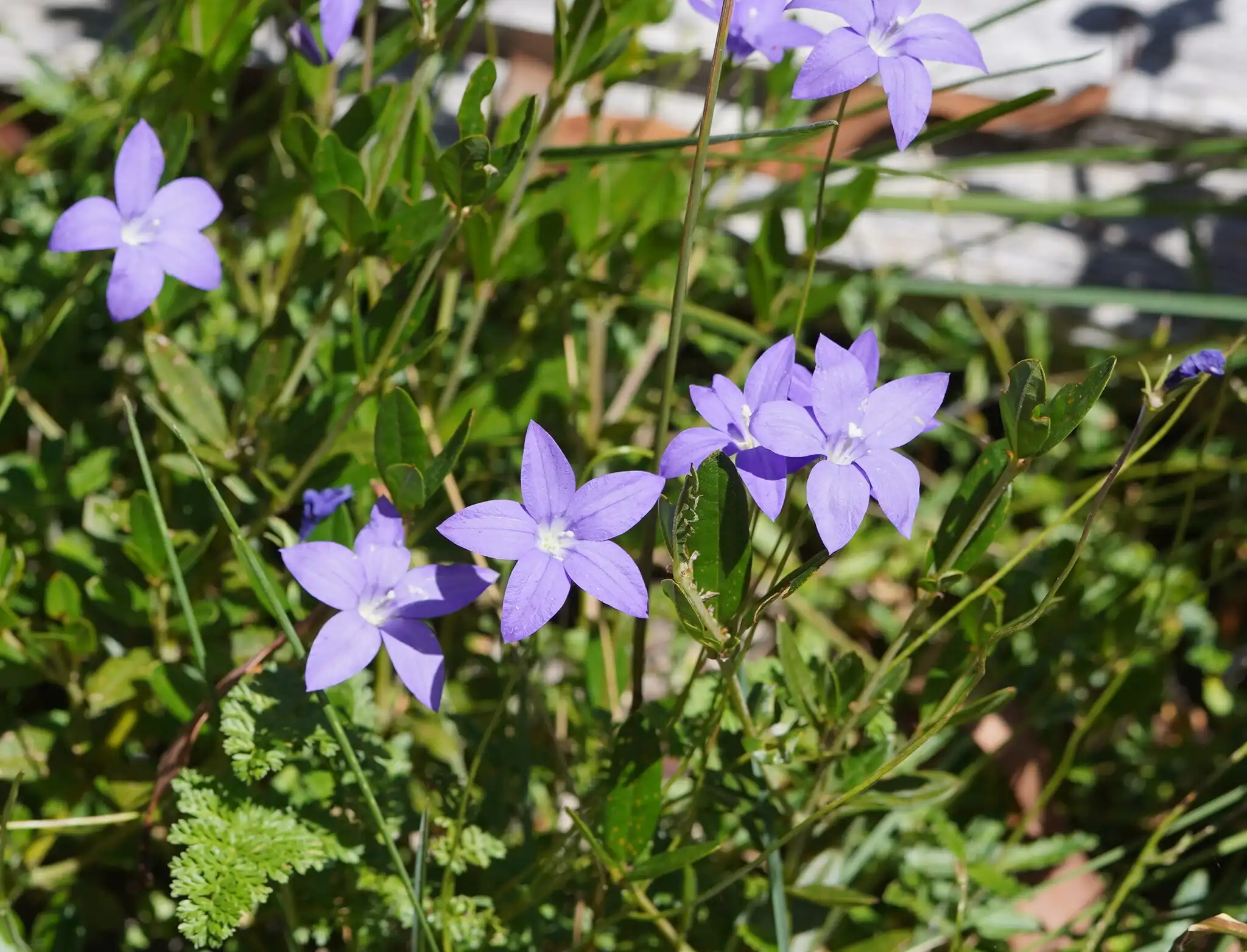
Wahlenbergia gloriosa is a small, creeping perennial herb native to the alpine and sub-alpine regions of southeastern Australia. It spreads via underground rhizomes to form low mats of slender, semi-erect stems clad in small, dark green leaves with wavy margins.
The species is distinguished by its upright, single violet-blue bell flowers held on long, delicate stems above the foliage. It requires cool, high-altitude conditions to thrive and struggles in areas with high summer heat and humidity.
Uses & Benefits:
Essentials
At a Glance
Plant Type
Perennial
Height
16"
Light
Full Sun, Partial Sun
Zones
7, 8, 9
Water
Medium
Humidity
Low to medium
Lifespan
Perennial
Native To
Australia
Toxicity
Non-toxic
Bloom period
Late spring – Summer
In flower about 4 months of the year
Planting
How to Grow
- Select a site with full sun to partial shade and light, compost-enriched soil.
- Incorporate grit, gravel, or crushed stone to ensure rapid drainage.
- Plant rhizome plugs or container starts in spring, keeping the shallow roots consistently moist but not wet.
- Protect plants from extreme afternoon heat and dry spells with light shade or regular misting.
Pro Tip
Provide excellent drainage by incorporating gravel or stone into the planting mix; waterlogged soil quickly triggers fatal root rot.
Keep It Thriving
Care Guide
Do
- Keep the shallow root system moist during dry spells.
- Use a highly permeable, gritty soil mix.
- Apply a diluted, soluble liquid fertilizer sparingly in spring and fall.
Don't
- Do not allow the soil to become waterlogged or sit in standing water.
- Avoid cutting back hard into old, leafless wood.
- Do not apply heavy doses of granular fertilizer.
Seasonal Care Calendar
| Task | Jan | Feb | Mar | Apr | May | Jun | Jul | Aug | Sep | Oct | Nov | Dec |
|---|---|---|---|---|---|---|---|---|---|---|---|---|
| Fertilize | ||||||||||||
| Pest Check | ||||||||||||
| Propagate | ||||||||||||
| Spring Cleanup |
Watch Out For
Pests & Diseases
Common Pests
Common Diseases
In the Garden
Landscape Uses & Companions
Landscape Uses
Companion Plants
Multiply
Propagation Methods
Good to Know
Common Questions
Royal Bluebell questions
What zones can Royal Bluebell grow in?
Royal Bluebell is hardy in USDA Zones 7–9. Inside that range it survives winter in the ground; outside it, grow it as an annual or a container plant you protect.
When does Royal Bluebell bloom?
Royal Bluebell typically blooms in late spring through summer. Exact timing shifts a week or two with your zone — Sow's bloom calendar maps it to your garden.
Does Royal Bluebell need full sun?
Royal Bluebell does best in full sun to part shade. In hot climates, afternoon shade keeps blooms fresher longer.
Is Royal Bluebell drought tolerant?
Yes — once established (usually after the first full season), Royal Bluebell handles dry spells with minimal watering. Water deeply its first year to build the root system that makes that possible.
Keep exploring
Explore the genus
Hardy in your zone?
Grow Royal Bluebell with confidence
See it in a design of your actual yard, get zone-matched care reminders, and track it season by season in your garden journal.