The Story
Plant Bio
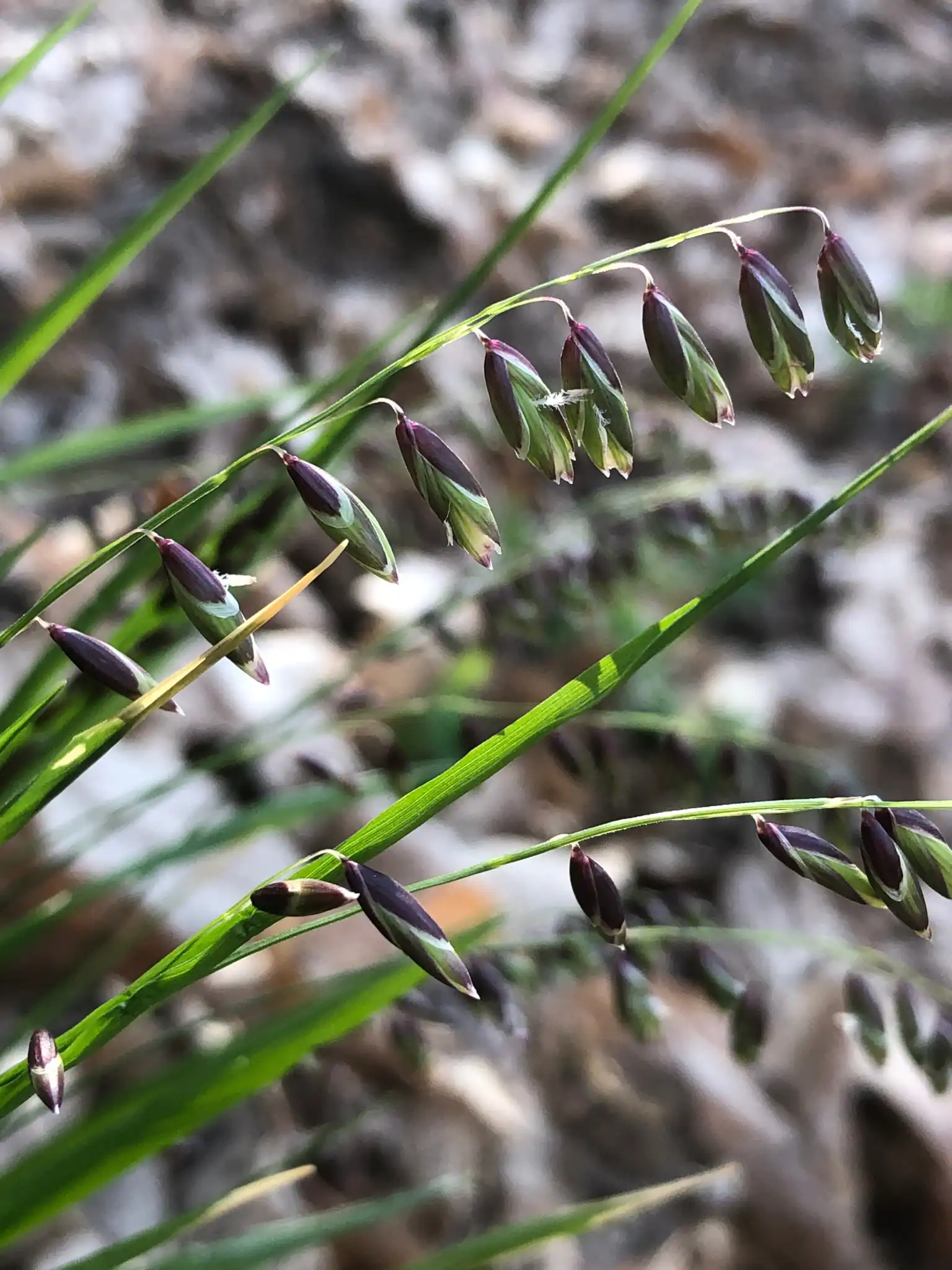
Melica nutans, commonly known as mountain melick, is a slender, clump-forming perennial grass native to European and Asian woodlands. It spreads via creeping rhizomes to produce upright to arching stems clad in narrow, linear leaves that emerge light green in spring.
The species is distinguished by its slender, one-sided, nodding flowering panicles that carry compressed, pale green to purple-tinged spikelets from late spring through summer. These delicate, pearl-like spikelets dangle gracefully on thin pedicels, creating a distinct nodding habit in shaded positions.
Uses & Benefits:
Essentials
At a Glance
Plant Type
Grass
Height
20"
Width
18"
Light
Partial Sun, Shade
Zones
6, 7, 8, 9
Water
Low to moderate
Humidity
Moderate
Lifespan
Perennial
Native To
Europe and Asia
Toxicity
Non-toxic
Bloom period
Late spring – Summer
In flower about 4 months of the year
Planting
How to Grow
- Select a site in partial to full shade with moist, humus-rich, and well-drained soil.
- Amend the planting area with organic matter to mimic a natural woodland floor.
- Space divisions or plugs twelve to eighteen inches apart to allow for rhizomatous spreading.
- Water thoroughly after planting and maintain consistent moisture during the establishment phase.
Pro Tip
Plant this grass strictly in partial to full shade with consistent moisture; placing it in hot, baking sun or heavy, waterlogged clay causes rapid decline.
Keep It Thriving
Care Guide
Do
- Cut foliage and spent flowering stems hard to ground level in late winter or early spring.
- Provide regular supplemental water during dry summer spells.
- Grow in neutral to alkaline soils for optimal performance.
Don't
- Do not over-fertilize, as excess nutrients cause weak, floppy growth.
- Avoid heavy shearing during active summer growth.
- Do not plant in poorly drained or waterlogged winter soils.
Seasonal Care Calendar
| Task | Jan | Feb | Mar | Apr | May | Jun | Jul | Aug | Sep | Oct | Nov | Dec |
|---|---|---|---|---|---|---|---|---|---|---|---|---|
| Divide | ||||||||||||
| Mulch | ||||||||||||
| Pest Check | ||||||||||||
| Propagate | ||||||||||||
| Prune |
Watch Out For
Pests & Diseases
Common Pests
Common Diseases
In the Garden
Landscape Uses & Companions
Landscape Uses
Companion Plants
Multiply
Propagation Methods
Good to Know
Common Questions
Mountain Melick questions
What zones can Mountain Melick grow in?
Mountain Melick is hardy in USDA Zones 6–9. Inside that range it survives winter in the ground; outside it, grow it as an annual or a container plant you protect.
Is Mountain Melick deer resistant?
Yes — Mountain Melick is rated deer-resistant. Deer typically pass it over, though extreme hunger can override any plant's defenses.
When does Mountain Melick bloom?
Mountain Melick typically blooms in late spring through summer. Exact timing shifts a week or two with your zone — Sow's bloom calendar maps it to your garden.
Does Mountain Melick need full sun?
Mountain Melick does best in part shade.
Keep exploring
Explore the genus
Hardy in your zone?
Grow Mountain Melick with confidence
See it in a design of your actual yard, get zone-matched care reminders, and track it season by season in your garden journal.