The Story
Plant Bio
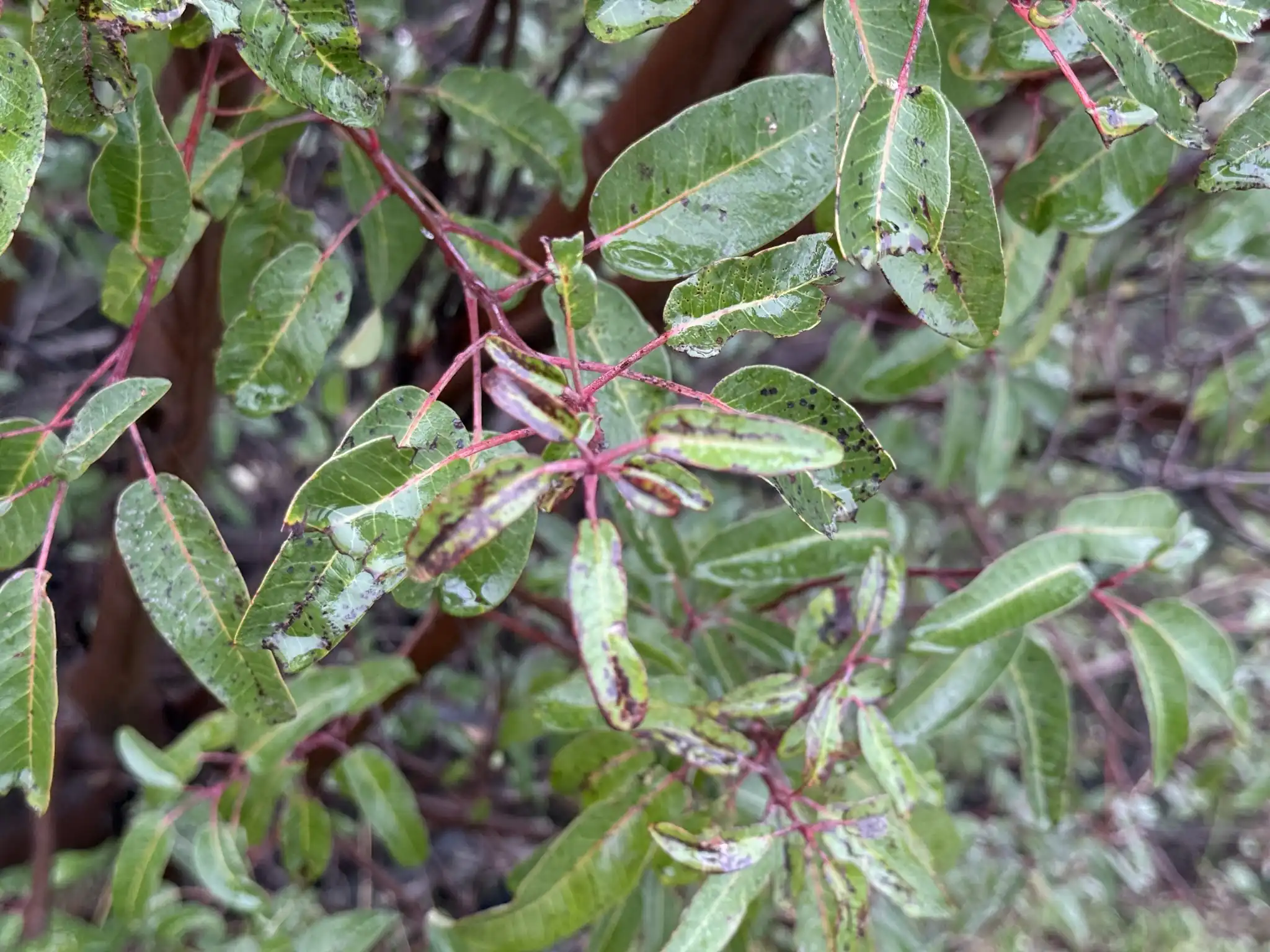
Malosma laurina, known as laurel sumac, is a large, dense, rounded evergreen shrub native to the coastal sage scrub and chaparral of Southern California and Baja California. The leathery, glossy green leaves fold lengthwise along the midrib to form a distinct trough shape and emit an aroma of bitter almonds or apples when crushed.
Terminal, plume-like panicles of small white flowers bloom in late spring and summer, followed by small white drupes that feed native songbirds. Young foliage, stems, and leaf veins display a contrasting reddish tint that stands out against the mature bright green canopy.
Uses & Benefits:
Essentials
At a Glance
Plant Type
Shrub
Height
236"
Width
236"
Light
Full Sun
Zones
10
Water
Low
Humidity
Adapted to maritime and Mediterranean humidity
Native To
Southern California and Baja California
Toxicity
Skin Irritant
Bloom period
Late spring – Summer
In flower about 4 months of the year
Planting
How to Grow
- Select a planting site in full sun with sharp, excellent drainage in sandy, loamy, or rocky soil.
- Dig a hole twice as wide as the root ball but no deeper, ensuring the crown sits slightly above the surrounding soil level.
- Water deeply immediately after planting to settle the soil, then provide infrequent irrigation during the first dry season to establish the roots.
- Cease supplemental watering entirely once the plant is established, as wet summer soils promote fatal root rot.
Pro Tip
Use this species as a natural frost indicator in borderline climates; the tender terminal growth readily scorches or drops when temperatures dip below 25°F, marking the boundaries of frost-free thermal belts.
Keep It Thriving
Care Guide
Do
- Plant in exceptionally well-draining soil to prevent root rot.
- Prune lightly and only when necessary to shape the canopy or remove dead wood.
- Wear gloves when handling the foliage or sap to avoid potential skin irritation.
Don't
- Do not irrigate during the summer months once the root system is fully established.
- Do not prune heavily into old, leafless bare wood, as the plant struggles to regenerate from old wood.
- Do not apply supplemental fertilizers, which can cause excessive, weak growth.
Seasonal Care Calendar
| Task | Jan | Feb | Mar | Apr | May | Jun | Jul | Aug | Sep | Oct | Nov | Dec |
|---|---|---|---|---|---|---|---|---|---|---|---|---|
| Mulch | ||||||||||||
| Pest Check | ||||||||||||
| Plant | ||||||||||||
| Propagate | ||||||||||||
| Prune |
Watch Out For
Pests & Diseases
Common Pests
Common Diseases
In the Garden
Landscape Uses & Companions
Landscape Uses
Multiply
Propagation Methods
Good to Know
Common Questions
Laurel Sumac questions
What zones can Laurel Sumac grow in?
Laurel Sumac is hardy in USDA Zone 10. Inside that range it survives winter in the ground; outside it, grow it as an annual or a container plant you protect.
When does Laurel Sumac bloom?
Laurel Sumac typically blooms in late spring through summer. Exact timing shifts a week or two with your zone — Sow's bloom calendar maps it to your garden.
Does Laurel Sumac need full sun?
Laurel Sumac does best in full sun (6+ hours).
Is Laurel Sumac drought tolerant?
Yes — once established (usually after the first full season), Laurel Sumac handles dry spells with minimal watering. Water deeply its first year to build the root system that makes that possible.
Keep exploring
Explore the genus
Hardy in your zone?
Grow Laurel Sumac with confidence
See it in a design of your actual yard, get zone-matched care reminders, and track it season by season in your garden journal.