The Story
Plant Bio
Gossypium sturtianum is an erect, woody perennial shrub native to the arid interior of Australia. It forms a multi-stemmed, open to compact habit with an average lifespan of approximately ten years.
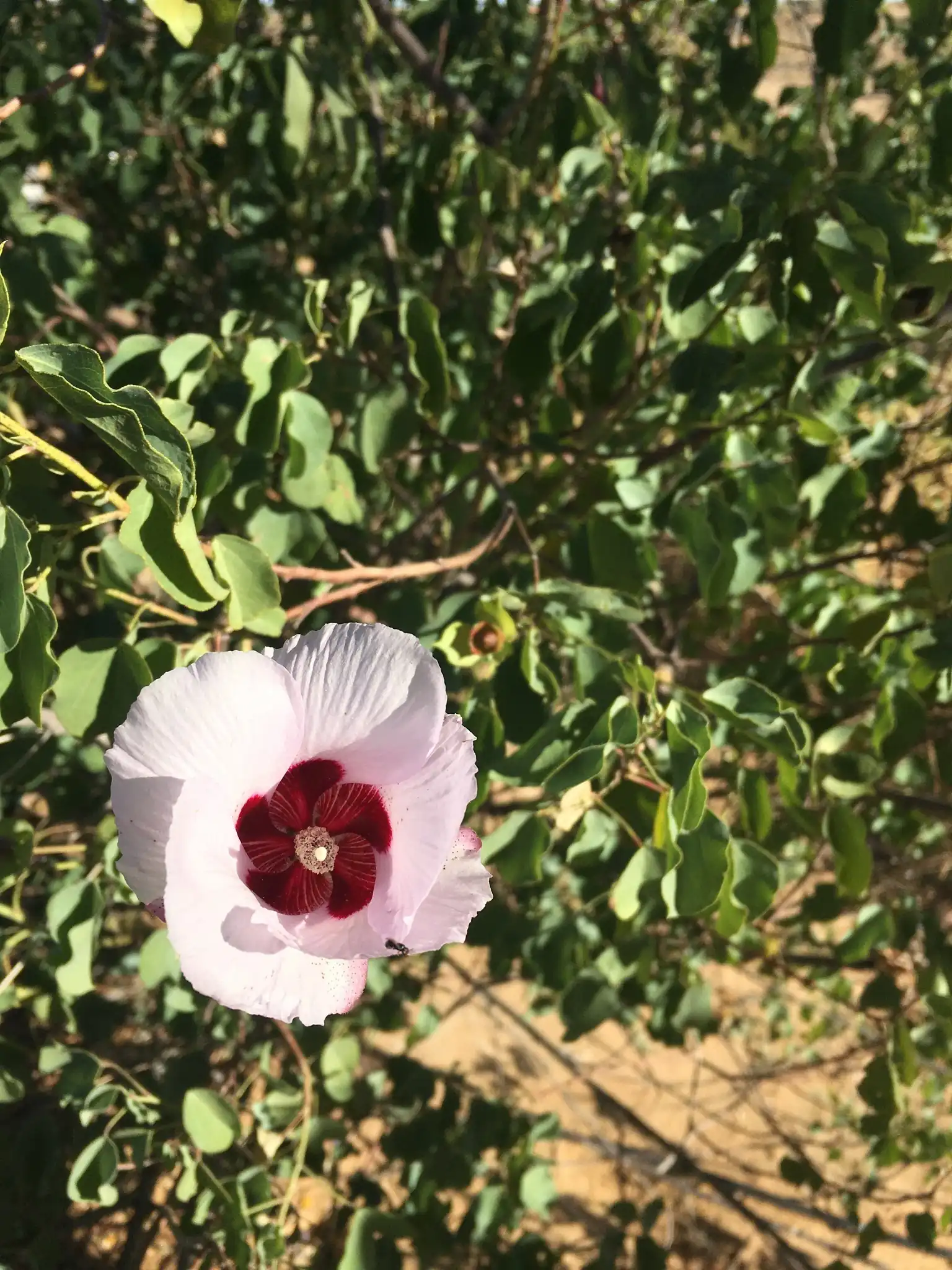
The species is distinguished by its round, dark green leaves that release a strong terpenoid scent when crushed, and solitary, hibiscus-like pink to purple flowers with contrasting dark red centers. It is the floral emblem of the Northern Territory of Australia and is grown globally as a botanical curiosity.
Uses & Benefits:
Essentials
At a Glance
Plant Type
Shrub
Height
118"
Width
79"
Light
Full Sun
Zones
10
Water
Low
Humidity
Low
Lifespan
10 years
Native To
Australia
Toxicity
Toxic to non-ruminants
Bloom period
Late winter – Spring
In flower about 4 months of the year
Planting
How to Grow
- Select a planting site or container with exceptional drainage, utilizing a sandy or gravelly soil mix.
- Position the plant in a location that receives full sun for the entire day to maximize flowering and prevent leggy growth.
- Water sparingly once established, allowing the soil to dry out completely between watering sessions.
- Protect the plant from frost by moving containers indoors or providing overhead cover when temperatures drop near freezing.
Pro Tip
Prune lightly immediately after the main flowering flush to maintain a compact shape; cutting back into old, leafless wood that lacks active buds prevents regrowth.
Keep It Thriving
Care Guide
Do
- Ensure perfect drainage by using sandy, gravelly, or highly porous potting mixes.
- Provide maximum air circulation and full sun exposure if growing in humid climates.
- Prune lightly after flowering to encourage a bushier, more compact growth habit.
Don't
- Do not over-water or allow the roots to sit in waterlogged, heavy clay soils.
- Do not cut back hard into old, bare, woody stems that lack visible buds.
- Do not over-fertilize, as the plant is adapted to nutrient-poor arid soils.
Seasonal Care Calendar
| Task | Jan | Feb | Mar | Apr | May | Jun | Jul | Aug | Sep | Oct | Nov | Dec |
|---|---|---|---|---|---|---|---|---|---|---|---|---|
| Fertilize | ||||||||||||
| Pest Check | ||||||||||||
| Prune | ||||||||||||
| Winter Prep |
Watch Out For
Pests & Diseases
Common Pests
Common Diseases
In the Garden
Landscape Uses & Companions
Landscape Uses
Multiply
Propagation Methods
Good to Know
Common Questions
Sturt's Desert Rose questions
What zones can Sturt's Desert Rose grow in?
Sturt's Desert Rose is hardy in USDA Zone 10. Inside that range it survives winter in the ground; outside it, grow it as an annual or a container plant you protect.
When does Sturt's Desert Rose bloom?
Sturt's Desert Rose typically blooms in late winter through spring. Exact timing shifts a week or two with your zone — Sow's bloom calendar maps it to your garden.
Does Sturt's Desert Rose need full sun?
Sturt's Desert Rose does best in full sun (6+ hours).
Is Sturt's Desert Rose drought tolerant?
Yes — once established (usually after the first full season), Sturt's Desert Rose handles dry spells with minimal watering. Water deeply its first year to build the root system that makes that possible.
Keep exploring
Explore the genus
Hardy in your zone?
Grow Sturt's Desert Rose with confidence
See it in a design of your actual yard, get zone-matched care reminders, and track it season by season in your garden journal.