The Story
Plant Bio
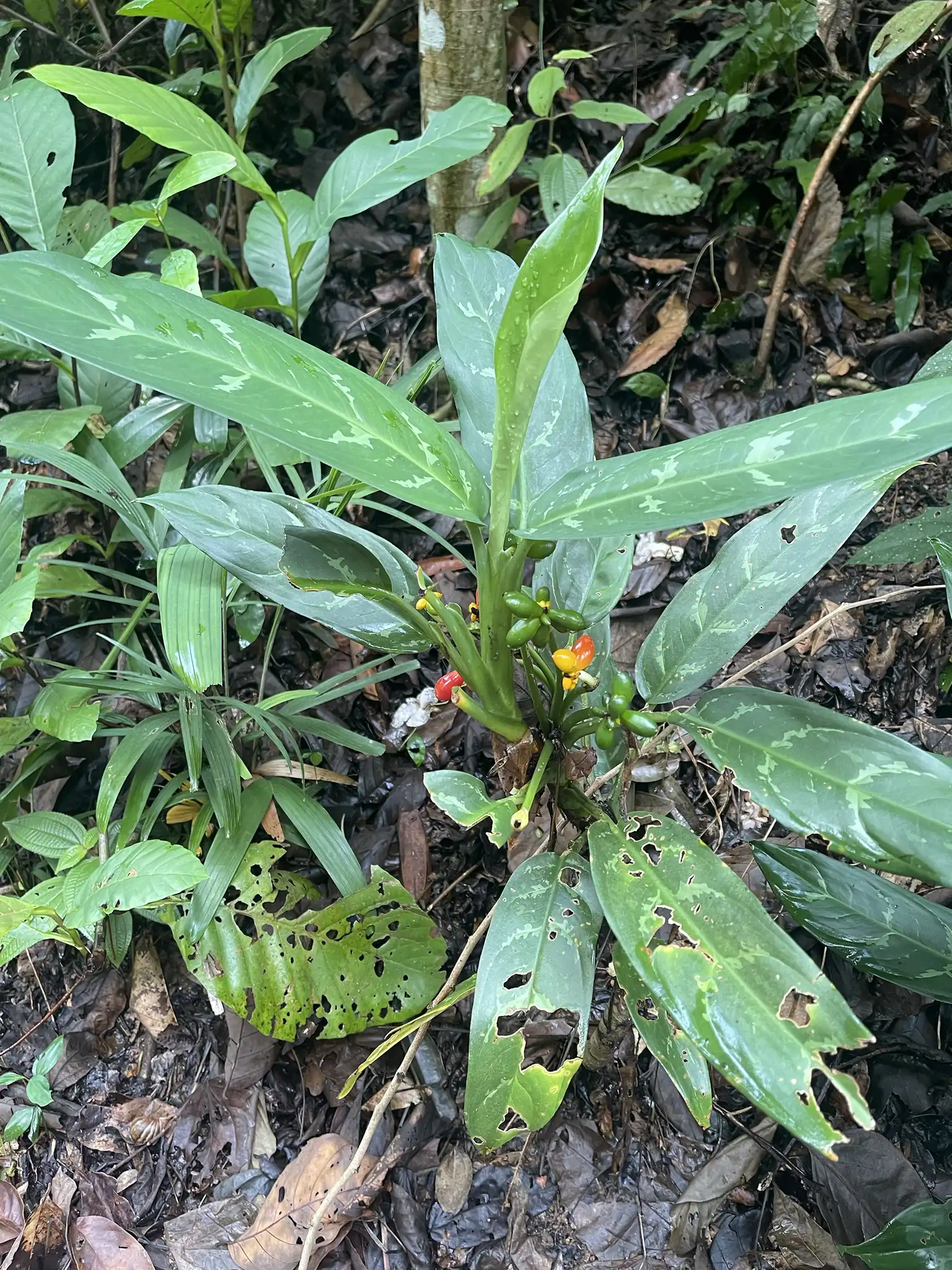
Aglaonema commutatum is an erect, clump-forming evergreen subshrub native to the humid understories of Central Malesia. The lance-shaped, dark green leaves feature distinct silver-grey variegation along the lateral veins and emerge tightly rolled from the leaf sheaths.
The cane-like stems become visible and slightly woody with age, resembling sugarcane. In summer, mature specimens may produce inconspicuous greenish-white spathes followed by clusters of bright red berries, though flowering is rare indoors.
Uses & Benefits:
Essentials
At a Glance
Plant Type
Tropical
Height
18"
Width
18"
Light
Partial Sun, Shade
Zones
10
Water
Low to moderate
Humidity
High preferred
Lifespan
Perennial
Native To
Central Malesia
Toxicity
Toxic if ingested; skin irritant
Bloom period
Summer
In flower about 3 months of the year
Marketplace
Where to Buy
Shipping costs Year-round shipping Free shipping
Planting
How to Grow
- Select a pot with excellent drainage holes and fill it with a rich, organic, well-draining potting mix.
- Position the plant in a warm indoor location receiving low to medium indirect light, avoiding direct sunlight.
- Water thoroughly only when the top two inches of the potting mix feels dry to the touch.
- Wipe the leaves occasionally with a damp cloth to remove dust and maintain clean, efficient foliage.
Pro Tip
While this species tolerates low-light indoor spaces, it is highly sensitive to heavy, constantly wet soil; always allow the top two inches of media to dry completely to prevent fatal root rot.
Keep It Thriving
Care Guide
Do
- Allow the potting mix to dry out slightly between waterings to prevent root rot.
- Maintain warm indoor temperatures above 50°F year-round.
- Provide high humidity levels where possible, or use a humidifier in dry indoor air.
Don't
- Never allow the pot to sit in standing water or a waterlogged saucer.
- Do not expose the plant to direct, scorching sunlight which burns the variegated foliage.
- Avoid pruning aggressively into old, leafless woody stems as they may fail to regenerate.
Seasonal Care Calendar
| Task | Jan | Feb | Mar | Apr | May | Jun | Jul | Aug | Sep | Oct | Nov | Dec |
|---|---|---|---|---|---|---|---|---|---|---|---|---|
| Fertilize | ||||||||||||
| Pest Check | ||||||||||||
| Propagate | ||||||||||||
| Prune |
Watch Out For
Pests & Diseases
Common Pests
Common Diseases
In the Garden
Landscape Uses & Companions
Landscape Uses
Companion Plants
Multiply
Propagation Methods
Good to Know
Common Questions
Chinese Evergreen questions
What zones can Chinese Evergreen grow in?
Chinese Evergreen is hardy in USDA Zone 10. Inside that range it survives winter in the ground; outside it, grow it as an annual or a container plant you protect.
When does Chinese Evergreen bloom?
Chinese Evergreen typically blooms in summer through summer. Exact timing shifts a week or two with your zone — Sow's bloom calendar maps it to your garden.
Does Chinese Evergreen need full sun?
Chinese Evergreen does best in part shade.
Is Chinese Evergreen drought tolerant?
Yes — once established (usually after the first full season), Chinese Evergreen handles dry spells with minimal watering. Water deeply its first year to build the root system that makes that possible.
Keep exploring
Explore the genus
Hardy in your zone?
Grow Chinese Evergreen with confidence
See it in a design of your actual yard, get zone-matched care reminders, and track it season by season in your garden journal.