11 named cultivars
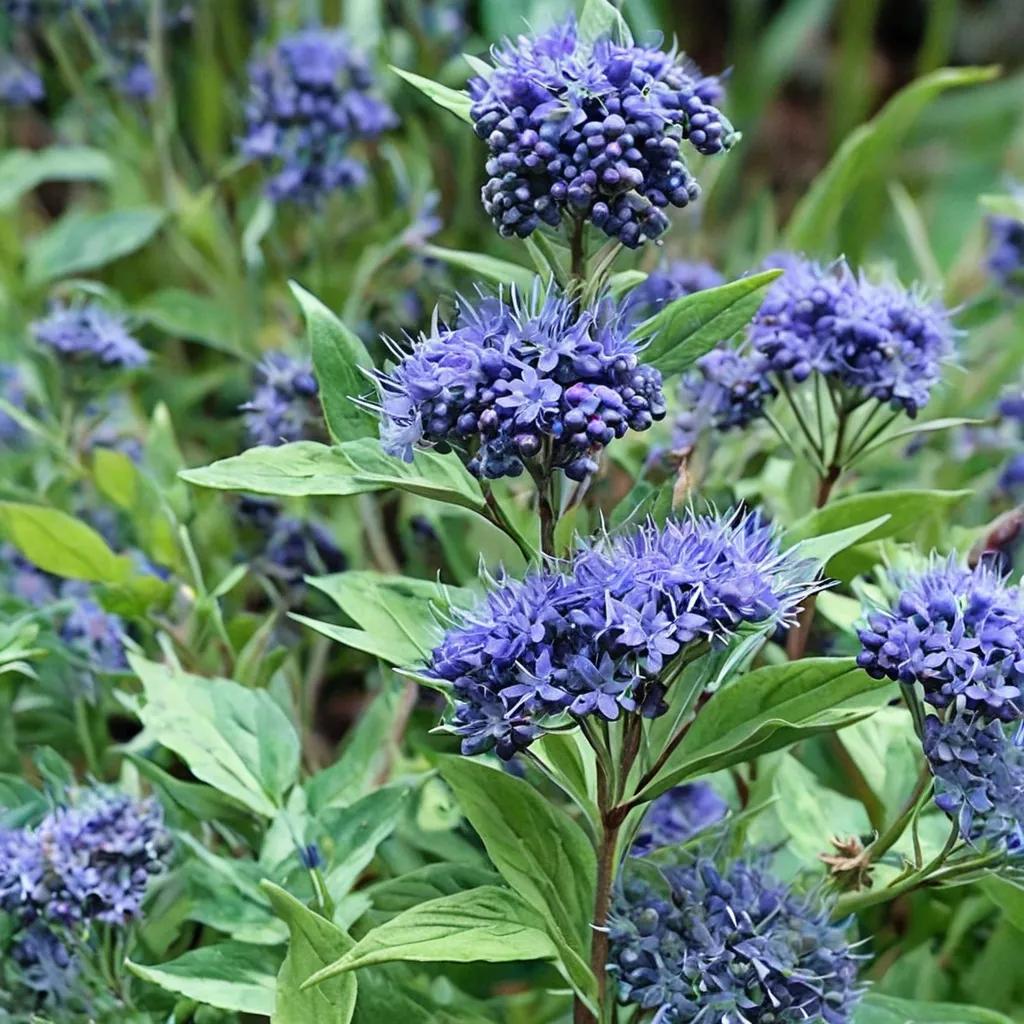 ‘Longwood Blue’'Longwood Blue' Bluebeard
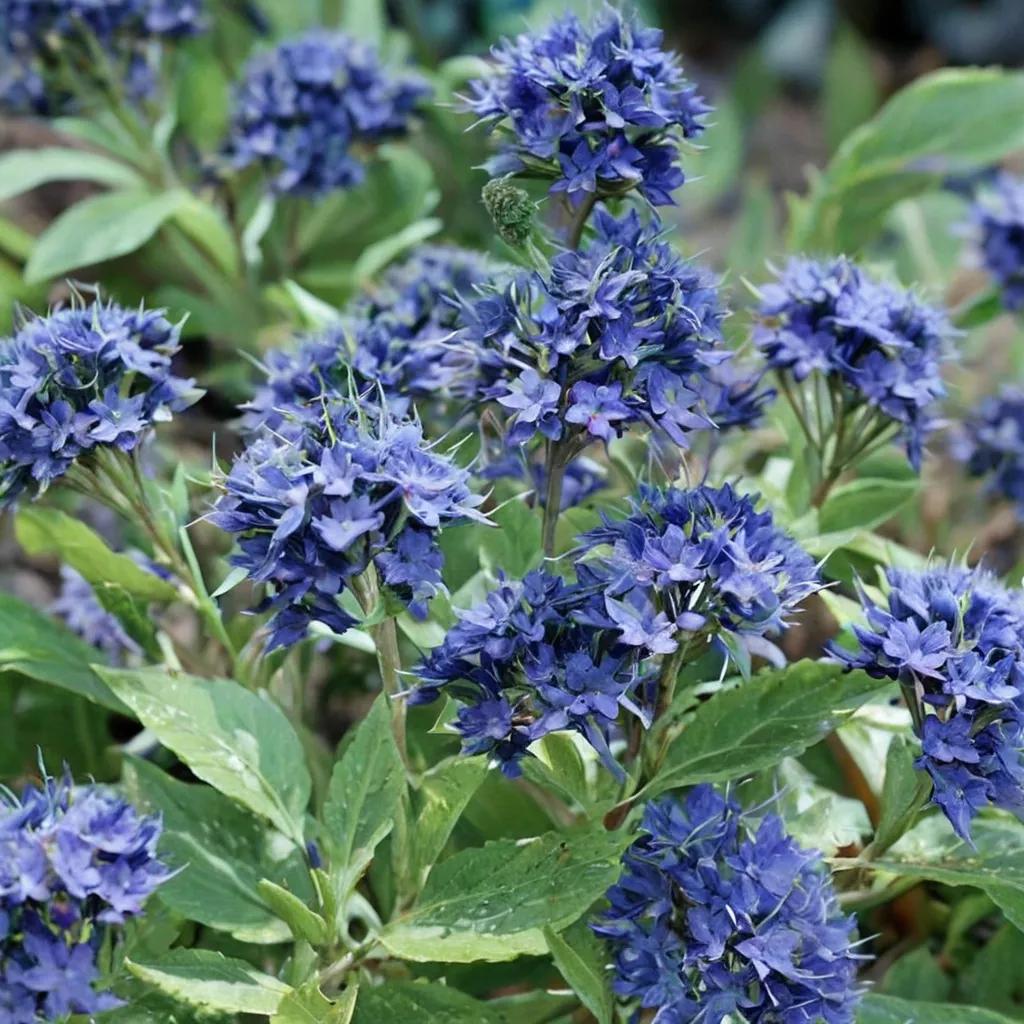 ‘First Choice’Bluebeard Caryopteris
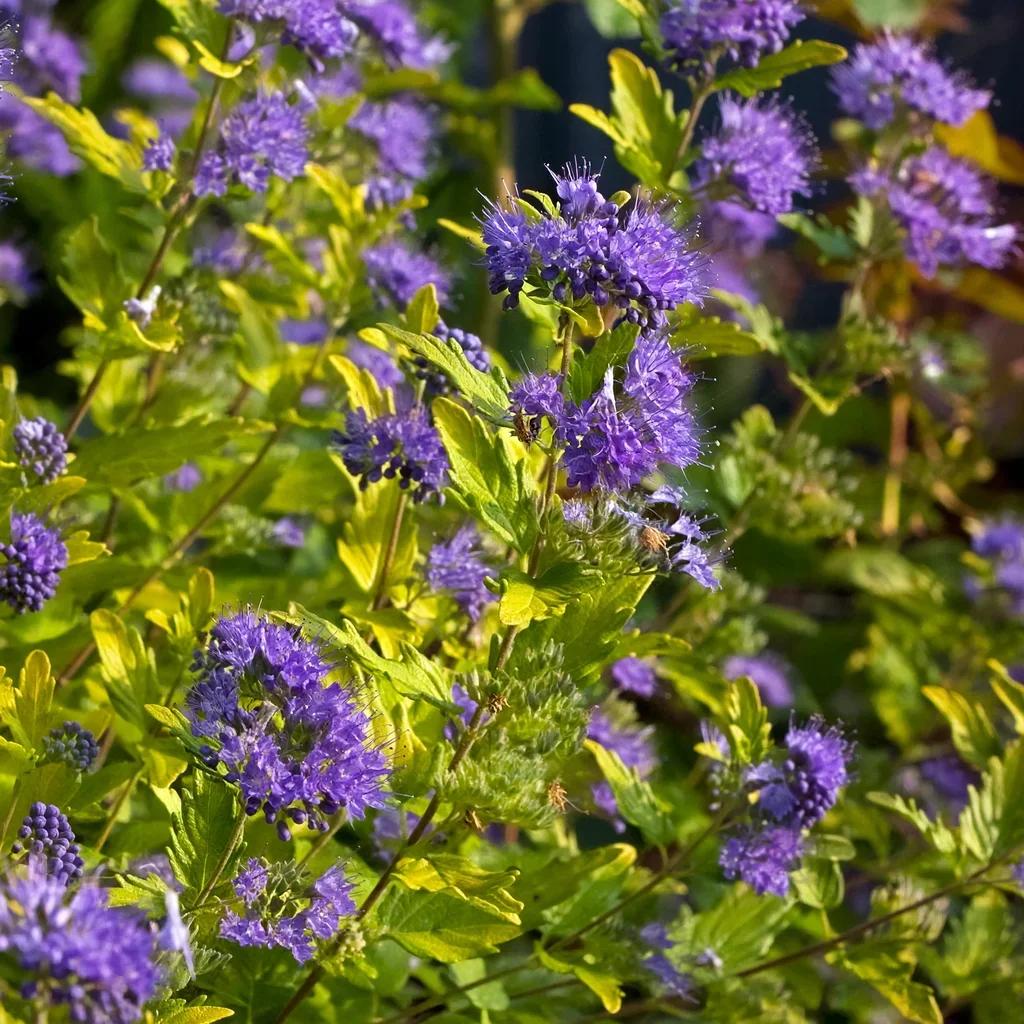 ‘Sunshine Blue II’Sunshine Blue II Bluebeard
 ‘Beekeeper’Beekeeper Bluebeard
 ‘Dark Knight’Dark Knight Caryopteris
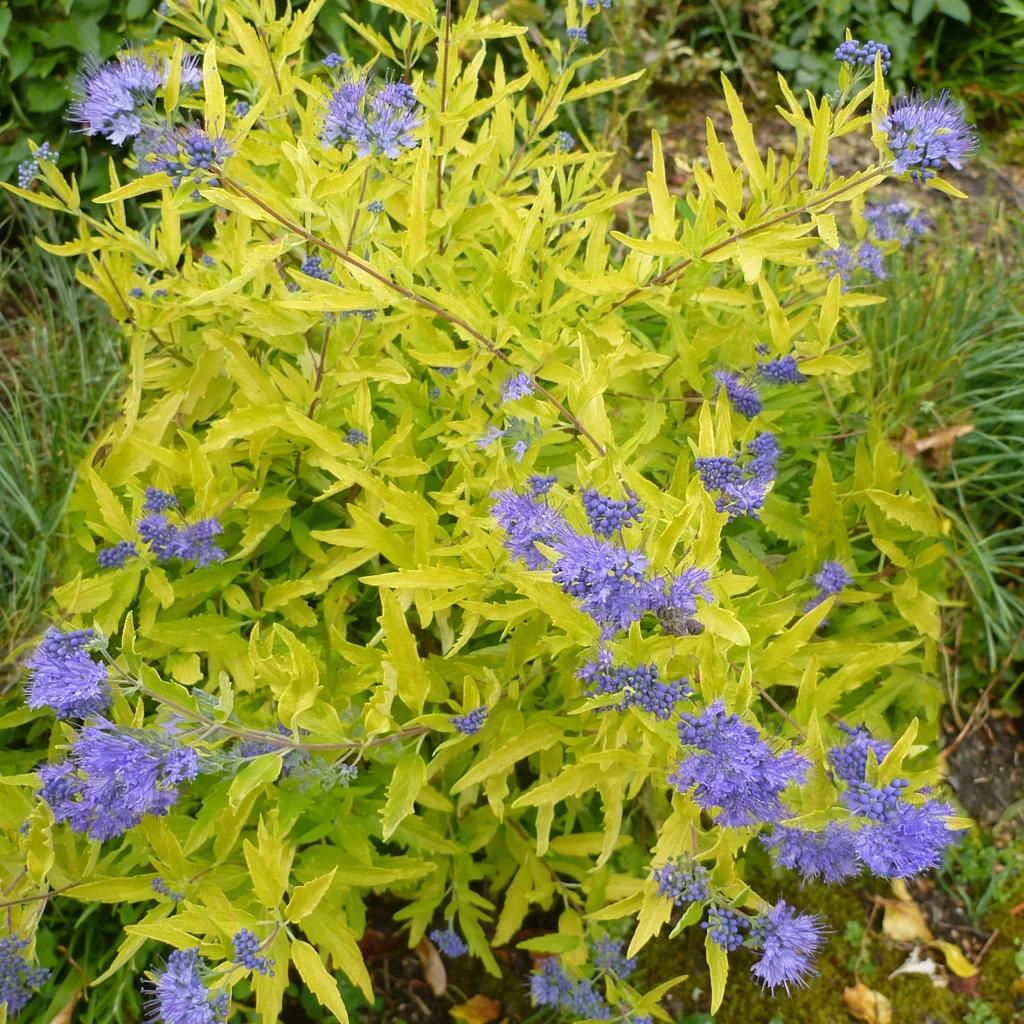 ‘Worcester Gold’Worcester Gold Caryopteris
 ‘Blue Mist’Blue Mist Caryopteris
 ‘Beyond Midnight’Beyond Midnight Bluebeard
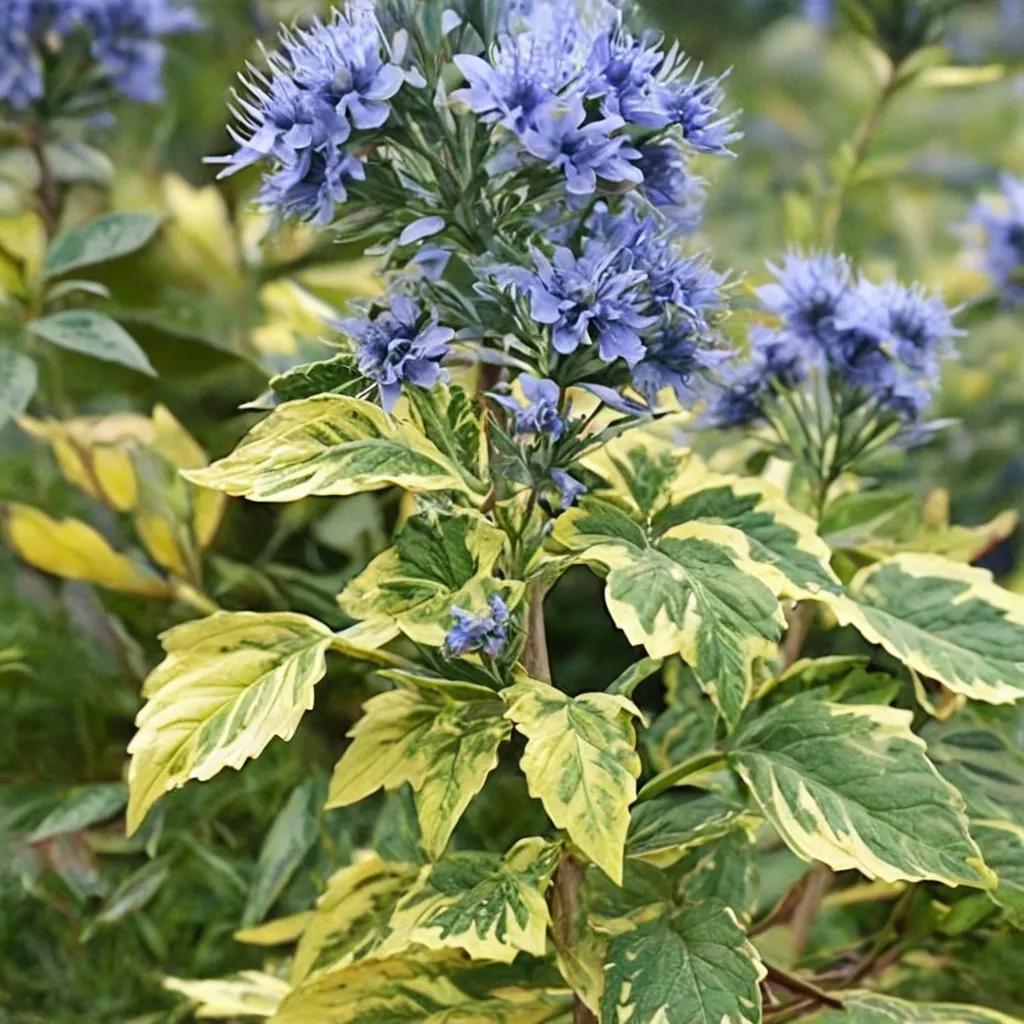 ‘Summer Sorbet’Summer Sorbet Caryopteris
 ‘Gold Crest’Gold Crest Bluebeard
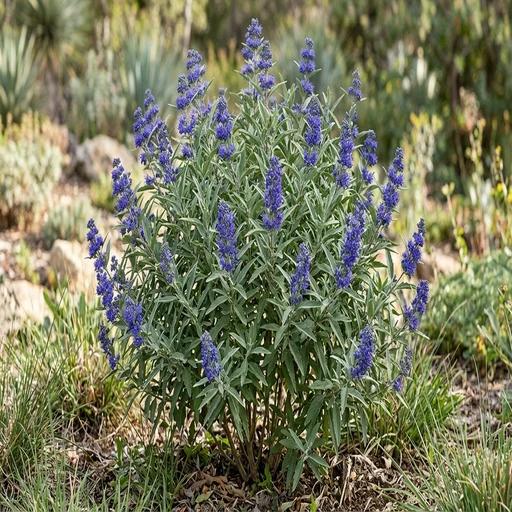 ‘Sapphire Surf’Sapphire Surf Bluebeard
The Story
Plant Bio
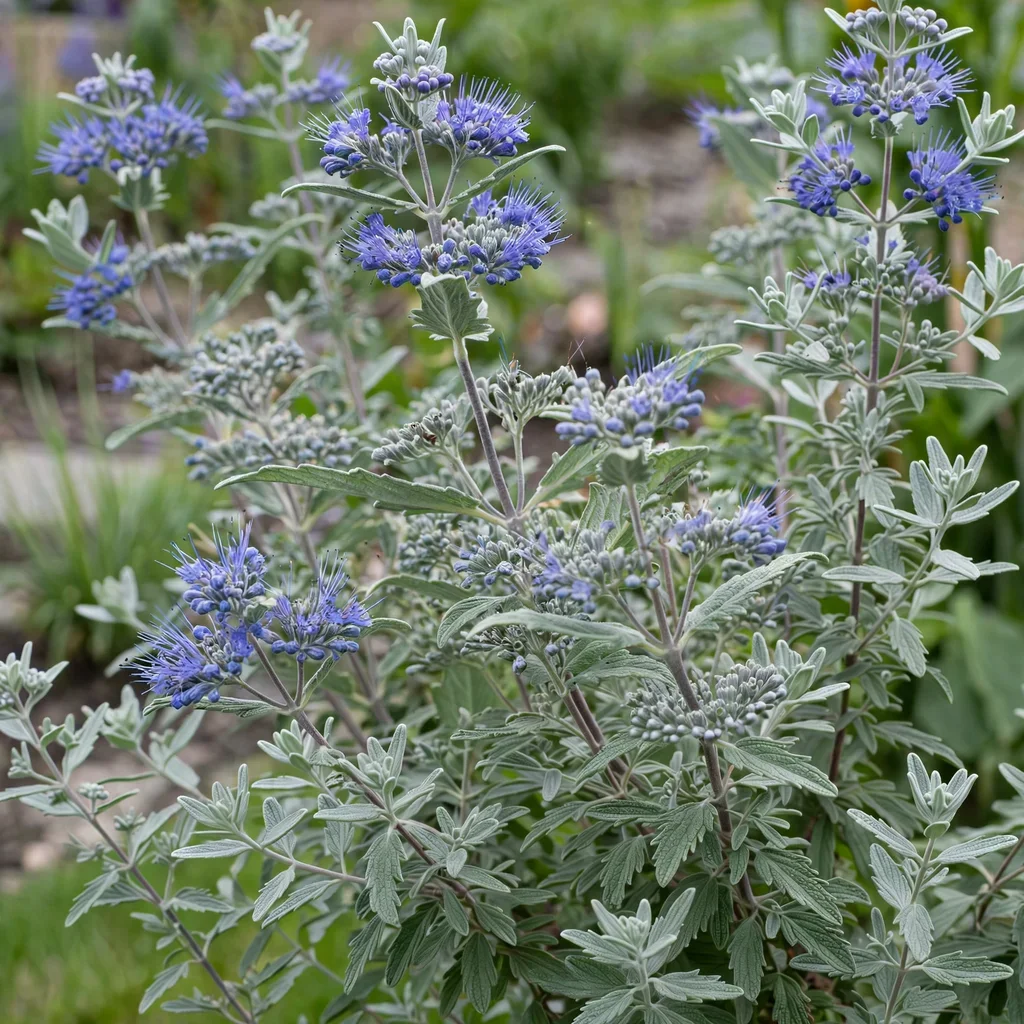
Caryopteris x clandonensis, bluebeard, is a compact deciduous subshrub raised from two Asian species, forming a rounded mound two to three feet high and about as wide. Aromatic grey-green leaves sit on square stems, and dense clusters of small blue to violet flowers open along the upper stems in late summer and early autumn.
It flowers on wood made the same season, so it is pruned like a perennial rather than a shrub: cut the whole plant back hard in early spring and it rebuilds and flowers on the new growth. Left unpruned it goes woody, sparse and shy of flower. Sharp drainage matters more than cold hardiness — wet winter soil kills it far more often than frost.
Uses & Benefits:
Essentials
At a Glance
Plant Type
Shrub
Height
30"
Width
36"
Light
Full Sun, Partial Sun
Zones
5, 6, 7, 8, 9
Water
Low
Humidity
Low
Lifespan
Perennial
Native To
Garden hybrid of Asian species
Toxicity
Non-toxic
Planting
How to Grow
- Plant in full sun in sharply drained soil.
- Avoid heavy clay and any spot that stays wet.
- Water while establishing, then only in drought.
- Cut the whole plant back hard in early spring.
- Leave the old stems standing over winter.
- Feed sparingly; lean soil gives sturdier growth.
Pro Tip
Prune it like a perennial, not a shrub — cut back to a foot in early spring and it flowers harder on the new wood.
Keep It Thriving
Care Guide
Do
- Give it full sun and sharp drainage ☀️
- Cut back hard in early spring ✂️
- Leave old stems on through winter 🍂
- Plant it where bees can reach it 🐝
Don't
- Plant it in heavy, wet winter soil ❌
- Prune it in autumn ❌
- Feed it richly — it flops ❌
Seasonal Care Calendar
| Task | Jan | Feb | Mar | Apr | May | Jun | Jul | Aug | Sep | Oct | Nov | Dec |
|---|---|---|---|---|---|---|---|---|---|---|---|---|
| Enjoy | ||||||||||||
| Prune |
Watch Out For
Pests & Diseases
Common Pests
Common Diseases
In the Garden
Landscape Uses & Companions
Landscape Uses
Companion Plants
Multiply
Propagation Methods
Good to Know
Common Questions
Bluebeard questions
What zones can Bluebeard grow in?
Bluebeard is hardy in USDA Zones 5–9. Inside that range it survives winter in the ground; outside it, grow it as an annual or a container plant you protect.
Is Bluebeard deer resistant?
Yes — Bluebeard is rated deer-resistant. Deer typically pass it over, though extreme hunger can override any plant's defenses.
When does Bluebeard bloom?
Bluebeard typically blooms in late summer to fall through late summer. Exact timing shifts a week or two with your zone — Sow's bloom calendar maps it to your garden.
Does Bluebeard need full sun?
Bluebeard does best in full sun to part shade. In hot climates, afternoon shade keeps blooms fresher longer.
Is Bluebeard drought tolerant?
Yes — once established (usually after the first full season), Bluebeard handles dry spells with minimal watering. Water deeply its first year to build the root system that makes that possible.
More Caryopteris to compare
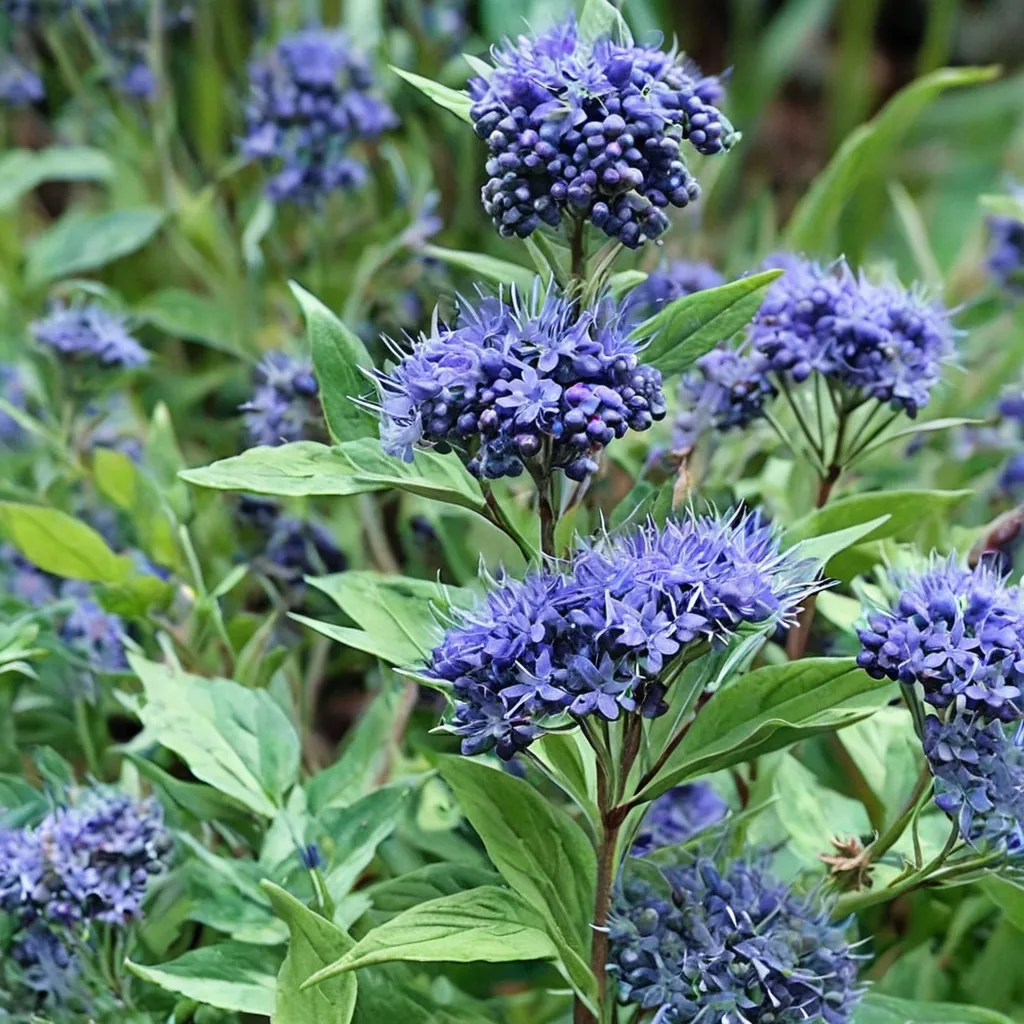
'Longwood Blue' Bluebeard
Caryopteris x clandonensis 'Longwood Blue'
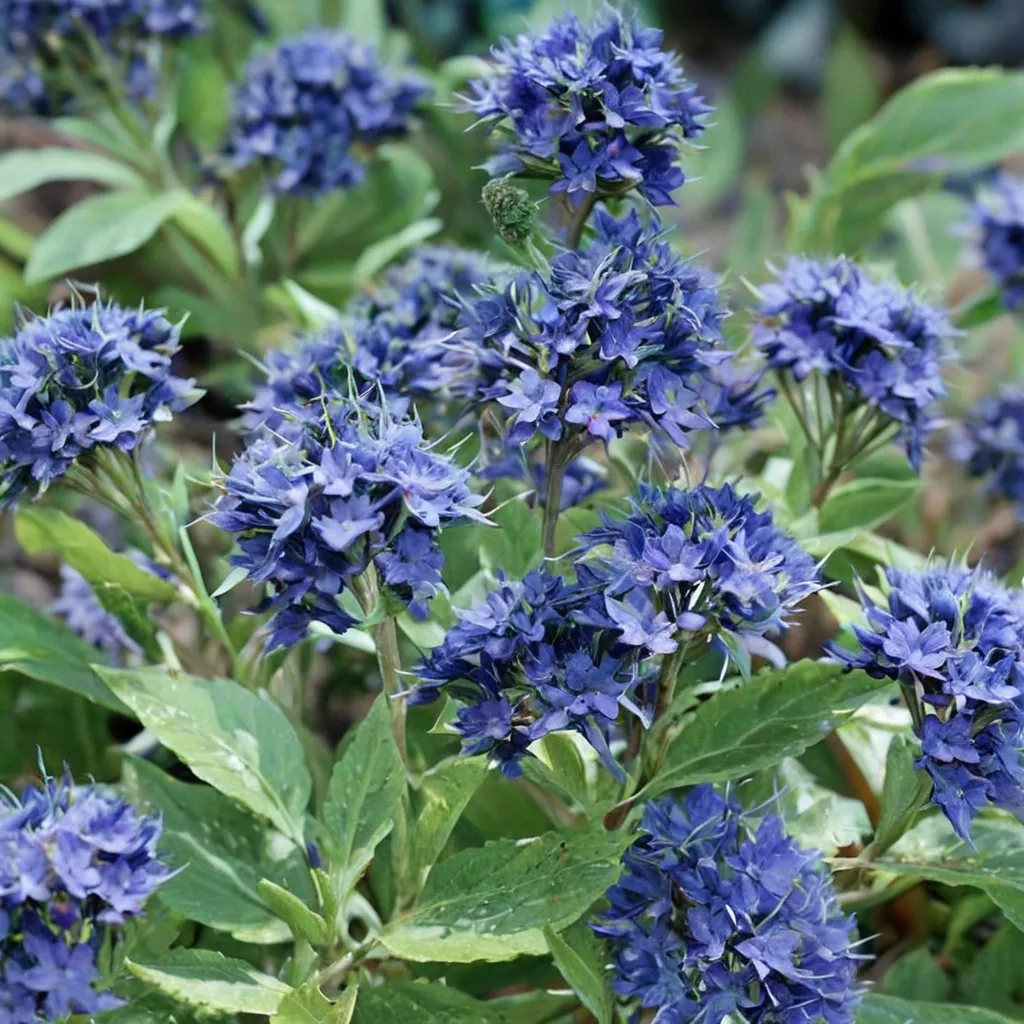
Bluebeard Caryopteris
Caryopteris x clandonensis 'First Choice'
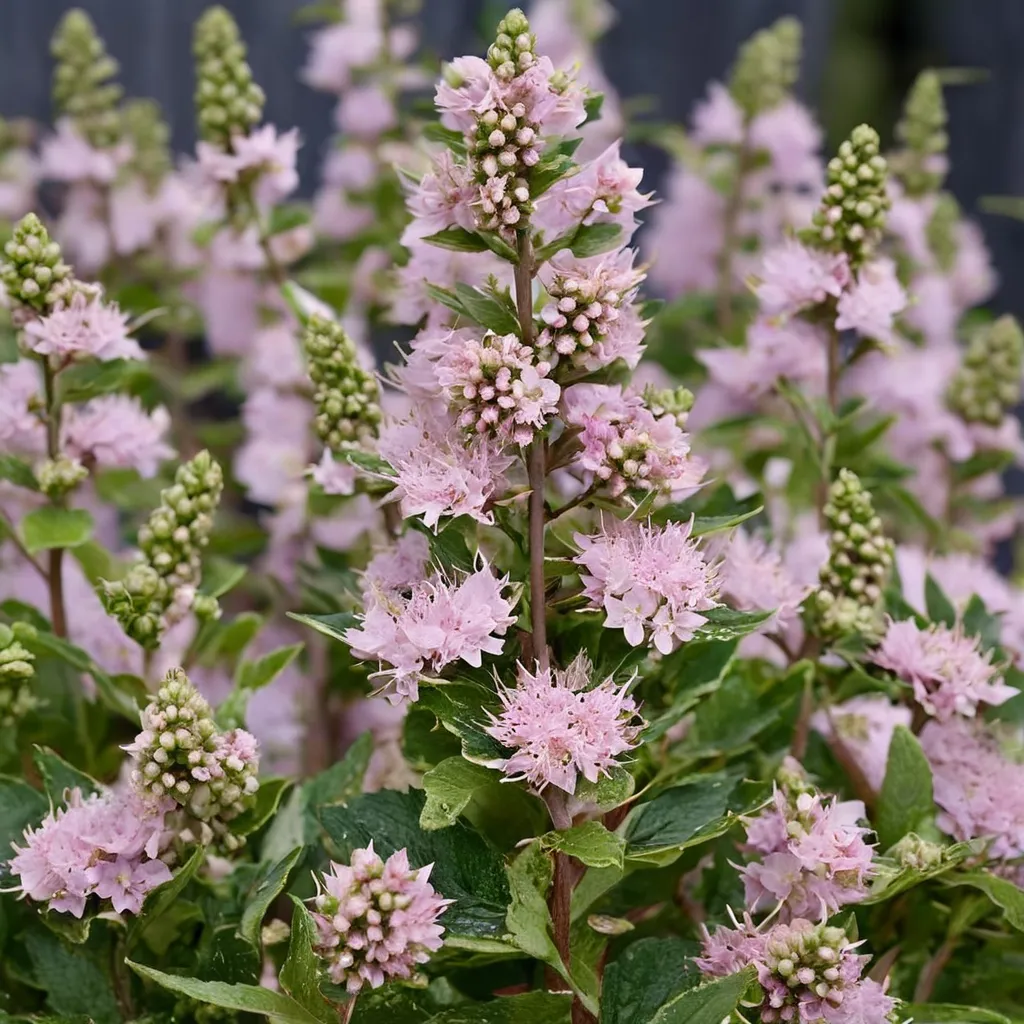
Pavilion Pink Bluebeard
Caryopteris incana 'Pavilion Pink'
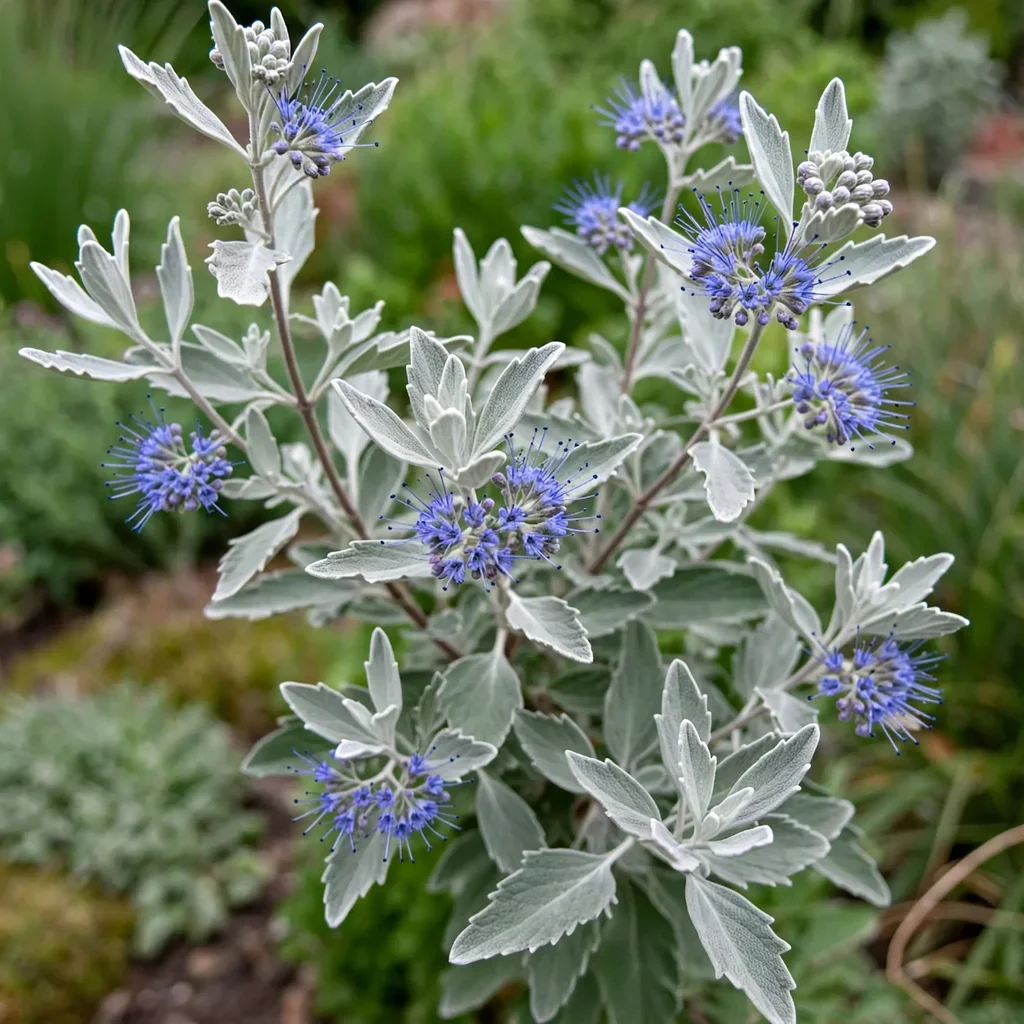
Pavilion Blue Bluebeard
Caryopteris incana 'Pavilion Blue'
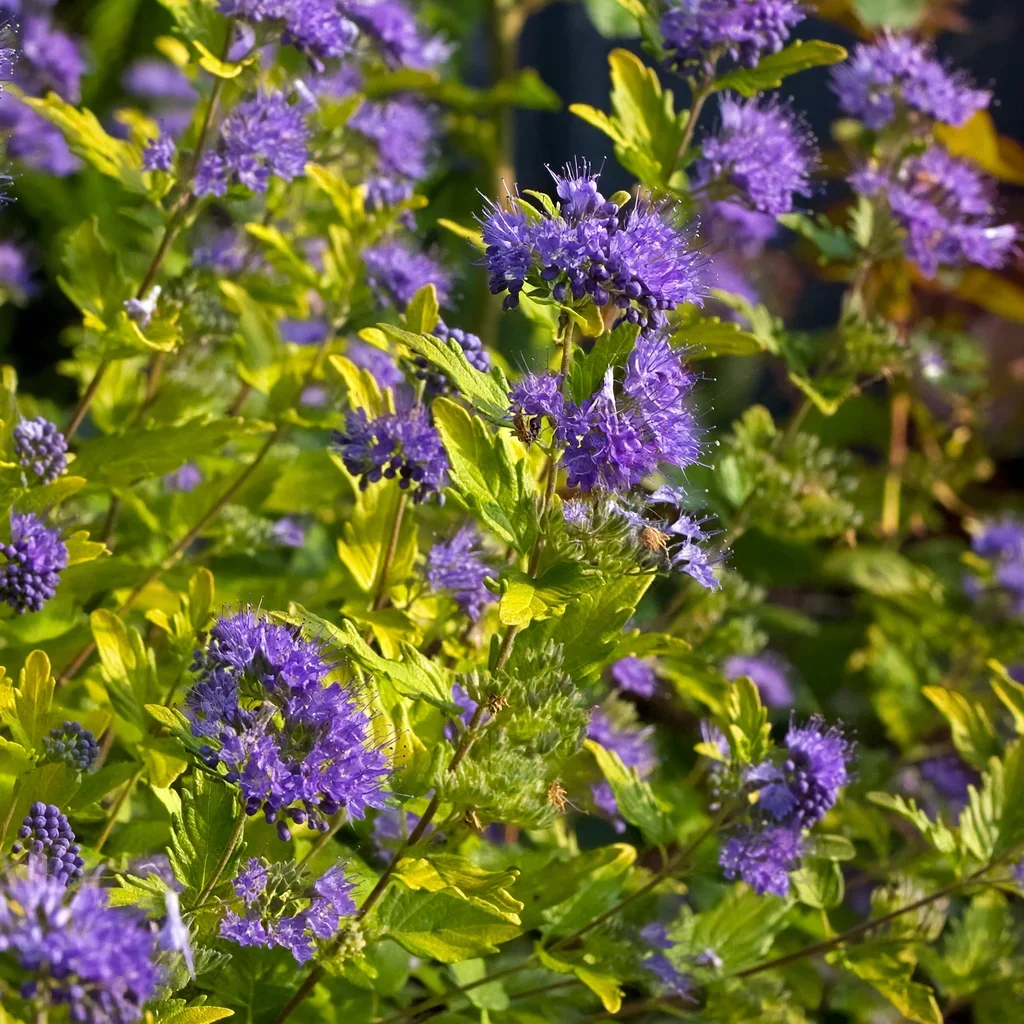
Sunshine Blue II Bluebeard
Caryopteris x clandonensis 'Sunshine Blue II'
Beekeeper Bluebeard
Caryopteris x clandonensis 'Beekeeper'
Keep exploring
Explore the genus
Hardy in your zone?
Grow Bluebeard with confidence
See it in a design of your actual yard, get zone-matched care reminders, and track it season by season in your garden journal.