The Story
Plant Bio
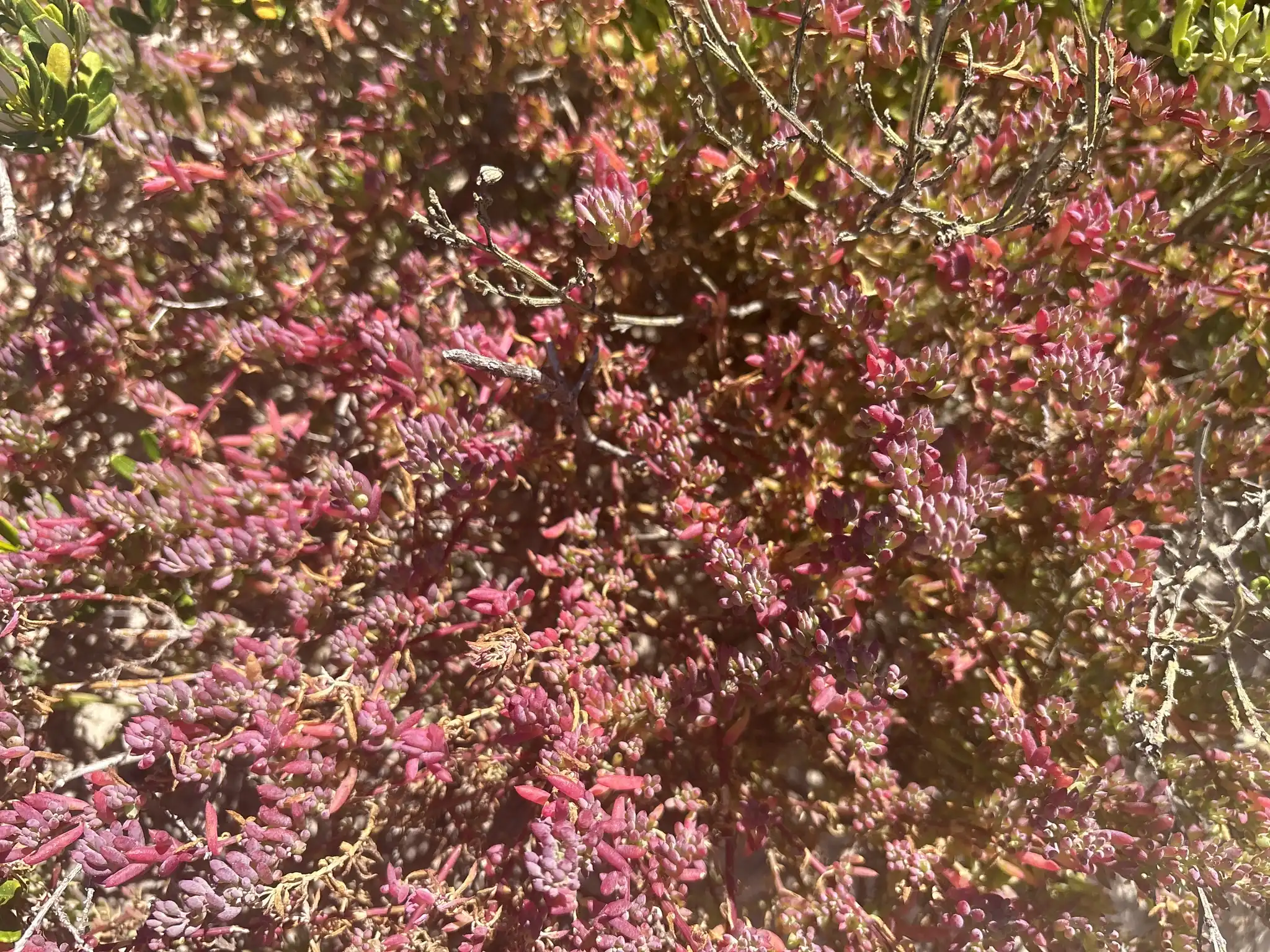
Suaeda australis, known as Austral seablite, is a sprawling, succulent perennial herb native to coastal saltmarshes and estuaries. The dense, branching stems carry fleshy, linear leaves that shift in color from bright green to rich purplish-red throughout the year.
This highly salt-tolerant species thrives in waterlogged, saline soils where most other plants fail, producing inconspicuous clusters of tiny green or pink flowers from spring through summer. The edible, salty foliage serves as a traditional wild food and acts as a reliable indicator of soil salinity.
Uses & Benefits:
Essentials
At a Glance
Plant Type
Perennial
Height
35"
Width
79"
Light
Full Sun, Partial Sun
Zones
8, 9, 10
Water
High
Humidity
High
Lifespan
Short-lived perennial
Native To
Australia
Toxicity
Non-toxic
Bloom period
Spring – Summer
In flower about 6 months of the year
Planting
How to Grow
- Select a planting site in full sun to partial shade with moist, saline, or alkaline soil.
- Incorporate sand or clay to mimic natural coastal mudflat conditions if planting in standard garden beds.
- Water regularly to keep the soil consistently moist, especially during the initial establishment phase.
- Apply a diluted sea-mineral or sea-salt solution occasionally if growing away from maritime exposure.
Pro Tip
To maintain vigor in inland gardens, irrigate periodically with water containing trace sea salts, as growing this species in purely fresh, acidic soils leads to rapid decline.
Keep It Thriving
Care Guide
Do
- Keep the soil moist to periodically waterlogged to mimic its natural saltmarsh habitat.
- Grow in full sun to maximize the rich purplish-red foliage coloration.
- Use a diluted sea-salt solution periodically when cultivating in non-saline inland soils.
Don't
- Do not allow the soil to dry out completely, especially when combined with acidic leaching.
- Do not prune heavily into old, leafless woody stems as regrowth will be poor.
- Do not apply standard high-phosphorus fertilizers, which are unnecessary for this species.
Seasonal Care Calendar
| Task | Jan | Feb | Mar | Apr | May | Jun | Jul | Aug | Sep | Oct | Nov | Dec |
|---|---|---|---|---|---|---|---|---|---|---|---|---|
| Harvest | ||||||||||||
| Pest Check | ||||||||||||
| Propagate | ||||||||||||
| Prune |
Watch Out For
Pests & Diseases
Common Pests
Common Diseases
In the Garden
Landscape Uses & Companions
Landscape Uses
Multiply
Propagation Methods
Good to Know
Common Questions
Austral Seablite questions
What zones can Austral Seablite grow in?
Austral Seablite is hardy in USDA Zones 8–10. Inside that range it survives winter in the ground; outside it, grow it as an annual or a container plant you protect.
When does Austral Seablite bloom?
Austral Seablite typically blooms in spring through summer. Exact timing shifts a week or two with your zone — Sow's bloom calendar maps it to your garden.
Does Austral Seablite need full sun?
Austral Seablite does best in full sun to part shade. In hot climates, afternoon shade keeps blooms fresher longer.
Is Austral Seablite drought tolerant?
Yes — once established (usually after the first full season), Austral Seablite handles dry spells with minimal watering. Water deeply its first year to build the root system that makes that possible.
Keep exploring
Explore the genus
Hardy in your zone?
Grow Austral Seablite with confidence
See it in a design of your actual yard, get zone-matched care reminders, and track it season by season in your garden journal.