The Story
Plant Bio
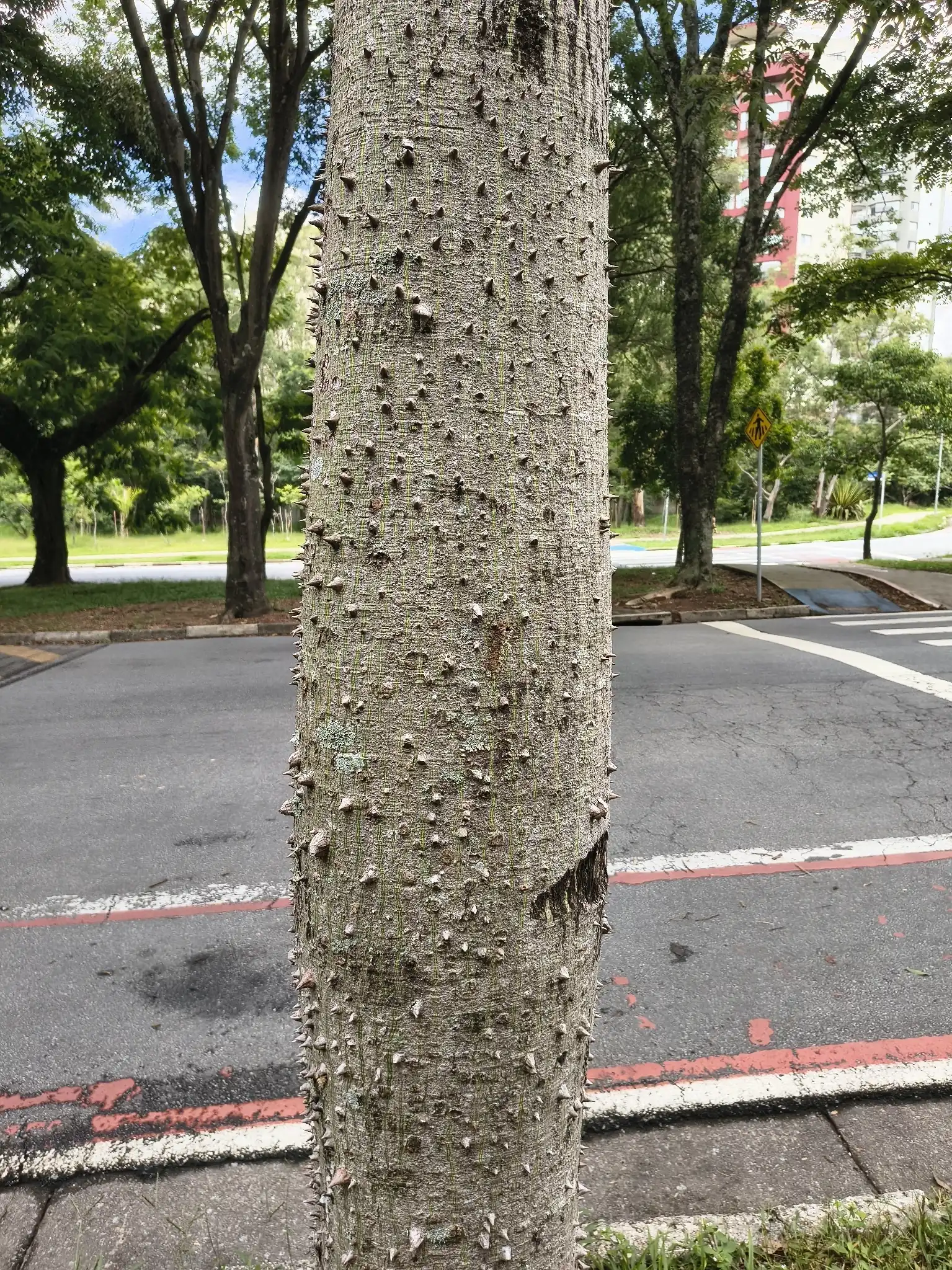
Ceiba speciosa, the silk floss tree, is a deciduous South American tree reaching fifty to sixty feet in height, distinguished by a swollen, bottle-shaped green trunk heavily armed with stout, conical prickles. In late fall, the canopy drops its leaves to reveal large, five-petaled pink flowers with creamy, speckled throats that resemble hibiscus blooms.
As the tree matures, the trunk transitions from bright green to gray while retaining its sharp, defensive armor. The woody seed pods split open in spring to release a white, cotton-like fiber once used to stuff life preservers and cushions.
Uses & Benefits:
Essentials
At a Glance
Plant Type
Tree
Height
708"
Width
590"
Light
Full Sun
Zones
9, 10
Water
Low to Moderate
Humidity
Unknown
Lifespan
Long-lived
Native To
Argentina and Brazil
Toxicity
Non-toxic
Bloom period
Late fall – Early winter
In flower about 2 months of the year
Planting
How to Grow
- Select a planting site in full sun with deep, sandy or loamy soil that drains rapidly.
- Dig a hole twice as wide as the root ball but no deeper, ensuring the trunk flare sits slightly above the surrounding soil level.
- Water deeply immediately after planting to settle the soil, then allow the top few inches to dry completely before watering again.
- Establish a wide mulched zone around the base to protect the soft, spiked trunk from lawnmowers and string trimmers.
Pro Tip
Plant this tree well away from walkways and patios where the sharp trunk spikes pose a physical hazard, and ensure the soil is exceptionally well-drained to prevent fatal root rot.
Keep It Thriving
Care Guide
Do
- Prune minimally, focusing only on dead, damaged, or crossing branches.
- Allow the soil to dry out thoroughly between waterings once the tree is established.
- Protect young, thin-barked trees from frost if temperatures threaten to drop below 27°F.
Don't
- Do not plant this tree near high-traffic paths, sidewalks, or play areas where the sharp trunk spikes can cause injury.
- Do not overwater or plant in low-lying areas prone to standing water, which triggers fatal root rot.
- Do not prune heavily into old, leafless wood, as regrowth is slow and unpredictable.
Seasonal Care Calendar
| Task | Jan | Feb | Mar | Apr | May | Jun | Jul | Aug | Sep | Oct | Nov | Dec |
|---|---|---|---|---|---|---|---|---|---|---|---|---|
| Fertilize | ||||||||||||
| Pest Check | ||||||||||||
| Prune | ||||||||||||
| Winter Prep |
Watch Out For
Pests & Diseases
Common Pests
Common Diseases
In the Garden
Landscape Uses & Companions
Landscape Uses
Companion Plants
Multiply
Propagation Methods
Good to Know
Common Questions
Silk Floss Tree questions
What zones can Silk Floss Tree grow in?
Silk Floss Tree is hardy in USDA Zones 9–10. Inside that range it survives winter in the ground; outside it, grow it as an annual or a container plant you protect.
Is Silk Floss Tree deer resistant?
Not reliably. Deer may browse Silk Floss Tree, especially tender spring growth — plan on repellents or fencing where pressure is high.
When does Silk Floss Tree bloom?
Silk Floss Tree typically blooms in late fall through early winter. Exact timing shifts a week or two with your zone — Sow's bloom calendar maps it to your garden.
Does Silk Floss Tree need full sun?
Silk Floss Tree does best in full sun (6+ hours).
Is Silk Floss Tree drought tolerant?
Yes — once established (usually after the first full season), Silk Floss Tree handles dry spells with minimal watering. Water deeply its first year to build the root system that makes that possible.
Keep exploring
Explore the genus
Hardy in your zone?
Grow Silk Floss Tree with confidence
See it in a design of your actual yard, get zone-matched care reminders, and track it season by season in your garden journal.