Also known as Frangipani · 9 saves
Plumeria
Plumeria, the genus most gardeners know as frangipani. We track 3 varieties; the ones most used by real gardeners.
The 3 most-saved Plumeria varieties
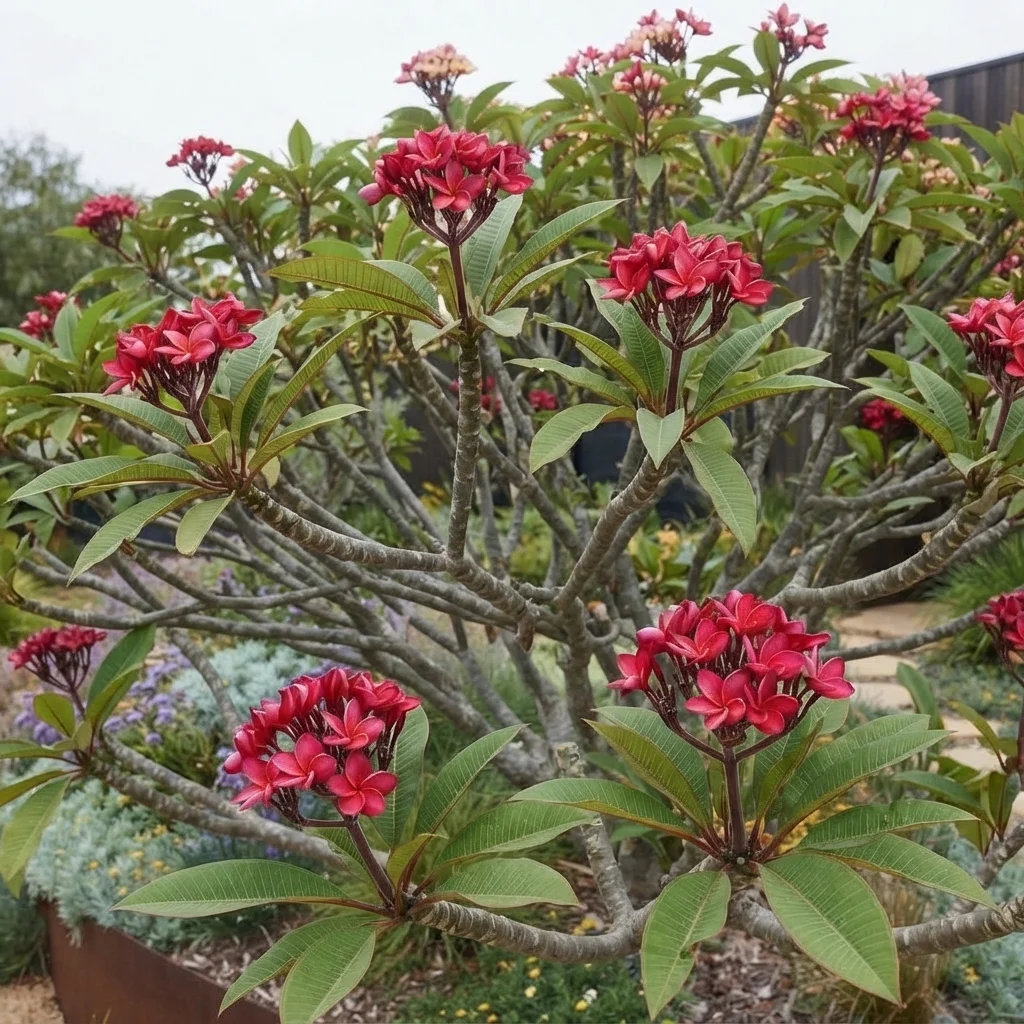
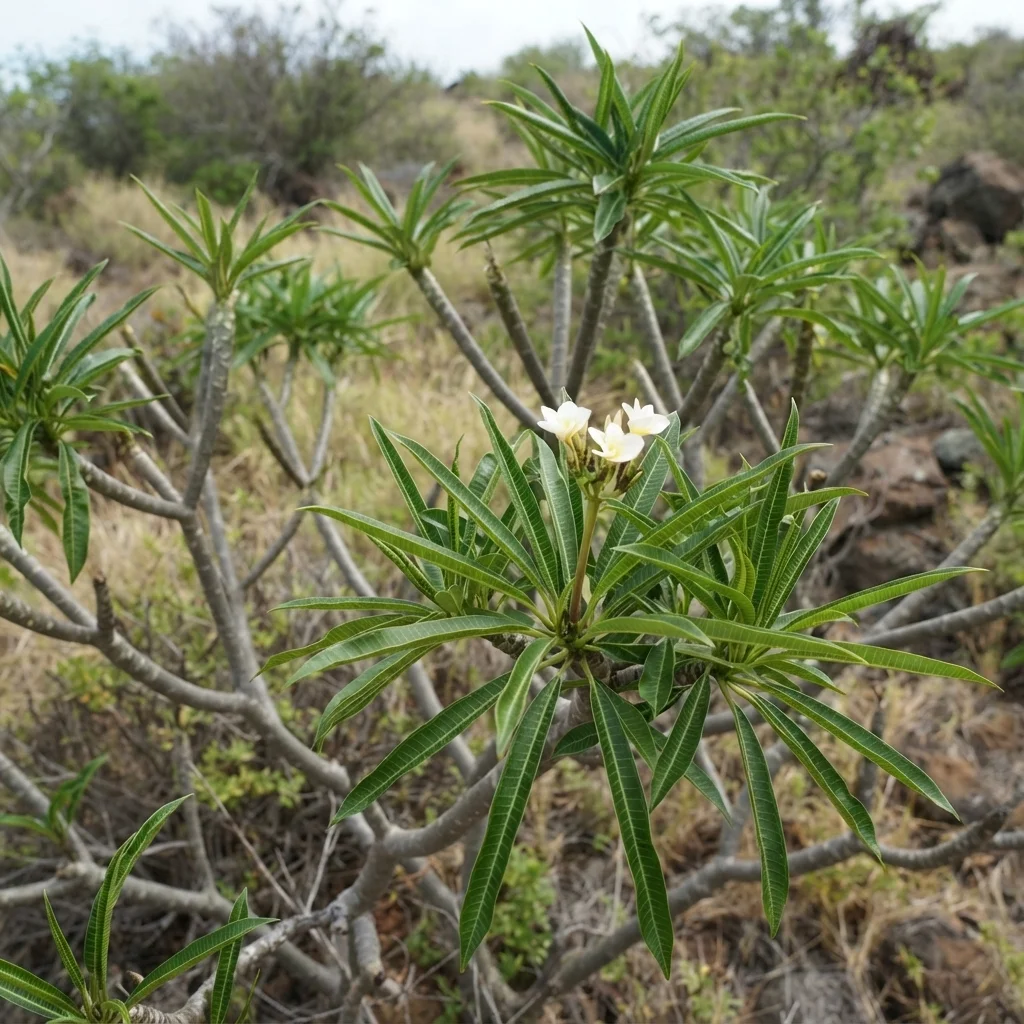
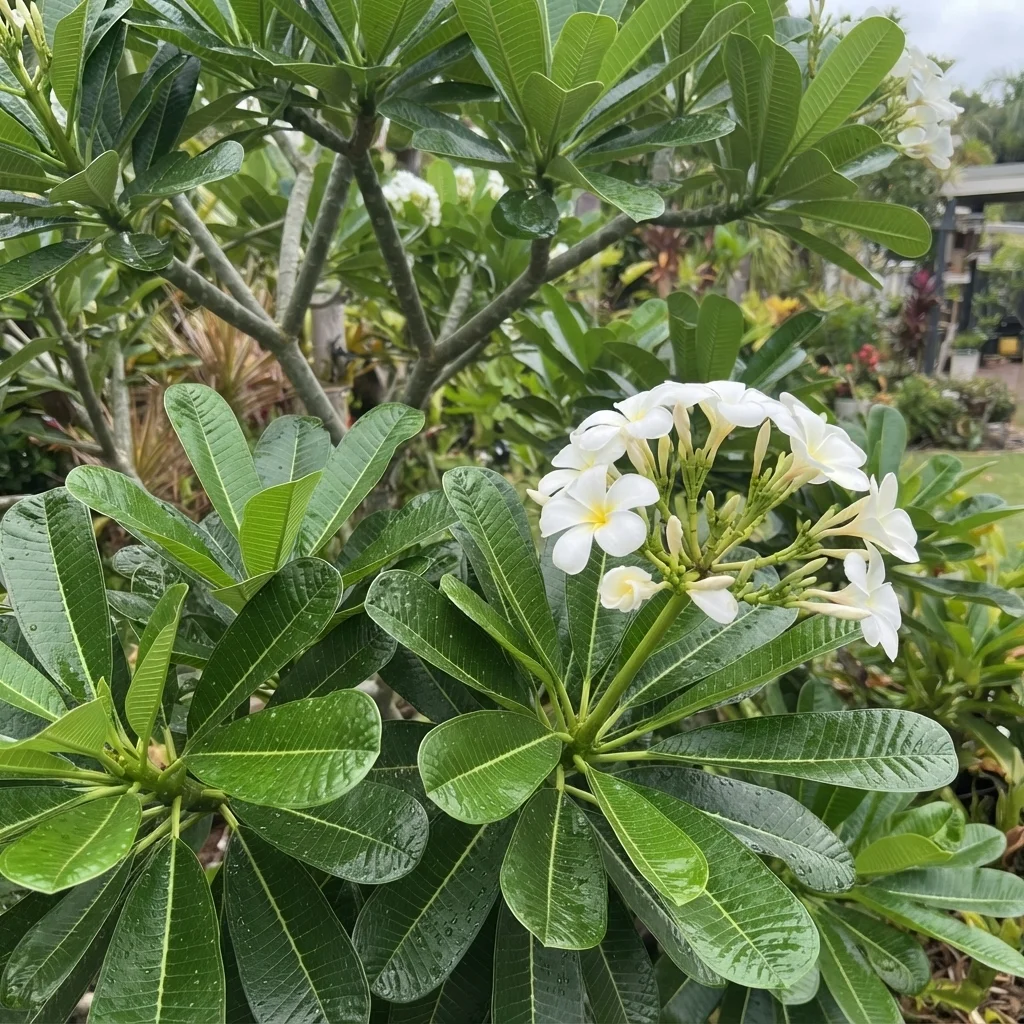
3 species of Plumeria
Each one is a parent of the varieties above.
Track your Plumeria in Sow
Save the Plumeria you grow and get care reminders timed to your zone.
How to grow Plumeria
Whats common across all Plumeria varieties in our catalog — drawn from the care records of the 3 most-grown of them.
The Plumeria year
- PruneFebruary and March100% of varieties
Prune lightly in late winter or early spring to shape or remove damaged wood before new growth begins.
- FertilizeApril–August100% of varieties
Apply a balanced or high-phosphorus fertilizer during the active summer growing season.
- Check for PestsJune–August100% of varieties
Monitor leaf undersides and axils for spider mites, scale, and mealybugs.
- Winter PrepOctober and November100% of varieties
Move container-grown plants indoors to a frost-free area and cease watering as leaves drop.


Do
- Grow in containers in regions that experience frost so the plant can be moved indoors for winter protection.
- Allow stem cuttings to dry and callus for several days before planting them into a well-draining medium.
- Apply a balanced or high-phosphorus fertilizer during the active spring and summer growing season.
- Water deeply only when the top soil layer is dry during active growth.
- Use a high-phosphorus fertilizer to encourage flower development.
Avoid
- Do not water the plant during its winter dormancy when it is devoid of leaves.
- Do not prune blindly into old, leafless wood that lacks visible live nodes.
- Do not allow the plant to sit in standing water or waterlogged, heavy soils.
- Do not overwater during winter dormancy, as soggy soil causes fatal root rot.
What goes wrong with Plumeria
| Problem | What you'll see | What to do |
|---|---|---|
| Spider mites | Fine webbing and stippling on leaves. | Apply insecticidal soap or horticultural oils. |
| Scale insects | Small raised bumps on stems and leaves, accompanied by sticky honeydew. | Treat with horticultural oils or systemic insecticides. |
| Mealybugs | White cottony masses in leaf axils. | Wipe with a rubbing alcohol swab or apply insecticidal soap. |
| Nematodes | Root galling and unthrifty growth. | Manage soil drainage and avoid planting in contaminated ground. |
| Root rot | Mushy stem bases, yellowing leaves, and sudden plant collapse. | Improve soil drainage, reduce watering, and use sterilized planting media. |
| Rust fungus | Bright orange or yellow pustules on leaf undersides, leading to premature defoliation. | Apply copper-based fungicides and clear away fallen leaves. |
| Root rot / Stem rot | Mushy, water-soaked black base caused by overwatering. | Cut away infected tissue, improve drainage, and apply fungicide. |
Making more Plumeria
Stem Cuttings
- Take stem cuttings in spring or summer from healthy branches.
- Allow the cuttings to dry and callous for one week in a shaded area.
- Pot the calloused cuttings in a dry, sandy soil mix.
- Keep the medium barely moist until roots establish.
Stem cuttings
- Cut a mature stem segment during the active growing season.
- Allow the cut end to dry and callus in a shaded area for several days.
- Insert the callused end into a well-draining propagation medium.
- Keep the medium barely moist until roots establish and new growth appears.
Plumeria questions
How many types of Plumeria are there?
The Sow catalog tracks 3 distinct Plumeria varieties. The most popular — ranked by 9 real gardeners — are shown first above.
What zones does Plumeria grow in?
Across its varieties, Plumeria covers USDA Zones 10–10. Individual varieties differ — each plant page lists its exact range, and Sow filters the catalog to your zone automatically.
When does Plumeria bloom?
Most Plumeria varieties bloom in late spring, spring. Staggering early, mid, and late varieties extends the genus's season in one bed.
Which Plumeria should I choose?
Start from the most-saved varieties above — popularity across thousands of gardens is a strong signal of reliability — then filter by your zone and sun. In the Sow app you can preview any of them in a photo of your actual yard before you buy.