The Story
Plant Bio
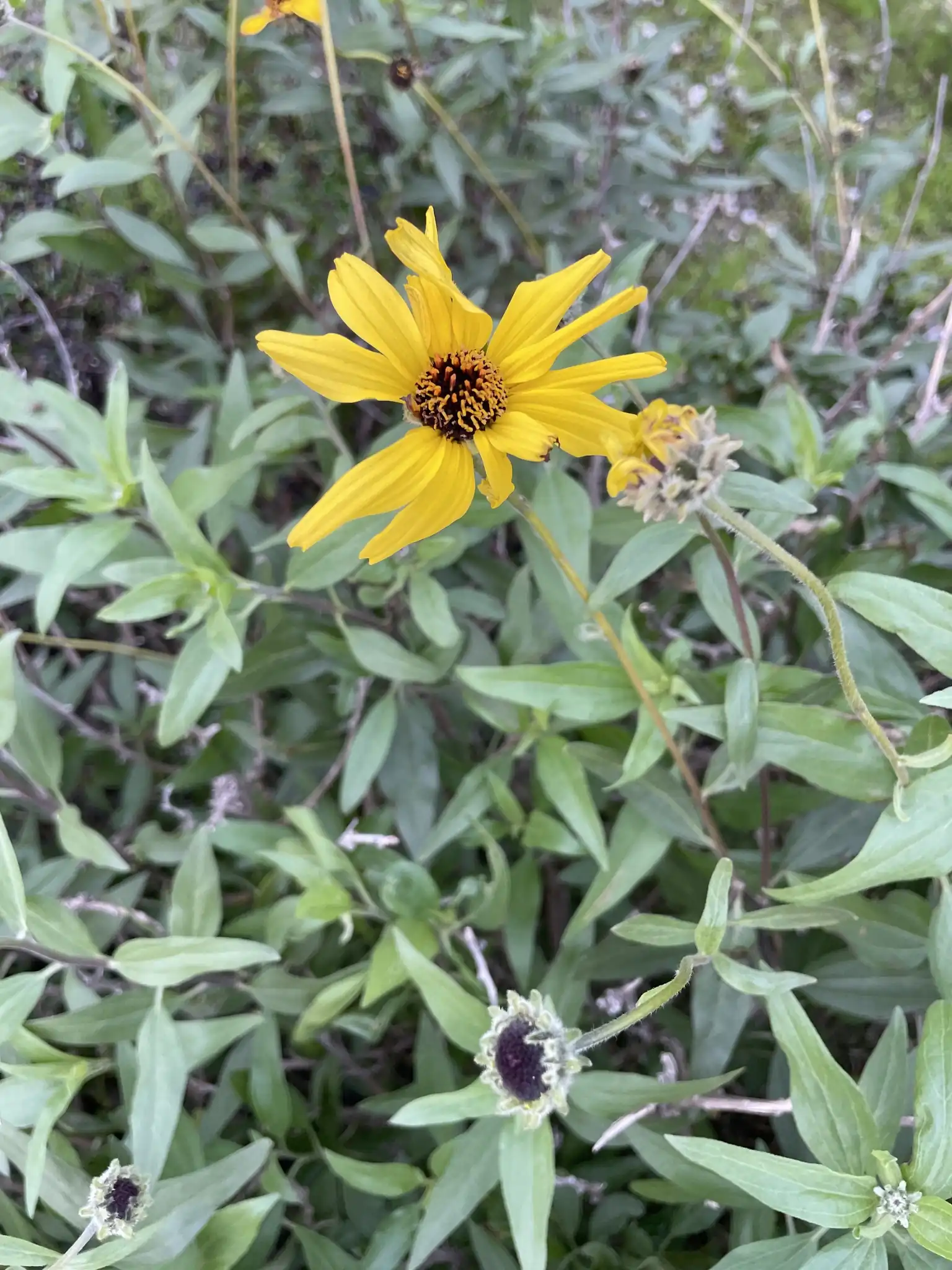
Encelia californica, the California brittlebush, is a fast-growing, rounded subshrub native to coastal Southern California and Baja, reaching three to five feet in height with brittle woody stems and aromatic green leaves. The bright yellow daisy-like flower heads feature contrasting dark purple-brown centers, held singly on long, leafless stalks from winter through spring.
This species is highly adapted to coastal environments, tolerating salt spray and severe drought by shedding leaves or entering semi-dormancy during dry summer months. It provides exceptional habitat value in native gardens, attracting native bees, butterflies, and hummingbirds.
Uses & Benefits:
Essentials
At a Glance
Plant Type
Shrub
Height
60"
Width
60"
Light
Full Sun
Zones
9, 10
Water
Low
Humidity
Low
Lifespan
Short-lived shrub
Native To
North America (California, Mexico)
Toxicity
Non-toxic
Bloom period
Winter – Spring
In flower about 6 months of the year
Planting
How to Grow
- Plant in a full-sun location with exceptionally well-drained sandy, rocky, or loamy soil.
- Water sparingly during the first winter and spring to help the root system establish.
- Cut the entire plant back hard to six-inch stubs in late summer or fall to prevent woody, leggy growth.
- Withhold all supplemental summer water once the plant is established to prevent root rot.
Pro Tip
Eliminate all summer irrigation once established; watering during the warm months triggers root rot and quickly kills the plant.
Keep It Thriving
Care Guide
Do
- Grow in full sun and sharply drained soil.
- Prune hard every year or two in late summer or fall.
- Allow the plant to go semi-dormant during dry summer periods.
Don't
- Do not irrigate during the summer months once established.
- Do not apply fertilizers, which cause weak and short-lived growth.
- Do not plant in heavy, poorly drained clay soils.
Seasonal Care Calendar
| Task | Jan | Feb | Mar | Apr | May | Jun | Jul | Aug | Sep | Oct | Nov | Dec |
|---|---|---|---|---|---|---|---|---|---|---|---|---|
| Pest Check | ||||||||||||
| Propagate | ||||||||||||
| Prune | ||||||||||||
| Spring Cleanup |
Watch Out For
Pests & Diseases
Common Pests
Common Diseases
In the Garden
Landscape Uses & Companions
Landscape Uses
Multiply
Propagation Methods
Good to Know
Common Questions
California Brittlebush questions
What zones can California Brittlebush grow in?
California Brittlebush is hardy in USDA Zones 9–10. Inside that range it survives winter in the ground; outside it, grow it as an annual or a container plant you protect.
Is California Brittlebush deer resistant?
Not reliably. Deer may browse California Brittlebush, especially tender spring growth — plan on repellents or fencing where pressure is high.
When does California Brittlebush bloom?
California Brittlebush typically blooms in winter through spring. Exact timing shifts a week or two with your zone — Sow's bloom calendar maps it to your garden.
Does California Brittlebush need full sun?
California Brittlebush does best in full sun (6+ hours).
Is California Brittlebush drought tolerant?
Yes — once established (usually after the first full season), California Brittlebush handles dry spells with minimal watering. Water deeply its first year to build the root system that makes that possible.
More Encelia to compare
Keep exploring
Explore the genus
Hardy in your zone?
Grow California Brittlebush with confidence
See it in a design of your actual yard, get zone-matched care reminders, and track it season by season in your garden journal.