The Story
Plant Bio
Schoenoplectus is a genus of rhizomatous emergent aquatic perennials found in wet habitats worldwide. This species forms upright, dense, rush-like clumps of cylindrical, bright green stems that perform vital water-filtration and soil-stabilization roles in wetland ecosystems.
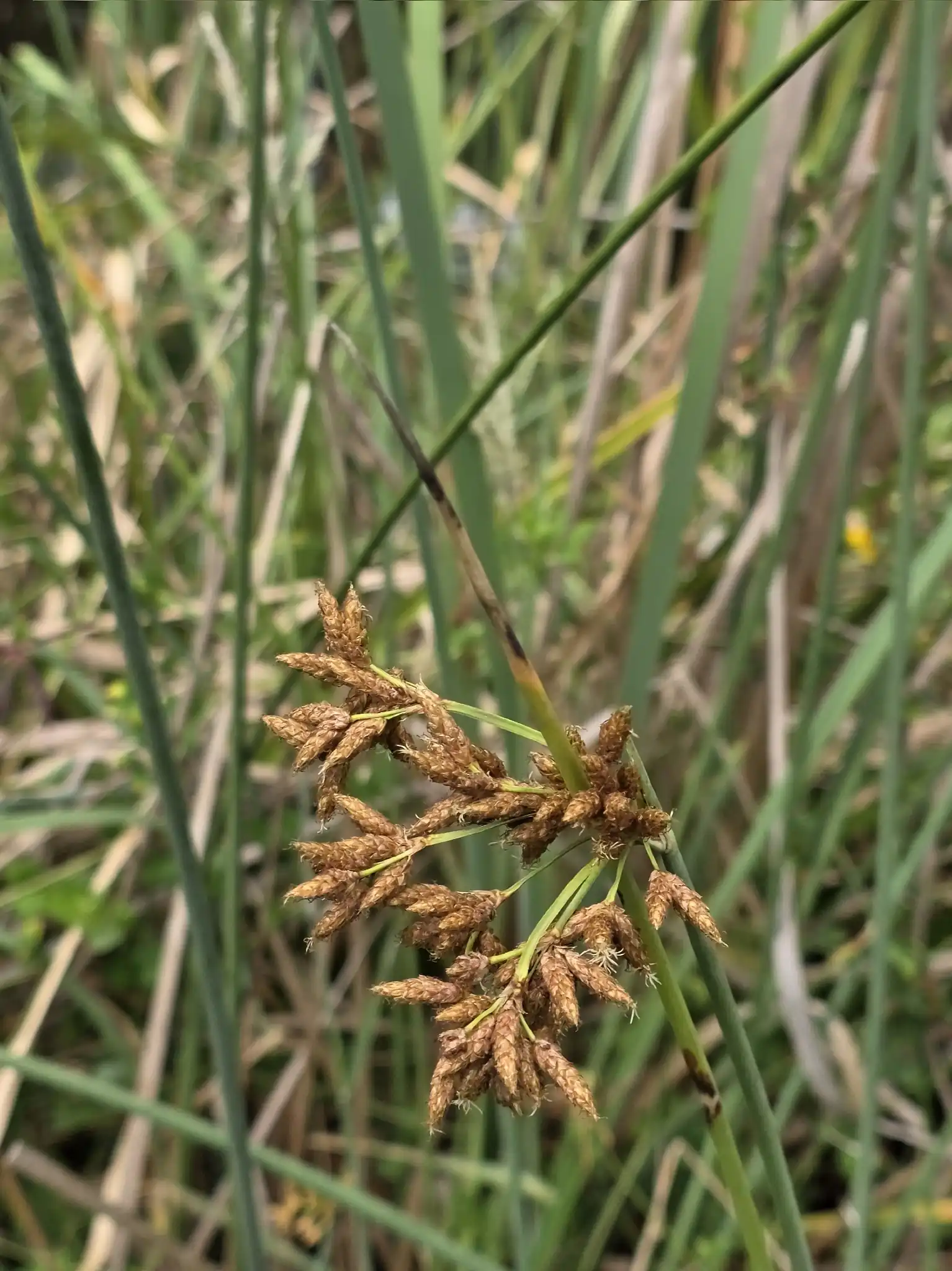
Schoenoplectus tabernaemontani is distinguished by its heavily reduced foliage, where leaf blades are mostly absent or restricted to basal sheaths. In summer, the naked stems terminate in branched, umbel-like clusters of tiny, wind-pollinated brownish spikelets.
Uses & Benefits:
Essentials
At a Glance
Plant Type
Aquatic
Height
96"
Width
48"
Light
Full Sun, Partial Sun
Zones
4, 5, 6, 7, 8, 9
Water
Wet
Humidity
High
Lifespan
Perennial
Native To
North America, Europe, Asia, Africa, Australia
Toxicity
Non-toxic
Bloom period
Late spring – Summer
In flower about 4 months of the year
Planting
How to Grow
- Select a site in full sun with permanently wet soil or standing water up to 18 inches deep.
- Dig a hole twice the width of the root ball and set the rhizome just below the soil surface.
- Anchor the plant firmly in the mud or substrate to prevent it from floating before roots establish.
- Maintain constant moisture, ensuring the soil never dries out completely during the first growing season.
Pro Tip
Plant this species in heavy clay or soil enclosed by root barriers; the aggressive underground rhizomes will rapidly colonize open mud and overwhelm smaller water features if left unrestricted.
Keep It Thriving
Care Guide
Do
- Keep the soil saturated or submerged continuously.
- Install physical root barriers if planting in confined ornamental ponds.
- Cut dead stems back to the waterline in late winter.
Don't
- Do not allow the planting medium to dry out completely.
- Do not prune active green stems during the peak summer growing season.
- Do not plant in deep shade where stems will weaken and flop.
Seasonal Care Calendar
| Task | Jan | Feb | Mar | Apr | May | Jun | Jul | Aug | Sep | Oct | Nov | Dec |
|---|---|---|---|---|---|---|---|---|---|---|---|---|
| Divide | ||||||||||||
| Pest Check | ||||||||||||
| Plant | ||||||||||||
| Spring Cleanup |
Watch Out For
Pests & Diseases
Common Pests
Common Diseases
In the Garden
Landscape Uses & Companions
Landscape Uses
Companion Plants
Multiply
Propagation Methods
Good to Know
Common Questions
Softstem Bulrush questions
What zones can Softstem Bulrush grow in?
Softstem Bulrush is hardy in USDA Zones 4–9. Inside that range it survives winter in the ground; outside it, grow it as an annual or a container plant you protect.
Is Softstem Bulrush deer resistant?
Not reliably. Deer may browse Softstem Bulrush, especially tender spring growth — plan on repellents or fencing where pressure is high.
When does Softstem Bulrush bloom?
Softstem Bulrush typically blooms in late spring through summer. Exact timing shifts a week or two with your zone — Sow's bloom calendar maps it to your garden.
Does Softstem Bulrush need full sun?
Softstem Bulrush does best in full sun to part shade. In hot climates, afternoon shade keeps blooms fresher longer.
Keep exploring
Explore the genus
Grow Softstem Bulrush with confidence
See it in a design of your actual yard, get zone-matched care reminders, and track it season by season in your garden journal.