The Story
Plant Bio
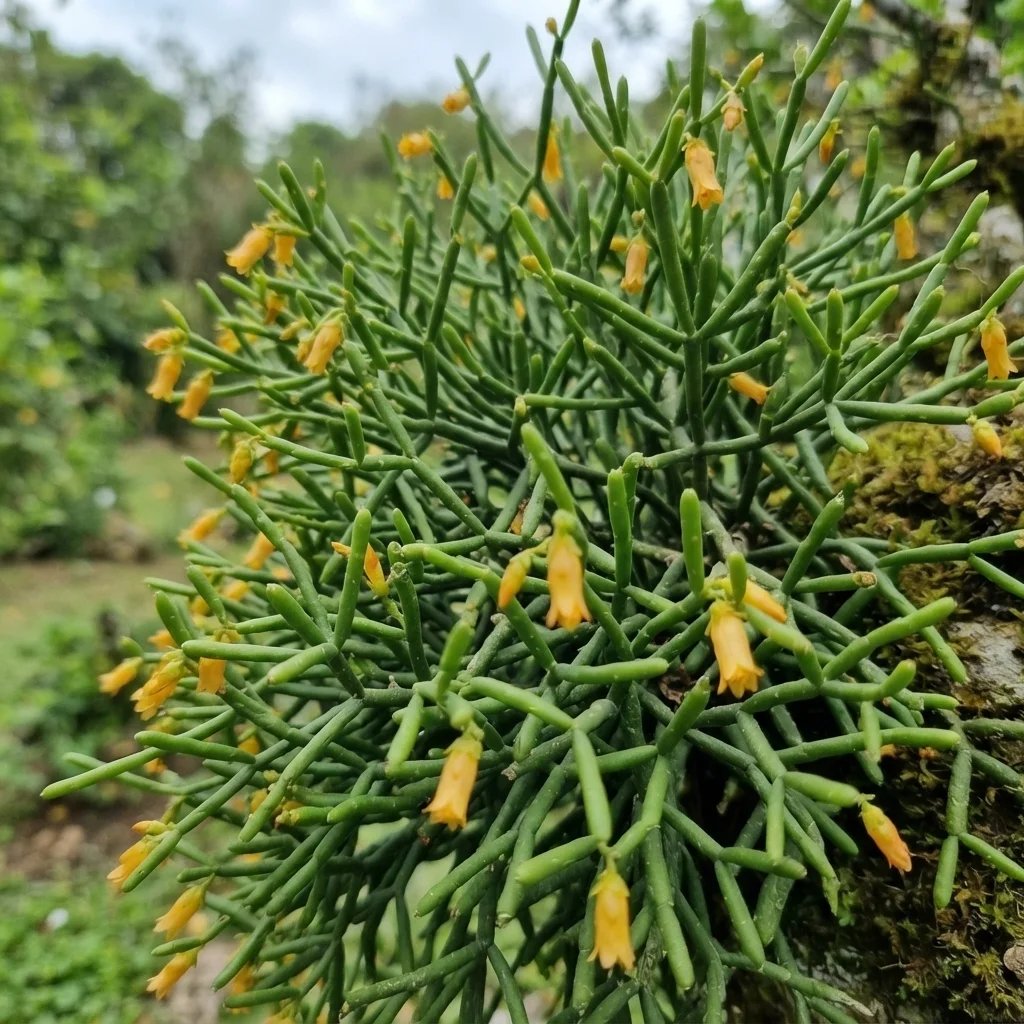
Hatiora salicornioides is an evergreen, epiphytic jungle cactus native to the high-altitude tropical rainforests of Brazil, where it grows on tree trunks and rocks. The plant forms a bushy, multi-branched, erect or arching mound of jointed, succulent stems composed of distinctive bottle-shaped segments.
The deep green segments turn reddish-purple when exposed to bright light or cool temperatures, providing a striking backdrop for the small, bell-shaped yellow to orange flowers that appear at the stem tips in late winter. These blooms are followed by small, translucent white, berry-like fruits.
Uses & Benefits:
Essentials
At a Glance
Plant Type
Cactus Succulent
Height
39"
Width
24"
Light
Partial Sun, Shade
Zones
10
Water
Moderate
Humidity
Medium to high
Lifespan
Long-lived
Native To
Brazil
Toxicity
Non-toxic
Bloom period
Late winter – Early spring
In flower about 2 months of the year
Planting
How to Grow
- Plant in a highly porous, well-draining epiphytic potting mix amended with perlite, pumice, or orchid bark to ensure rapid drainage.
- Position the container in bright, indirect light or filtered sunlight, avoiding harsh midday sun which scorches the succulent stems.
- Water thoroughly when the top layer of the potting medium dries out, keeping the soil lightly moist but never waterlogged during the active growing season.
- Maintain moderate to high ambient humidity by misting the plant or placing the container on a pebble tray filled with water.
Pro Tip
Never prune into the old, woody, leafless basal stems, as these older tissues lack the capacity to sprout new growth; instead, restrict any shaping to snapping or cutting cleanly at a joint segment.
Keep It Thriving
Care Guide
Do
- Provide a container with unobstructed drainage holes to prevent fatal root rot.
- Apply a balanced, water-soluble fertilizer at half-strength every four to six weeks during spring and summer.
- Bring the plant indoors or protect it in a greenhouse when temperatures drop near freezing, as it has very low frost tolerance.
Don't
- Do not treat this jungle epiphyte like a desert cactus by subjecting it to intense, baking sun or prolonged, severe drought.
- Do not overwater or plant in heavy, moisture-retaining loam soil, which causes immediate root collapse.
- Do not fertilize during the autumn and winter months when the plant is not actively growing.
Seasonal Care Calendar
| Task | Jan | Feb | Mar | Apr | May | Jun | Jul | Aug | Sep | Oct | Nov | Dec |
|---|---|---|---|---|---|---|---|---|---|---|---|---|
| Fertilize | ||||||||||||
| Pest Check | ||||||||||||
| Propagate | ||||||||||||
| Prune |
Watch Out For
Pests & Diseases
Common Pests
Common Diseases
In the Garden
Landscape Uses & Companions
Landscape Uses
Companion Plants
Multiply
Propagation Methods
Good to Know
Common Questions
Dancing Bones Cactus questions
What zones can Dancing Bones Cactus grow in?
Dancing Bones Cactus is hardy in USDA Zone 10. Inside that range it survives winter in the ground; outside it, grow it as an annual or a container plant you protect.
Is Dancing Bones Cactus deer resistant?
Yes — Dancing Bones Cactus is rated deer-resistant. Deer typically pass it over, though extreme hunger can override any plant's defenses.
When does Dancing Bones Cactus bloom?
Dancing Bones Cactus typically blooms in late winter through early spring. Exact timing shifts a week or two with your zone — Sow's bloom calendar maps it to your garden.
Does Dancing Bones Cactus need full sun?
Dancing Bones Cactus does best in part shade.
Is Dancing Bones Cactus drought tolerant?
Yes — once established (usually after the first full season), Dancing Bones Cactus handles dry spells with minimal watering. Water deeply its first year to build the root system that makes that possible.
Keep exploring
Explore the genus
Hardy in your zone?
Grow Dancing Bones Cactus with confidence
See it in a design of your actual yard, get zone-matched care reminders, and track it season by season in your garden journal.