Also known as Orchid Cactus · 40 saves
Epiphyllum
Epiphyllum, the genus most gardeners know as orchid cactus. We track 5 varieties; the ones most used by real gardeners.
The 5 most-saved Epiphyllum varieties
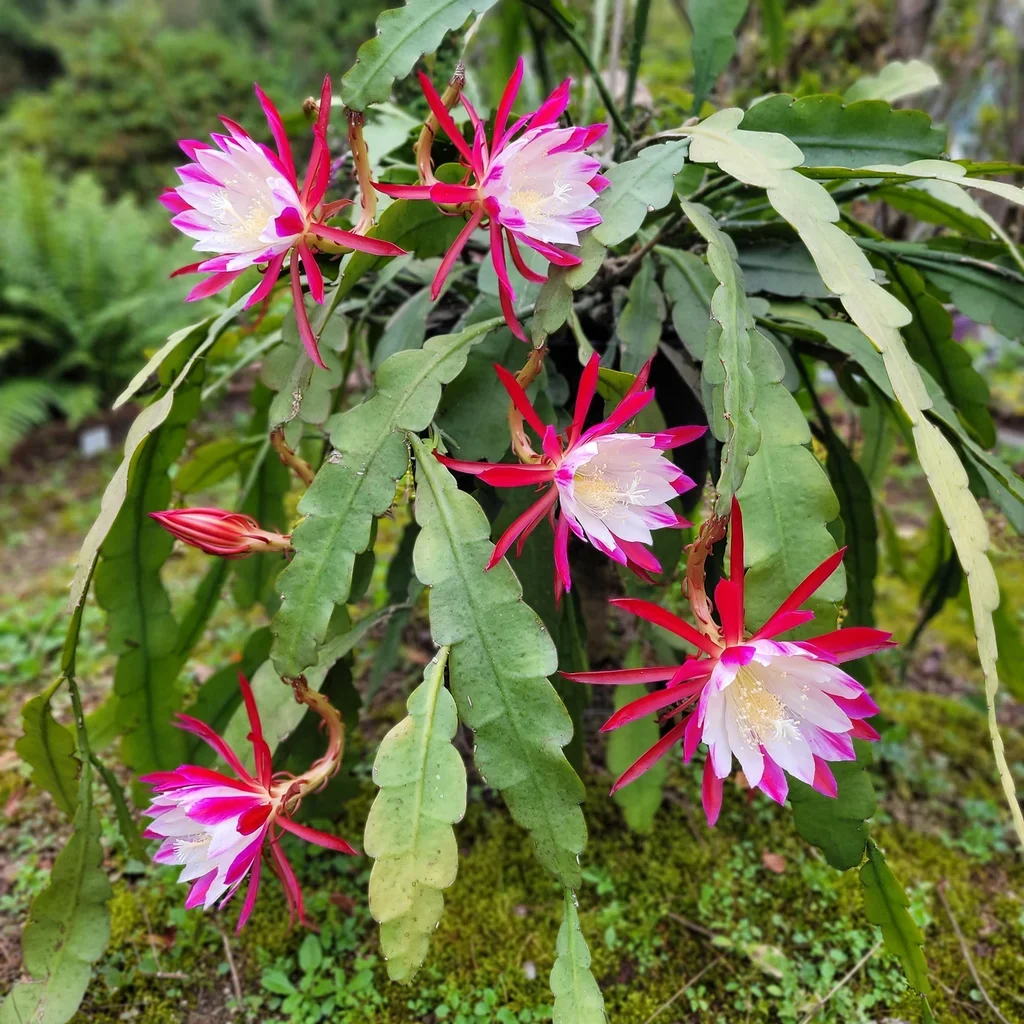
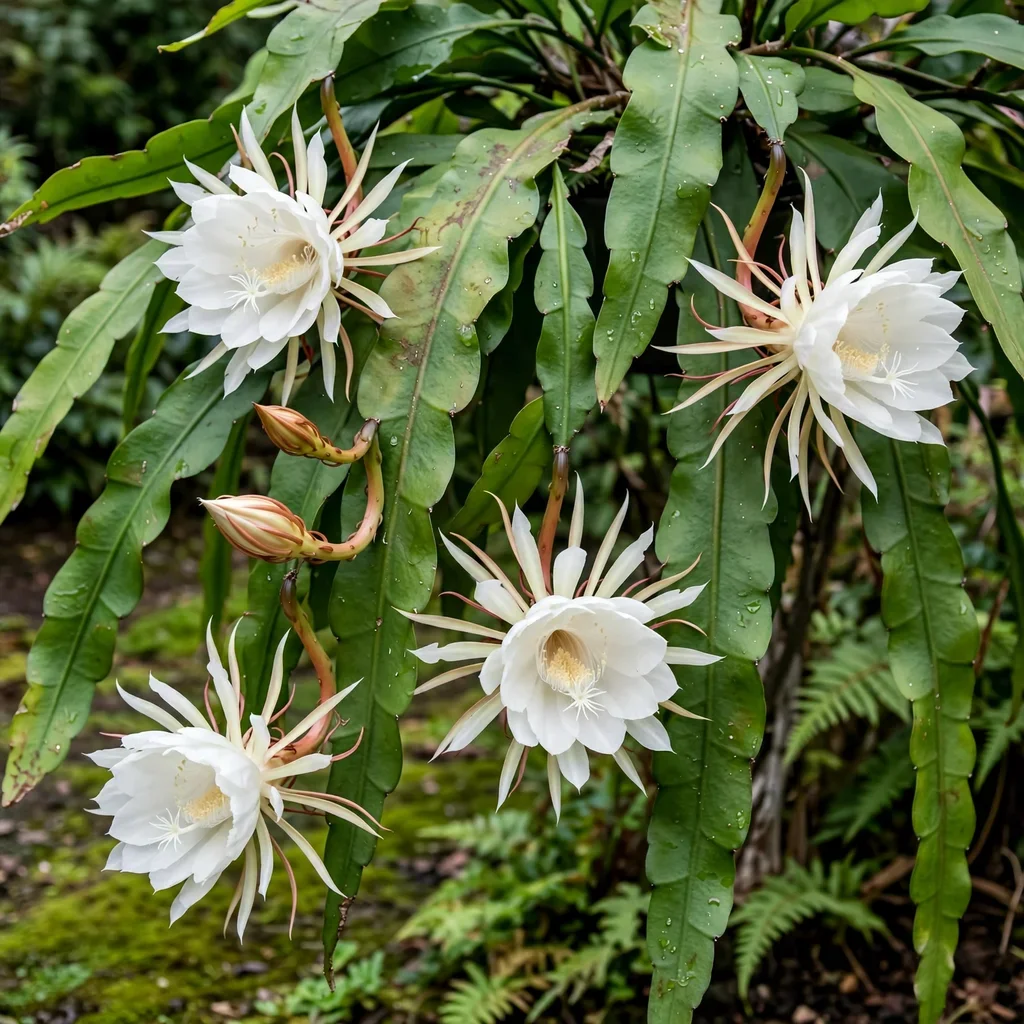
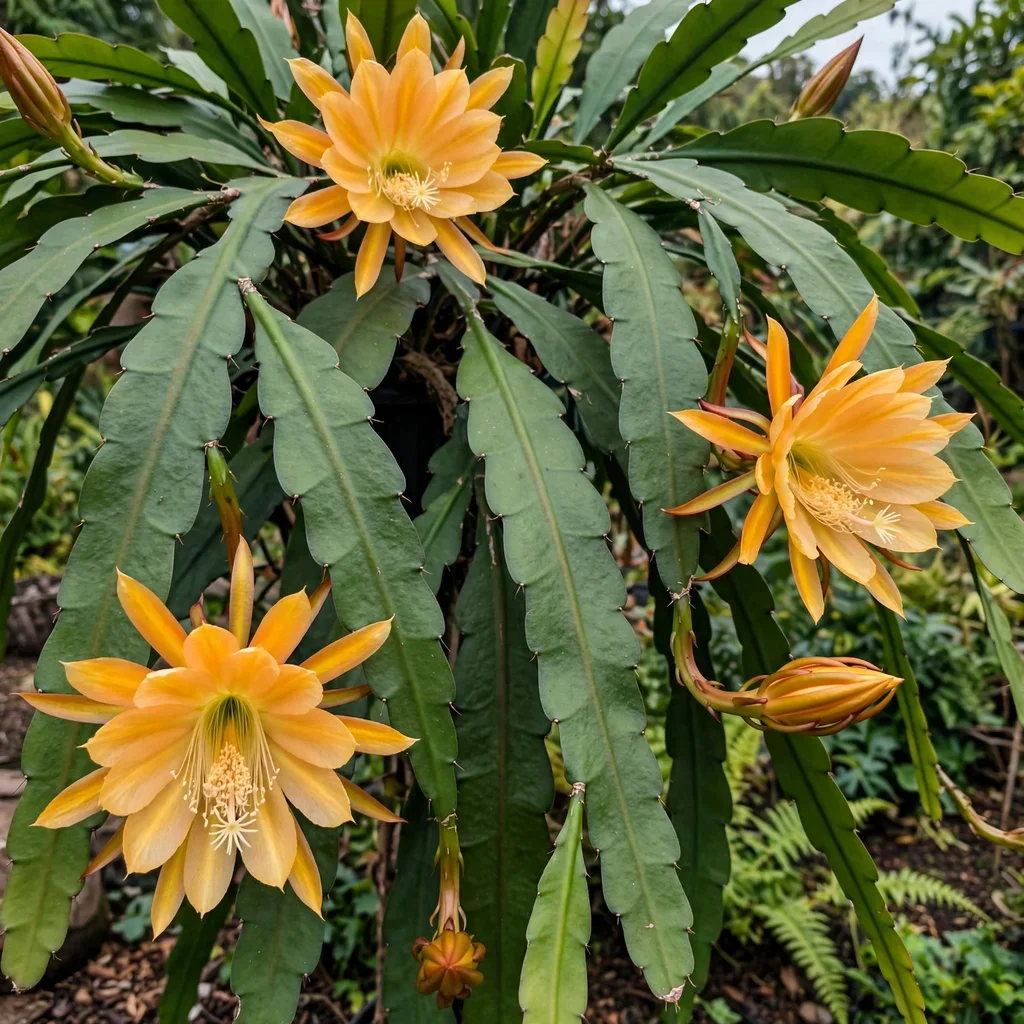
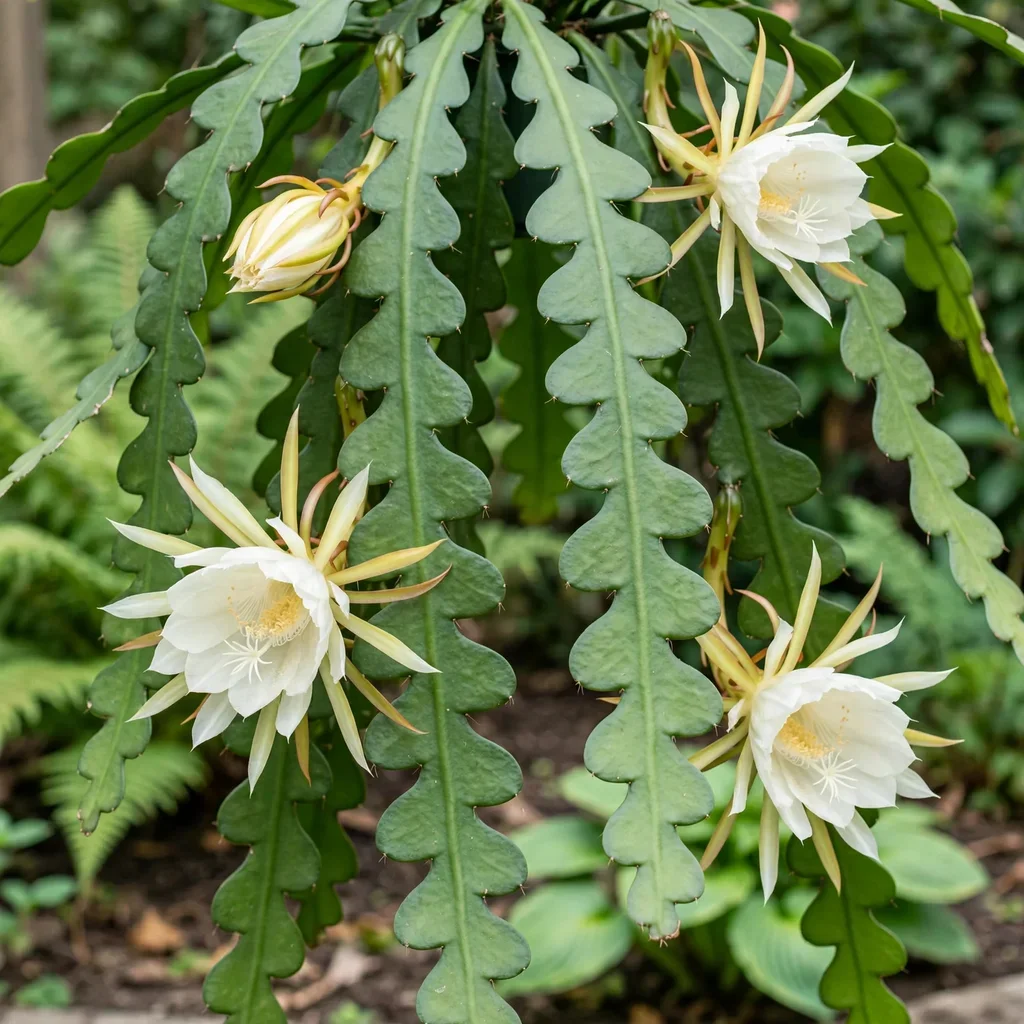
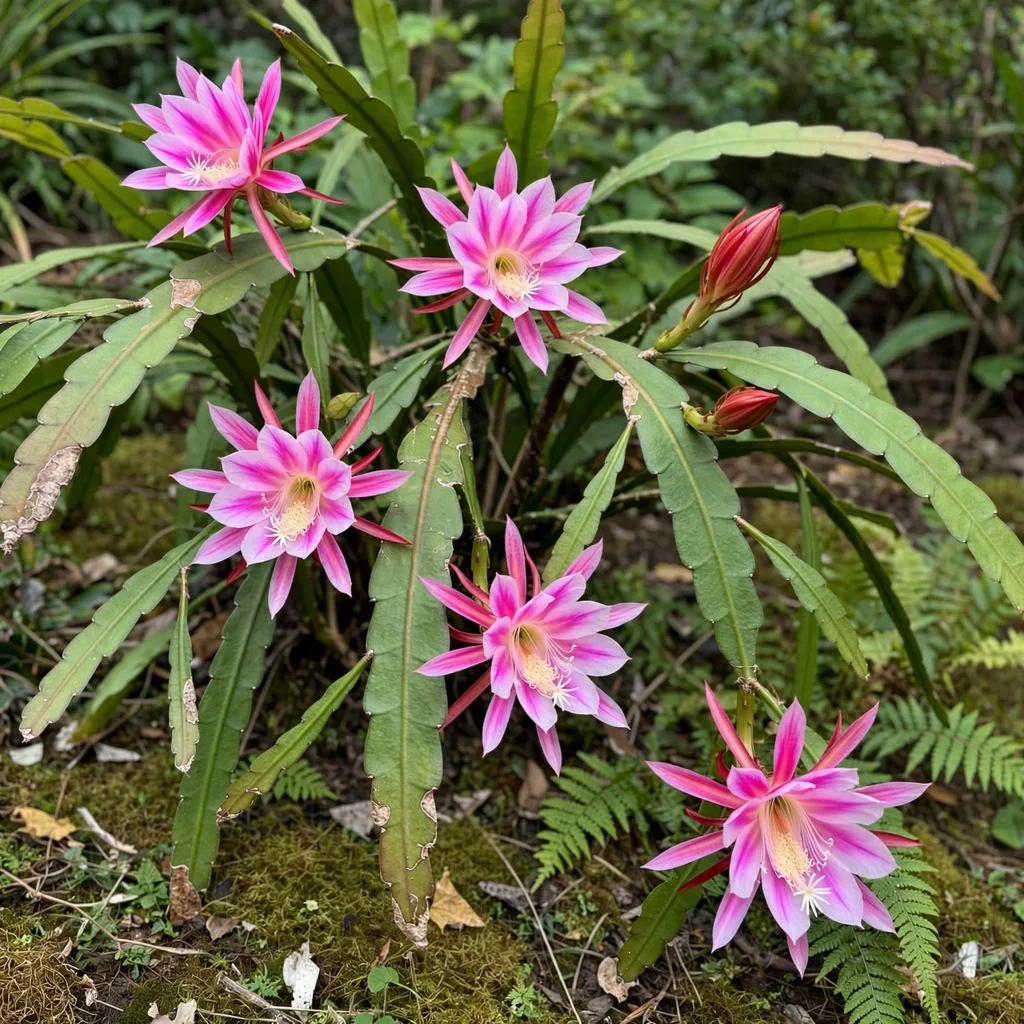
2 species of Epiphyllum
Each one is a parent of the varieties above.
Track your Epiphyllum in Sow
Save the Epiphyllum you grow and get care reminders timed to your zone.
How to grow Epiphyllum
Whats common across all Epiphyllum varieties in our catalog — drawn from the care records of the 5 most-grown of them.
The Epiphyllum year
- PruneJuly and August100% of varieties
Remove old, woody, or damaged stems before spring growth begins.
- FertilizeApril–September100% of varieties
Apply balanced, diluted fertilizer monthly during the growing season.
- Winter PrepOctober and November100% of varieties
Move indoors before temperatures drop below 45°F (7°C).
- PropagateJune–August60% of varieties
Propagate new plants from stem cuttings


Do
- Repot every 2-3 years to refresh soil and accommodate growth
- Fertilize monthly during active growth
- Provide bright, indirect light for healthy growth 🌞
- Water sparingly during dormancy periods 💧
- Use a cactus-specific fertilizer monthly during growing season 🌱
Avoid
- Avoid overwatering, which can cause root rot ❌
- Don’t overwater; Epiphyllum oxypetalum dislikes soggy soil ❌
- Avoid direct harsh sunlight that can scorch leaves
- Don’t fertilize in winter when the plant is dormant
What goes wrong with Epiphyllum
| Problem | What you'll see | What to do |
|---|---|---|
| Mealybugs | White cottony masses on stems | Apply neem oil or insecticidal soap |
| Scale insects | Small brown bumps on stems | Use horticultural oil or remove manually |
| Spider mites | Fine webbing and stippled leaves | Use insecticidal soap or neem oil |
| Spider Mites | Fine webbing and speckled leaves | Increase humidity and spray with insecticidal soap |
| Root rot | Wilting and blackened roots | Improve drainage and reduce watering |
| Fungal leaf spots | Dark spots on leaves | Apply a fungicide and remove affected areas |
| Root Rot | Wilting and blackened roots | Reduce watering and repot in dry, well-draining soil |
Making more Epiphyllum
Cuttings
- Select a healthy stem and let it callus for 24 hours.
- Plant the callused end into dry, well-draining soil.
- Water lightly after planting, keeping soil slightly moist.
- Place in bright, indirect light.
- Roots typically develop in 4-6 weeks.
cuttings
- Select healthy stem segments, about 6 inches long.
- Allow cuttings to callus for 3-4 days in a dry, shaded area.
- Plant cuttings into well-draining cactus soil mix.
- Water lightly after planting and keep in bright, indirect light.
- Roots develop within 4-6 weeks, ready for transplant.
Epiphyllum questions
How many types of Epiphyllum are there?
The Sow catalog tracks 5 distinct Epiphyllum varieties. The most popular — ranked by 40 real gardeners — are shown first above.
What zones does Epiphyllum grow in?
Across its varieties, Epiphyllum covers USDA Zones 6–10. Individual varieties differ — each plant page lists its exact range, and Sow filters the catalog to your zone automatically.
When does Epiphyllum bloom?
Most Epiphyllum varieties bloom in late spring to early summer, mid-summer, late summer. Staggering early, mid, and late varieties extends the genus's season in one bed.
Which Epiphyllum should I choose?
Start from the most-saved varieties above — popularity across thousands of gardens is a strong signal of reliability — then filter by your zone and sun. In the Sow app you can preview any of them in a photo of your actual yard before you buy.