

The Story
Plant Bio
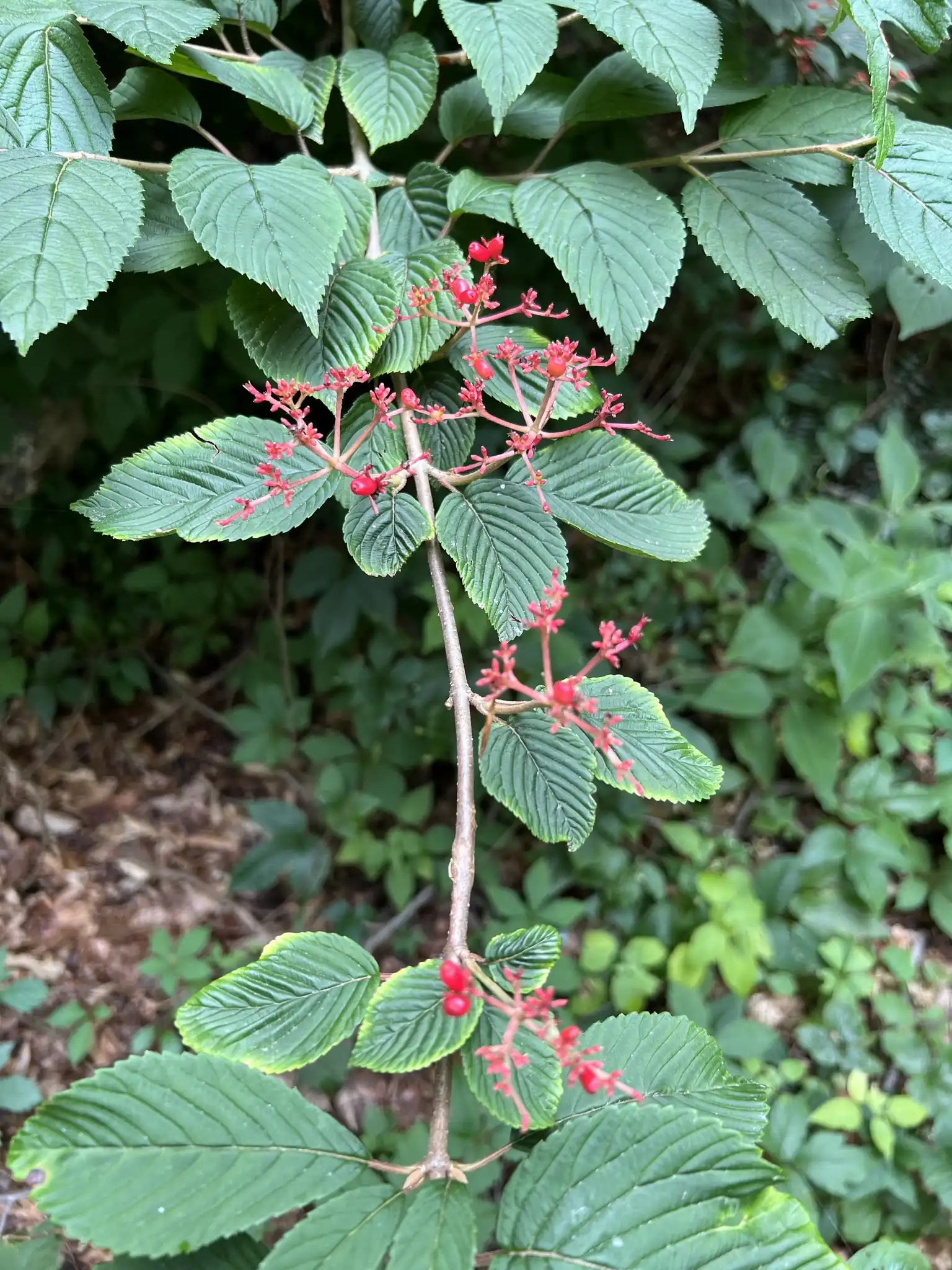
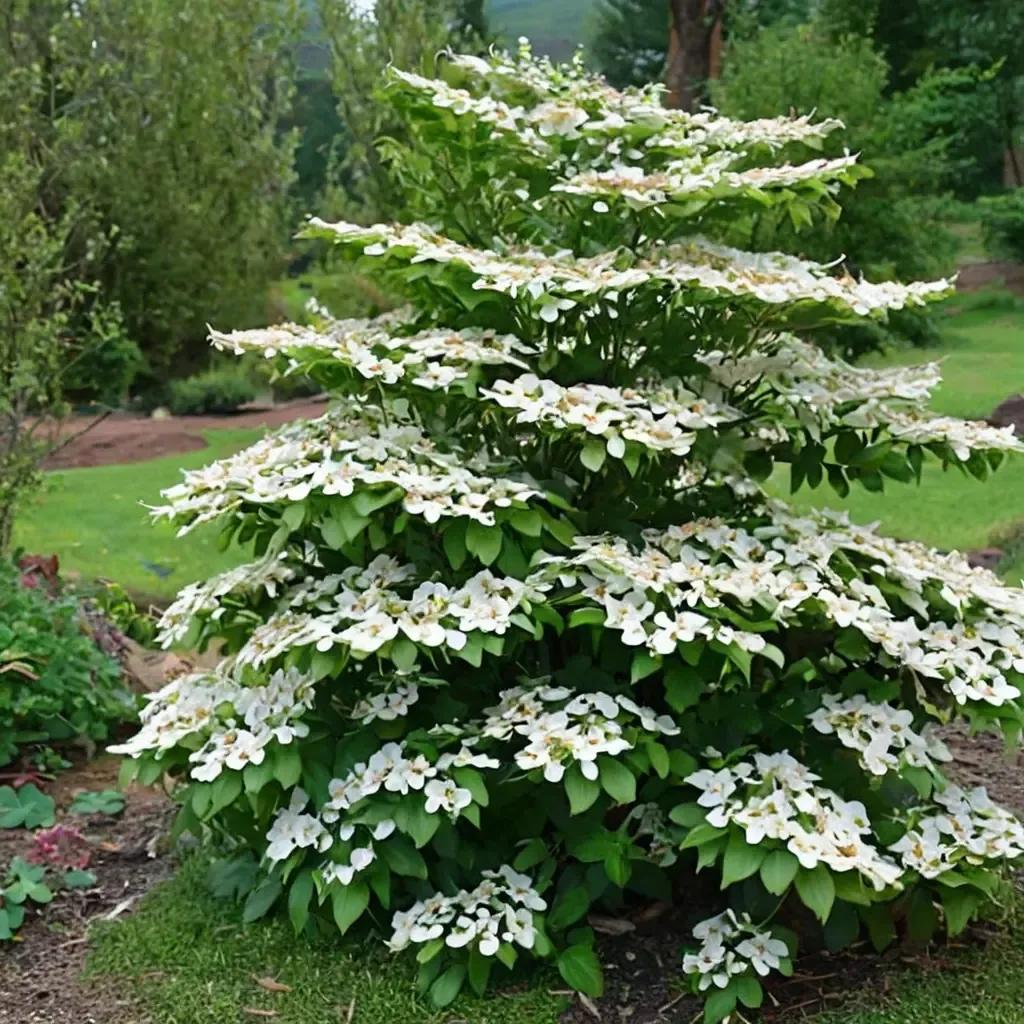
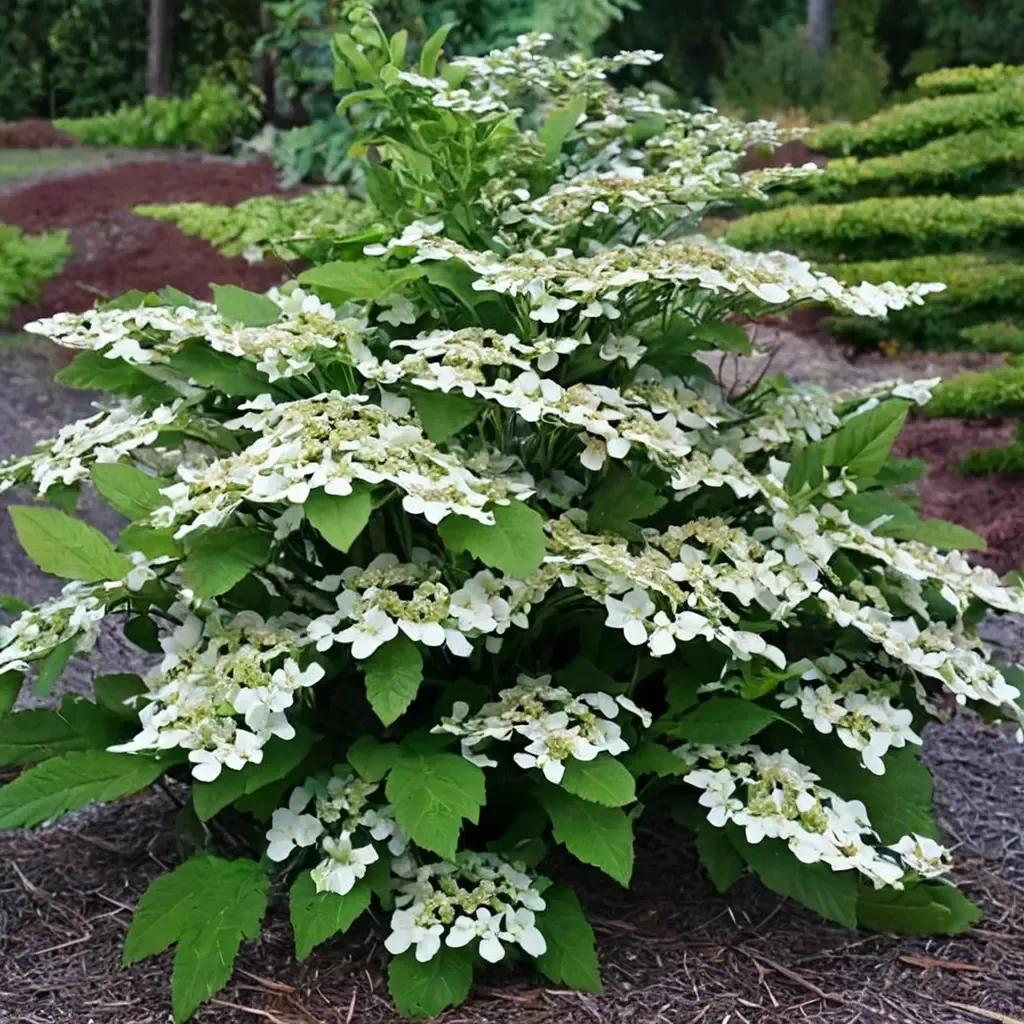
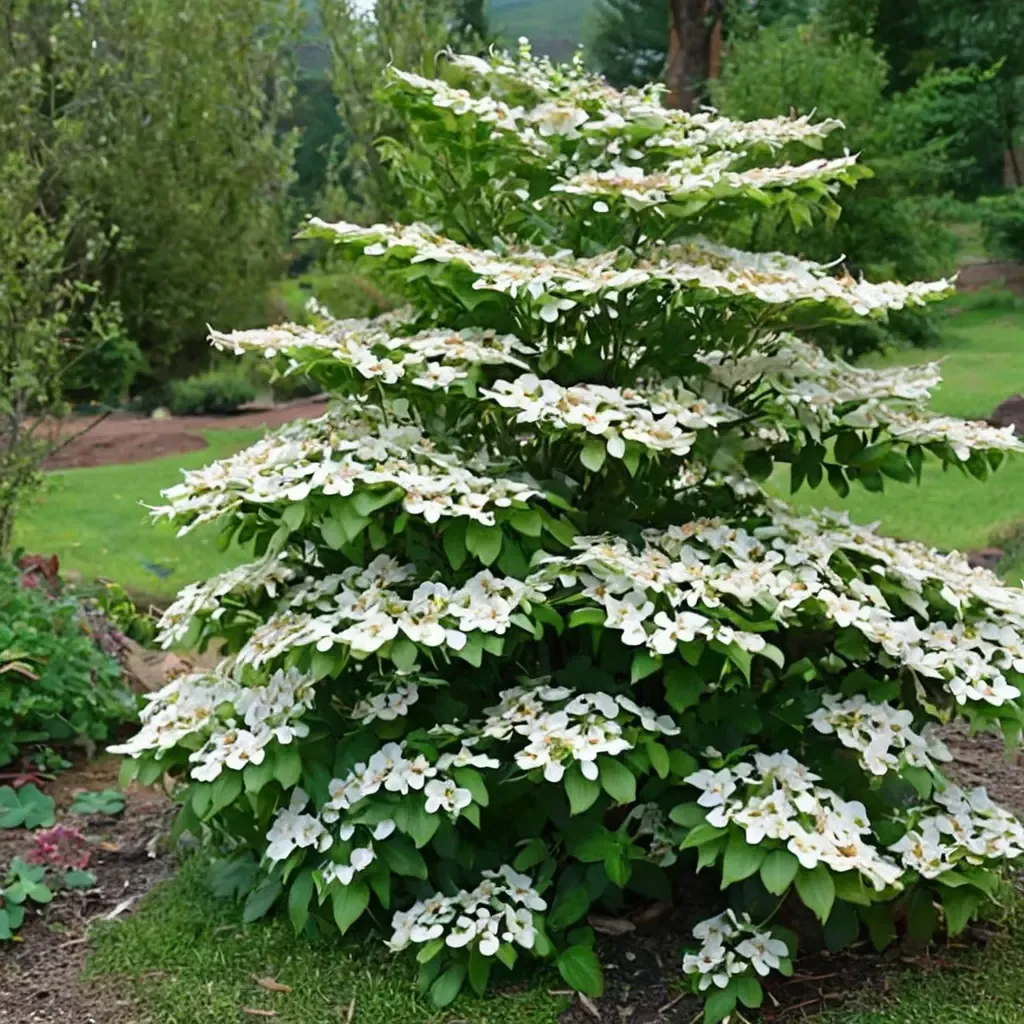
Viburnum plicatum, doublefile viburnum, is a spreading deciduous shrub native to China, Japan and Taiwan, reaching eight to fifteen feet tall and up to eighteen wide. Its branches are held in strongly horizontal tiers, and in mid-spring flat white flower cymes line the upper side of each branch in two neat rows — the doublefile arrangement that names it.
The horizontal branching is the plant's real architecture, and it needs room to display it: pruned into a ball it loses everything that makes it worth growing. Deeply pleated leaves give summer texture, and red fruits ripening to black follow the flowers on the form with fertile florets.
Uses & Benefits:
Essentials
At a Glance
Plant Type
Shrub
Height
138"
Width
168"
Light
Full Sun, Partial Sun
Zones
5, 6, 7, 8
Water
Moderate
Humidity
Moderate
Lifespan
Perennial
Native To
China, Japan and Taiwan
Toxicity
Non-toxic
Planting
How to Grow
- Plant in spring or autumn in moist, well-drained soil.
- Choose full sun to partial shade.
- Allow ten to eighteen feet of width for the tiered habit.
- Water through the first two seasons.
- Prune only to remove dead wood, right after flowering.
- Never shear it into a formal shape.
Pro Tip
Give it the full width it needs — the tiered horizontal branching is the whole point, and crowding or shearing destroys it permanently.
Keep It Thriving
Care Guide
Do
- Allow generous width for the tiers 📏
- Prune right after flowering, minimally ✂️
- Plant in moist well-drained soil 🌱
- Site it where the horizontal form shows 🌿
Don't
- Shear it into a ball ❌
- Crowd it into a narrow bed ❌
- Prune in late winter and lose the flowers ❌
Seasonal Care Calendar
| Task | Jan | Feb | Mar | Apr | May | Jun | Jul | Aug | Sep | Oct | Nov | Dec |
|---|---|---|---|---|---|---|---|---|---|---|---|---|
| Monitor | ||||||||||||
| Prune |
Watch Out For
Pests & Diseases
Common Pests
Common Diseases
In the Garden
Landscape Uses & Companions
Landscape Uses
Multiply
Propagation Methods
Good to Know
Common Questions
Japanese Snowball Viburnum questions
What zones can Japanese Snowball Viburnum grow in?
Japanese Snowball Viburnum is hardy in USDA Zones 5–8. Inside that range it survives winter in the ground; outside it, grow it as an annual or a container plant you protect.
Is Japanese Snowball Viburnum deer resistant?
Yes — Japanese Snowball Viburnum is rated deer-resistant. Deer typically pass it over, though extreme hunger can override any plant's defenses.
When does Japanese Snowball Viburnum bloom?
Japanese Snowball Viburnum typically blooms in mid-spring through late spring. Exact timing shifts a week or two with your zone — Sow's bloom calendar maps it to your garden.
Does Japanese Snowball Viburnum need full sun?
Japanese Snowball Viburnum does best in full sun to part shade. In hot climates, afternoon shade keeps blooms fresher longer.
More Viburnum to compare
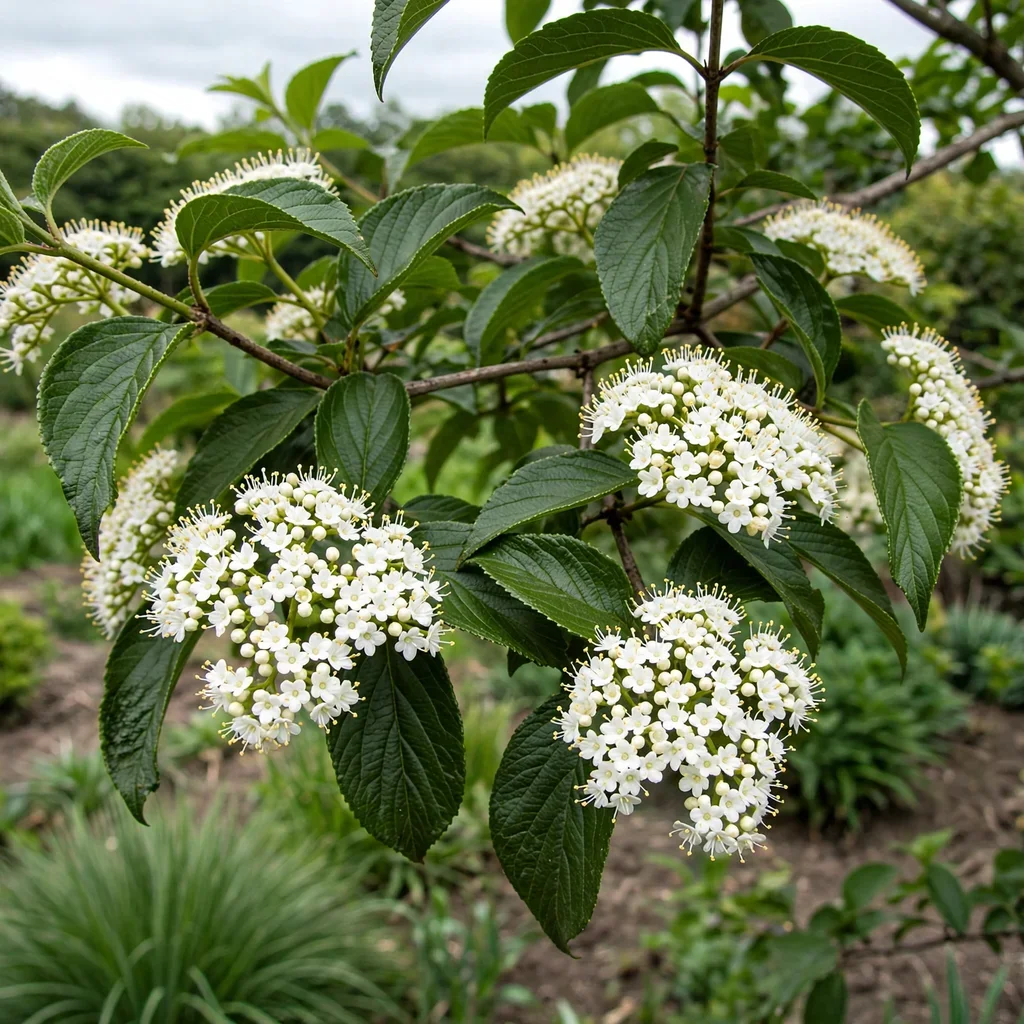
Nannyberry
Viburnum lentago
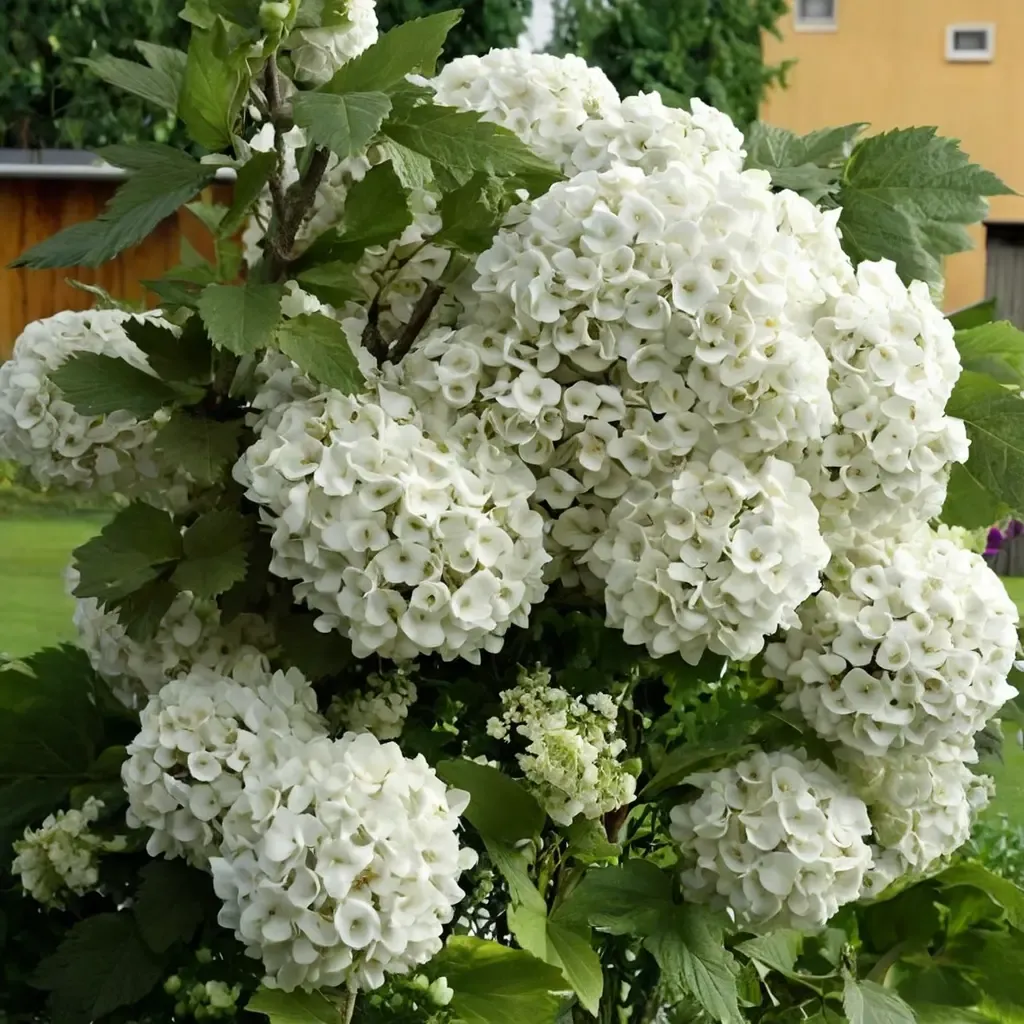
Snowball Viburnum
Viburnum opulus 'Sterile'
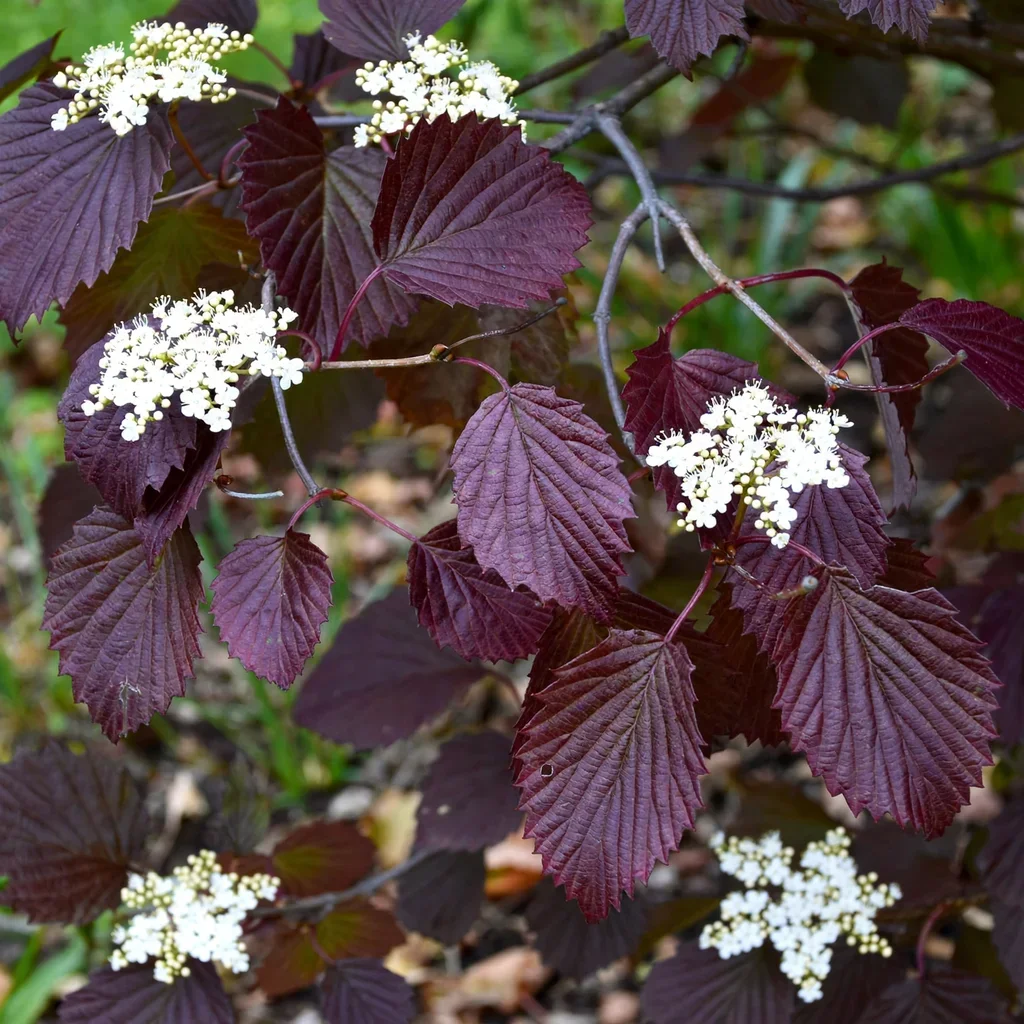
Autumn Jazz Arrowwood
Viburnum dentatum 'Autumn Jazz'
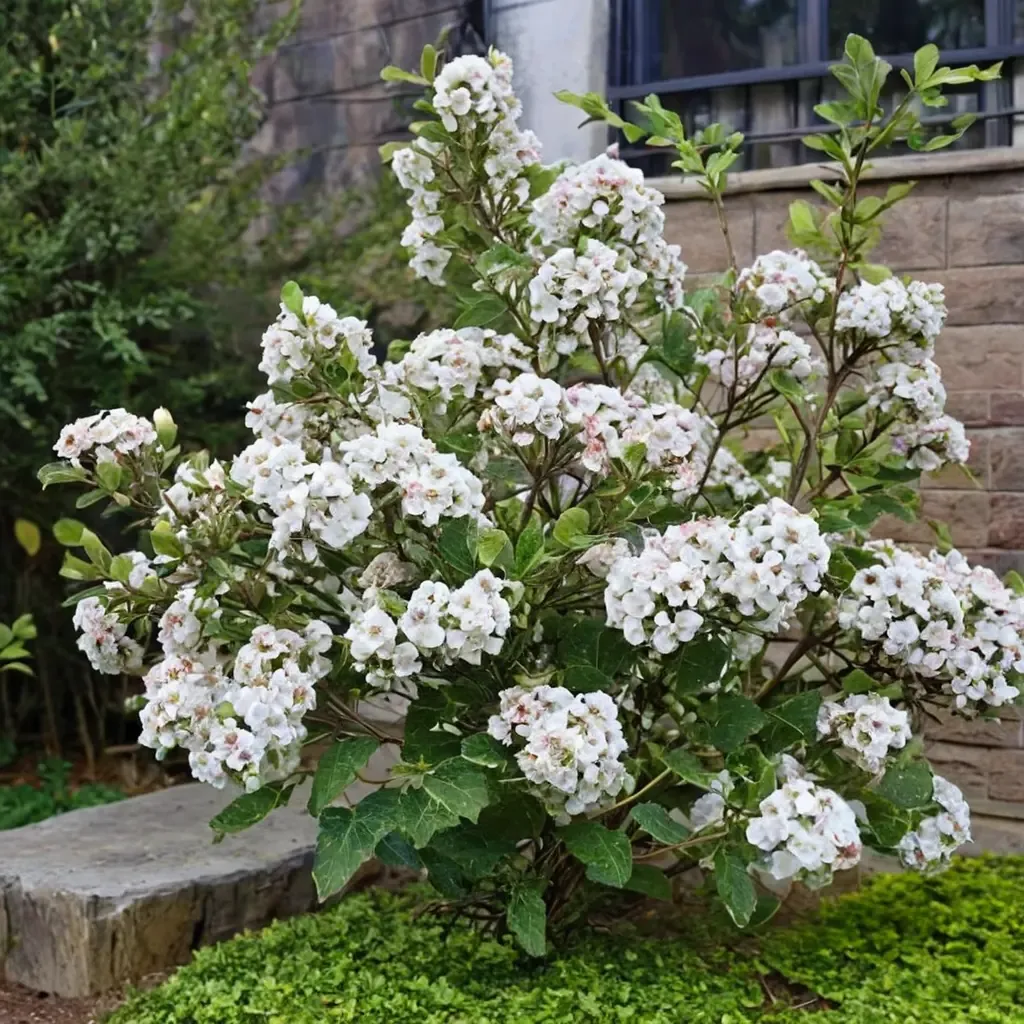
Korean spice viburnum
Viburnum carlesii
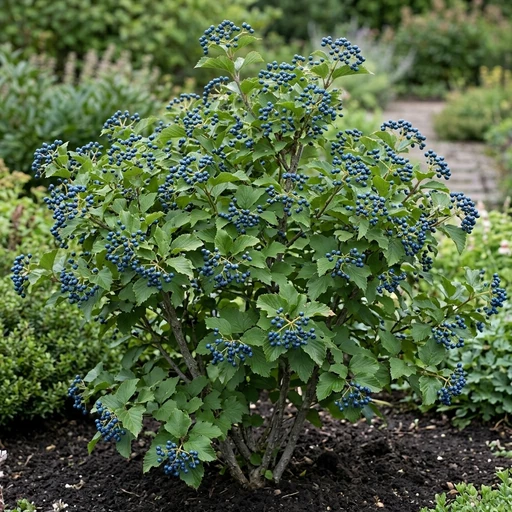
Blue Muffin Viburnum
Viburnum dentatum 'Christom'
Mariesii Japanese Snowball
Viburnum plicatum 'Mariesii'
Keep exploring
Explore the genus
Hardy in your zone?
Grow Japanese Snowball Viburnum with confidence
See it in a design of your actual yard, get zone-matched care reminders, and track it season by season in your garden journal.