The Story
Plant Bio
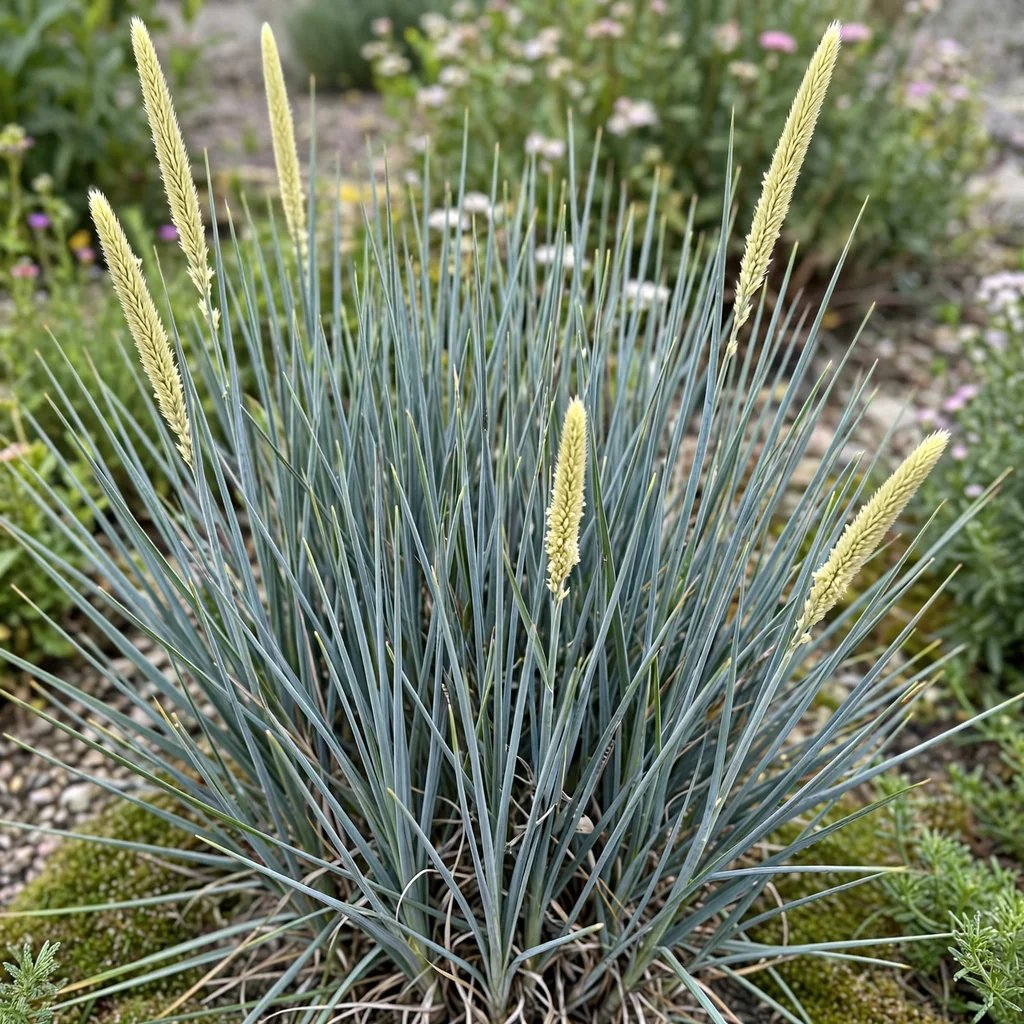
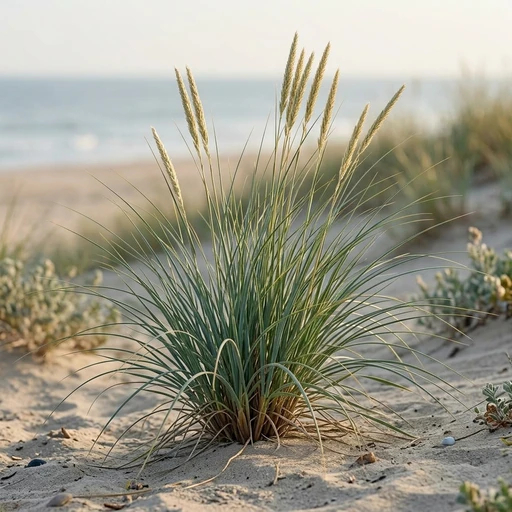
Ammophila arenaria, commonly known as Marram grass, is a robust, densely tufted perennial grass native to the coastlines of Europe, North Africa, and the Mediterranean. It forms rigid, upright clumps of stiff, blue-green foliage connected by an extensive network of deep, scaly rhizomes that grow upward and outward as sand accumulates.
This species is highly adapted to shifting coastal dunes, capable of spreading laterally up to 78 inches per year to bind loose sand. Its stiff, sharply pointed leaves are tightly inrolled to conserve moisture and withstand extreme salt spray and wind exposure.
Uses & Benefits:
Essentials
At a Glance
Plant Type
Grass
Height
48"
Width
78"
Light
Full Sun
Zones
4, 5, 6, 7, 8, 9
Water
Low
Humidity
High
Lifespan
Perennial
Native To
Europe, North Africa, Mediterranean
Toxicity
Non-toxic (but physically sharp)
Bloom period
Summer
In flower about 3 months of the year
Planting
How to Grow
- Select a planting site with loose, nutrient-poor sand and absolute full sun exposure.
- Space plants to accommodate the rapid lateral spread of the vigorous underground rhizomes.
- Water sparingly only during the initial establishment phase, then cease irrigation entirely.
- Avoid applying any fertilizer, as the plant is adapted to nutrient-deficient coastal environments.
Pro Tip
Plant exclusively in sharp, nutrient-poor sand with full sun exposure; planting in rich garden loam or providing regular irrigation triggers rapid root rot.
Keep It Thriving
Care Guide
Do
- Plant in sharp, rapidly draining sand.
- Provide full, unobstructed sun exposure.
- Leave spent foliage intact to help trap sand and stabilize dunes.
Don't
- Do not plant in heavy, organic, or poorly drained garden soils.
- Do not apply fertilizers, which can damage the plant.
- Do not cut back hard into old, leafless woody crown bases.
Seasonal Care Calendar
| Task | Jan | Feb | Mar | Apr | May | Jun | Jul | Aug | Sep | Oct | Nov | Dec |
|---|---|---|---|---|---|---|---|---|---|---|---|---|
| Deadhead | ||||||||||||
| Divide | ||||||||||||
| Pest Check | ||||||||||||
| Spring Cleanup |
Watch Out For
Pests & Diseases
Common Pests
Common Diseases
In the Garden
Landscape Uses & Companions
Landscape Uses
Companion Plants
Multiply
Propagation Methods
Good to Know
Common Questions
Marram Grass questions
What zones can Marram Grass grow in?
Marram Grass is hardy in USDA Zones 4–9. Inside that range it survives winter in the ground; outside it, grow it as an annual or a container plant you protect.
Is Marram Grass deer resistant?
Yes — Marram Grass is rated deer-resistant. Deer typically pass it over, though extreme hunger can override any plant's defenses.
When does Marram Grass bloom?
Marram Grass typically blooms in summer through summer. Exact timing shifts a week or two with your zone — Sow's bloom calendar maps it to your garden.
Does Marram Grass need full sun?
Marram Grass does best in full sun (6+ hours).
Is Marram Grass drought tolerant?
Yes — once established (usually after the first full season), Marram Grass handles dry spells with minimal watering. Water deeply its first year to build the root system that makes that possible.
More Ammophila to compare
Keep exploring
Explore the genus
Grow Marram Grass with confidence
See it in a design of your actual yard, get zone-matched care reminders, and track it season by season in your garden journal.