The Story
Plant Bio
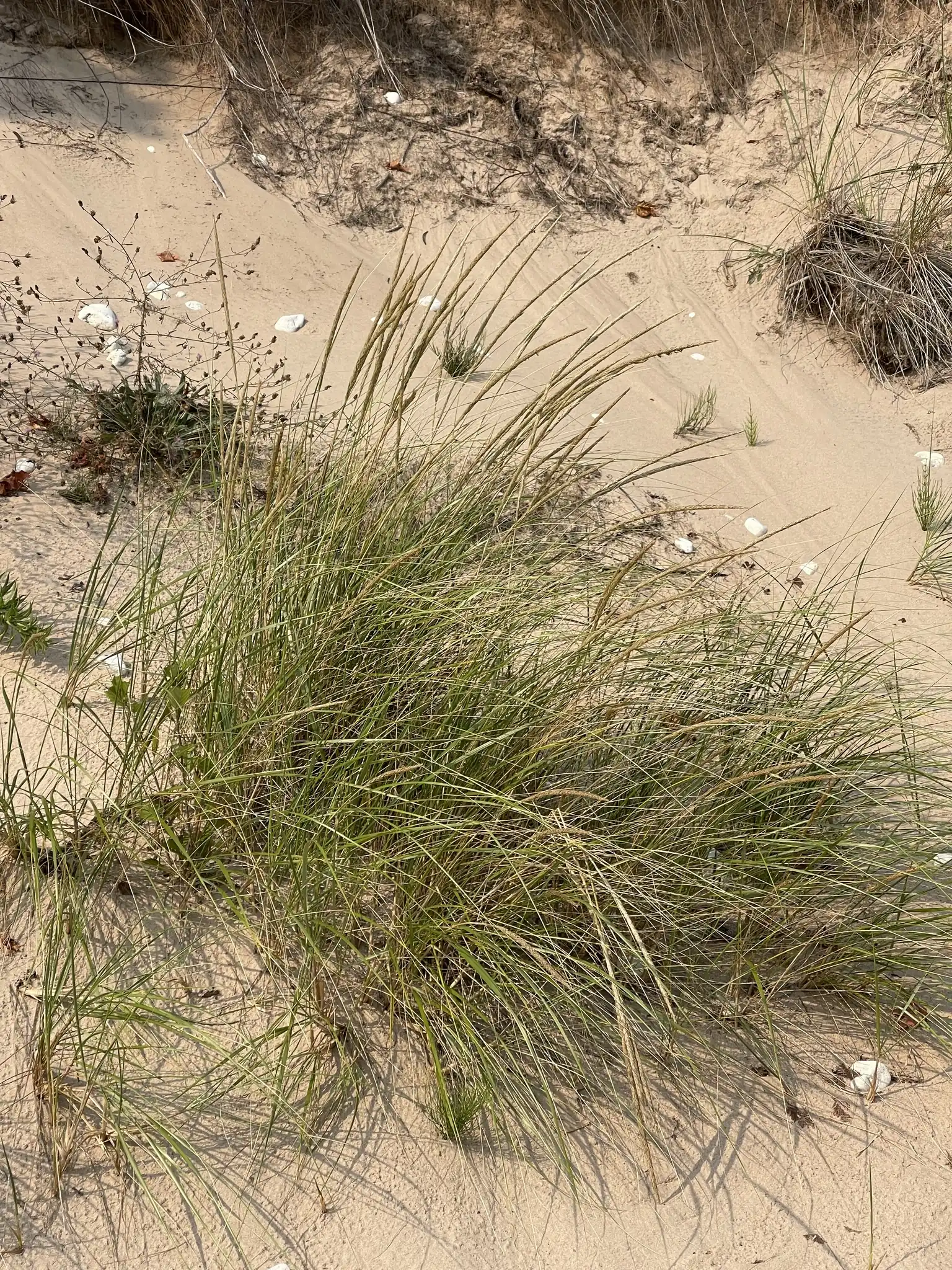
American Beach Grass is a rugged, rhizomatous perennial grass native to the Atlantic and Great Lakes coastlines. It is a key species in dune ecosystems, known for its ability to thrive in shifting sands.
This grass is a primary dune-builder. Its extensive system of rhizomes and roots traps windblown sand, and the plant responds to being buried by growing taller, which in turn stabilizes and builds the dune over time.
Uses & Benefits:
Essentials
At a Glance
Plant Type
Grass
Height
36"
Width
24"
Light
Full Sun
Zones
4, 5, 6, 7, 8, 9
Water
Low
Humidity
Tolerates salt spray
Lifespan
Long-lived perennial
Native To
Eastern North America
Toxicity
Non-toxic
Bloom period
Mid-summer – Late summer
In flower about 2 months of the year
Planting
How to Grow
- Plant only in pure sand in a full sun, coastal environment.
- Use a dibble bar or shovel to create a hole 8-10 inches deep.
- Place 2-3 culms (stems) into each hole.
- Space holes 18 inches apart in a grid pattern.
- Backfill the hole, ensuring sand is firm around the culms.
- No watering is needed; it relies on natural precipitation.
Pro Tip
Plant it deep, 8-10 inches into the sand, to ensure the nodes on the stem are buried and can produce new roots.
Keep It Thriving
Care Guide
Do
- Plant in large masses for effective sand stabilization.
- Protect newly planted areas from foot traffic.
- Apply a slow-release, low-nitrogen fertilizer at planting time if recommended for your area.
- Allow it to spread and form a dense colony.
Don't
- Don't plant in garden loam or clay soil; it requires sand.
- Don't plant in shady or inland locations.
- Don't water or mulch; it is adapted to harsh, dry conditions.
- Don't try to contain it in a small garden; it needs room to run.
Seasonal Care Calendar
| Task | Jan | Feb | Mar | Apr | May | Jun | Jul | Aug | Sep | Oct | Nov | Dec |
|---|---|---|---|---|---|---|---|---|---|---|---|---|
| Plant |
Watch Out For
Pests & Diseases
Common Pests
Common Diseases
In the Garden
Landscape Uses & Companions
Landscape Uses
Multiply
Propagation Methods
Good to Know
Common Questions
American Beach Grass questions
What zones can American Beach Grass grow in?
American Beach Grass is hardy in USDA Zones 4–9. Inside that range it survives winter in the ground; outside it, grow it as an annual or a container plant you protect.
Is American Beach Grass deer resistant?
Yes — American Beach Grass is rated deer-resistant. Deer typically pass it over, though extreme hunger can override any plant's defenses.
When does American Beach Grass bloom?
American Beach Grass typically blooms in mid-summer through late summer. Exact timing shifts a week or two with your zone — Sow's bloom calendar maps it to your garden.
Does American Beach Grass need full sun?
American Beach Grass does best in full sun (6+ hours).
Is American Beach Grass drought tolerant?
Yes — once established (usually after the first full season), American Beach Grass handles dry spells with minimal watering. Water deeply its first year to build the root system that makes that possible.
More Ammophila to compare
Keep exploring
Explore the genus
Grow American Beach Grass with confidence
See it in a design of your actual yard, get zone-matched care reminders, and track it season by season in your garden journal.