The Story
Plant Bio
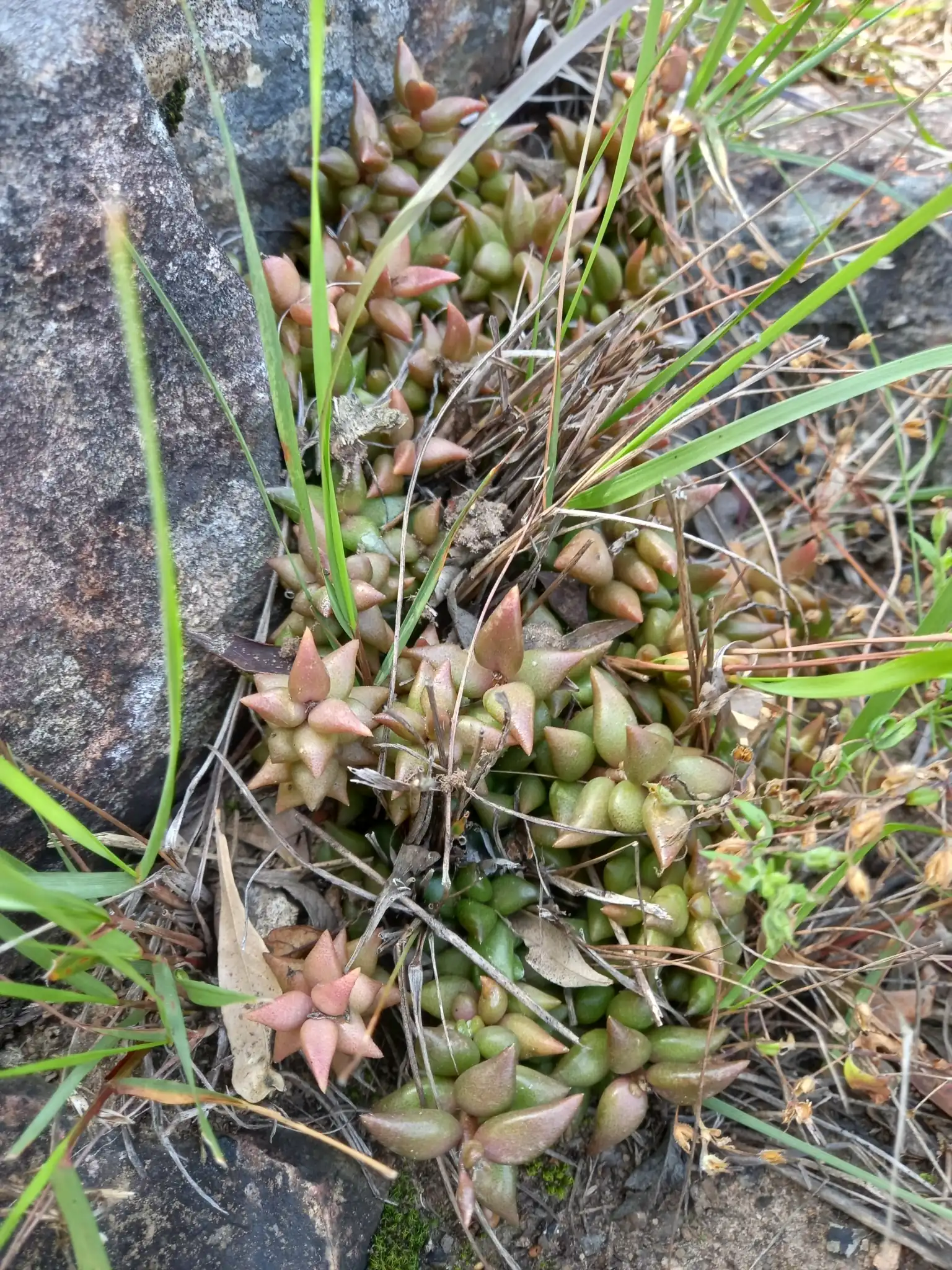
Anacampseros telephiastrum is a small, slow-growing succulent subshrub native to the rocky flats and slopes of South Africa's southern Karoo region. It forms low, dense mats of prostrate stems and fleshy, broadly ovate leaves that store water internally to survive extreme drought.
The foliage features tiny hairs in the leaf axils and distinctive papillae ending in minute points at the leaf tips. Under intense direct sunlight, the popular variegated cultivar 'Sunrise' develops vivid rose, pink, and cream margins against its emerald-green base.
Uses & Benefits:
Essentials
At a Glance
Plant Type
Cactus Succulent
Height
6"
Width
12"
Light
Full Sun, Partial Sun
Zones
10
Water
Low
Humidity
Low to Moderate
Lifespan
Perennial
Native To
South Africa
Toxicity
Non-toxic
Bloom period
Summer
In flower about 3 months of the year
Planting
How to Grow
- Select a shallow container with excellent drainage holes to prevent water retention.
- Fill the pot with a gritty, highly porous, mineral-based succulent potting mix containing minimal organic matter.
- Place the plant in a location that receives full sun to bright, direct light for several hours daily.
- Water thoroughly only when the soil is completely dry and the lower leaves show slight wrinkling.
Pro Tip
Provide bright, direct sunlight to maintain the compact rosette form and prevent the vibrant pink and cream leaf variegation from reverting to flat green.
Keep It Thriving
Care Guide
Do
- Use a soak-and-dry watering method, allowing the potting medium to dry out entirely between waterings.
- Provide excellent air ventilation to keep the foliage dry and prevent fungal issues.
- Bring containers indoors before outdoor temperatures drop below 30 degrees Fahrenheit.
Don't
- Never let the plant sit in standing water or soggy, heavy garden soil.
- Do not fertilize during the winter dormancy period when growth naturally slows.
- Avoid cutting back hard into old, leafless woody stems as they lack regenerative buds.
Seasonal Care Calendar
| Task | Jan | Feb | Mar | Apr | May | Jun | Jul | Aug | Sep | Oct | Nov | Dec |
|---|---|---|---|---|---|---|---|---|---|---|---|---|
| Fertilize | ||||||||||||
| Pest Check | ||||||||||||
| Propagate | ||||||||||||
| Winter Prep |
Watch Out For
Pests & Diseases
Common Pests
Common Diseases
In the Garden
Landscape Uses & Companions
Landscape Uses
Companion Plants
Multiply
Propagation Methods
Good to Know
Common Questions
Large Flowered Sandrose questions
What zones can Large Flowered Sandrose grow in?
Large Flowered Sandrose is hardy in USDA Zone 10. Inside that range it survives winter in the ground; outside it, grow it as an annual or a container plant you protect.
Is Large Flowered Sandrose deer resistant?
Yes — Large Flowered Sandrose is rated deer-resistant. Deer typically pass it over, though extreme hunger can override any plant's defenses.
When does Large Flowered Sandrose bloom?
Large Flowered Sandrose typically blooms in summer through summer. Exact timing shifts a week or two with your zone — Sow's bloom calendar maps it to your garden.
Does Large Flowered Sandrose need full sun?
Large Flowered Sandrose does best in full sun to part shade. In hot climates, afternoon shade keeps blooms fresher longer.
Is Large Flowered Sandrose drought tolerant?
Yes — once established (usually after the first full season), Large Flowered Sandrose handles dry spells with minimal watering. Water deeply its first year to build the root system that makes that possible.
Keep exploring
Explore the genus
Hardy in your zone?
Grow Large Flowered Sandrose with confidence
See it in a design of your actual yard, get zone-matched care reminders, and track it season by season in your garden journal.