51 saves
Echeveria
We track 14 varieties; the ones most used by real gardeners.
The 12 most-saved Echeveria varieties
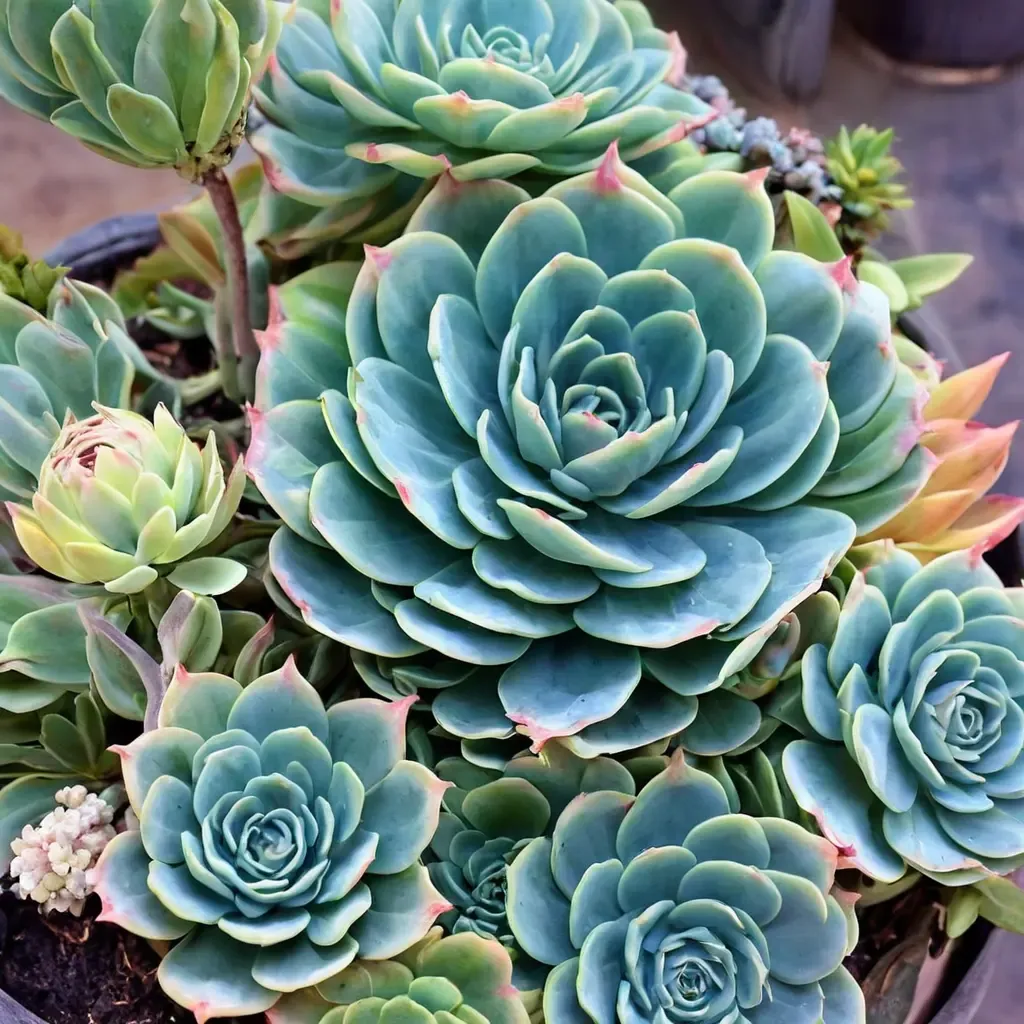
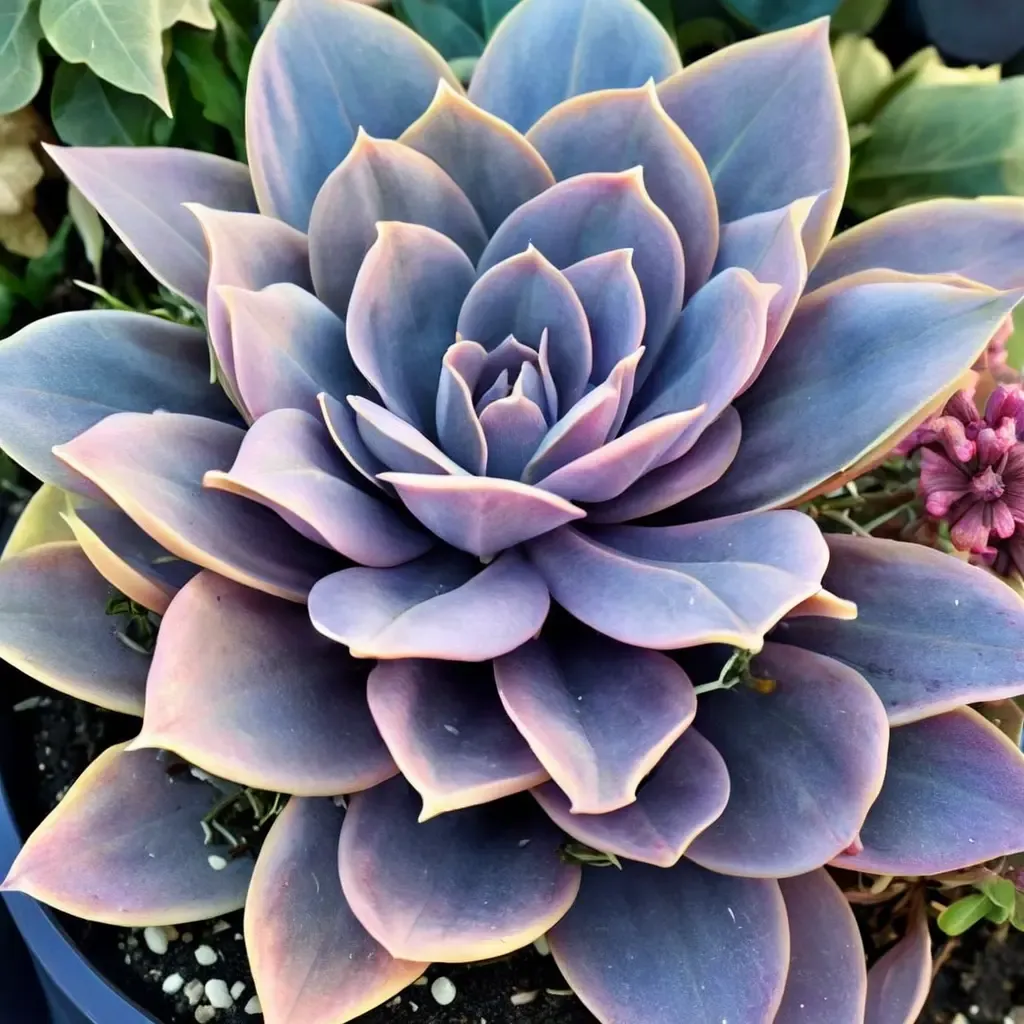
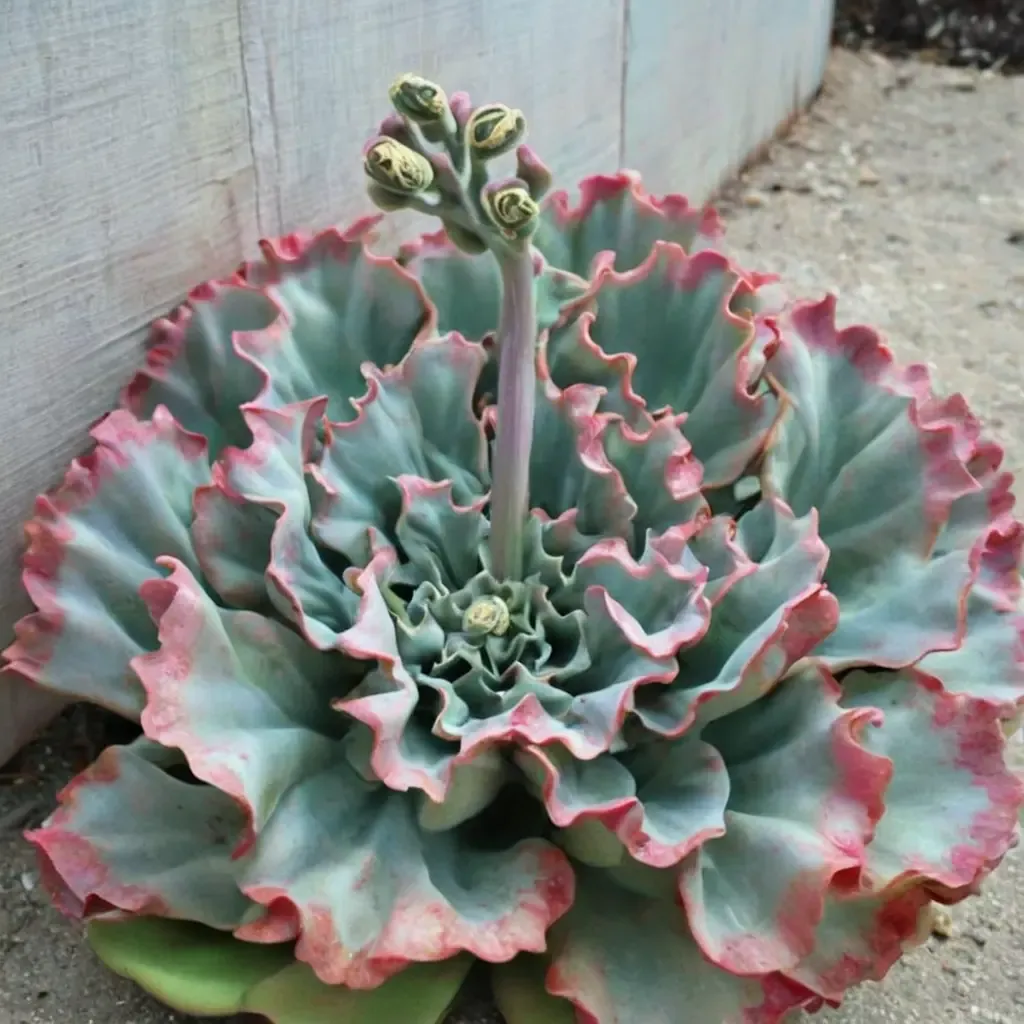
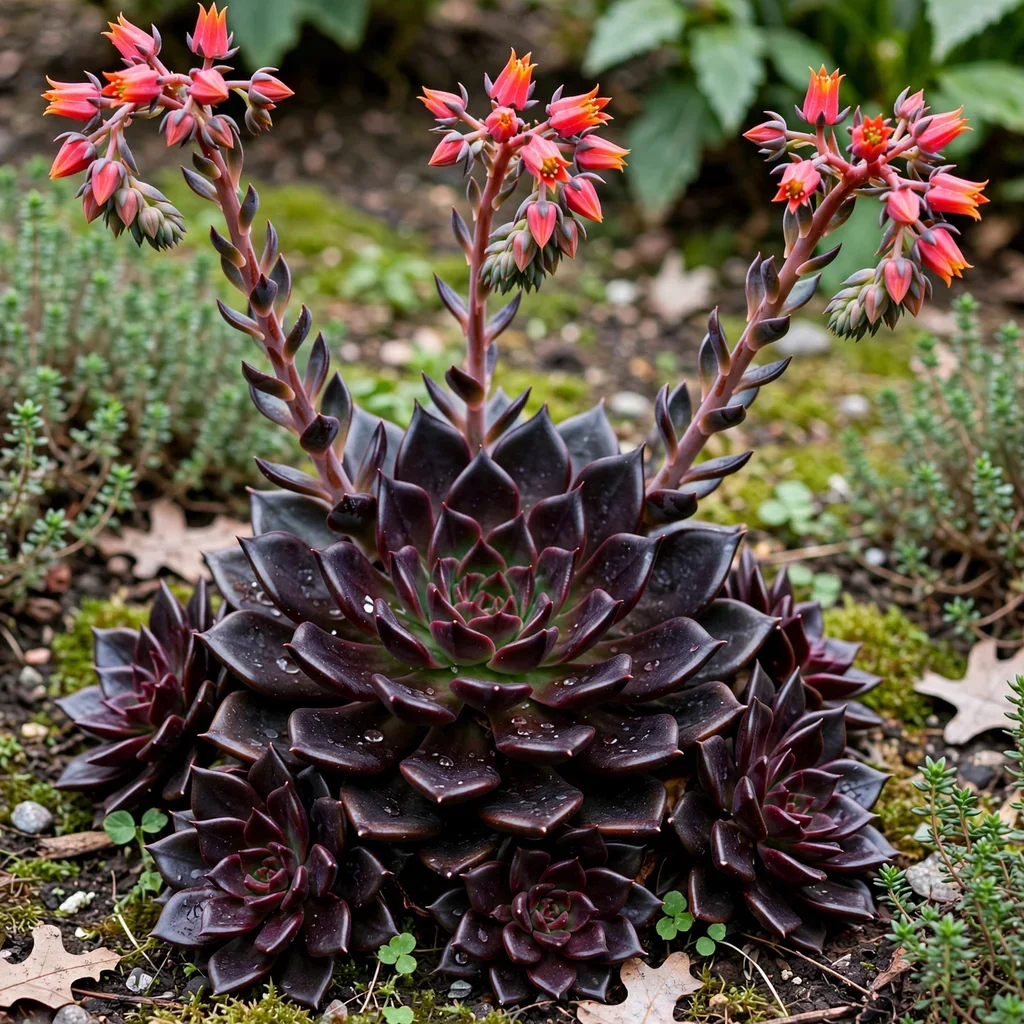
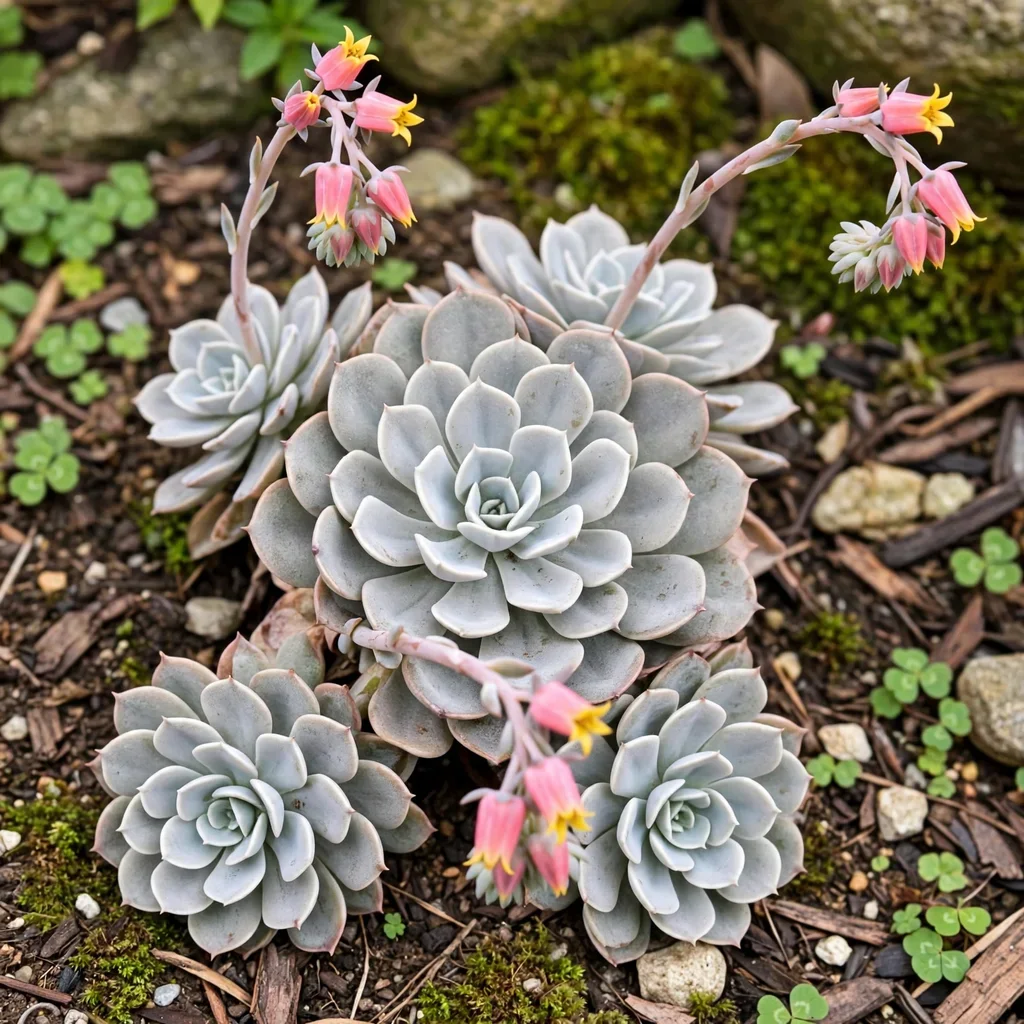
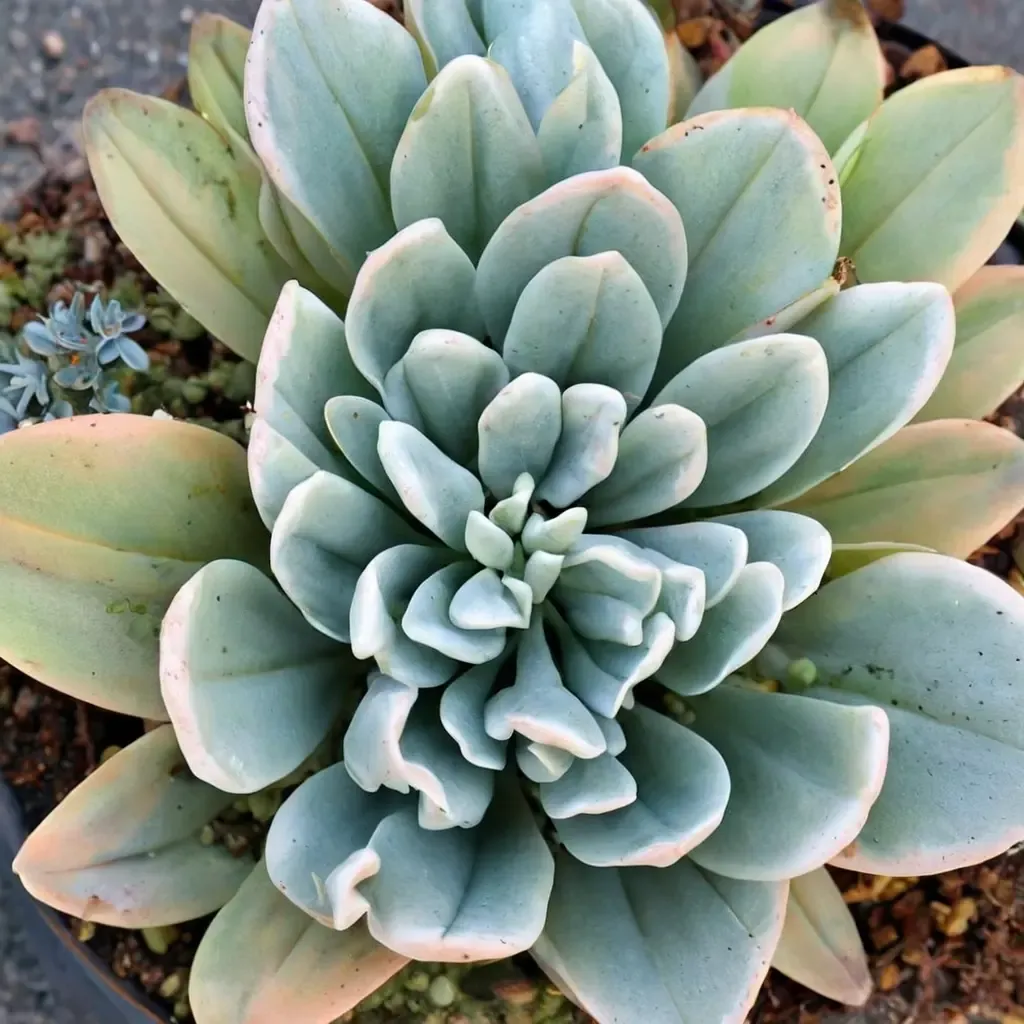
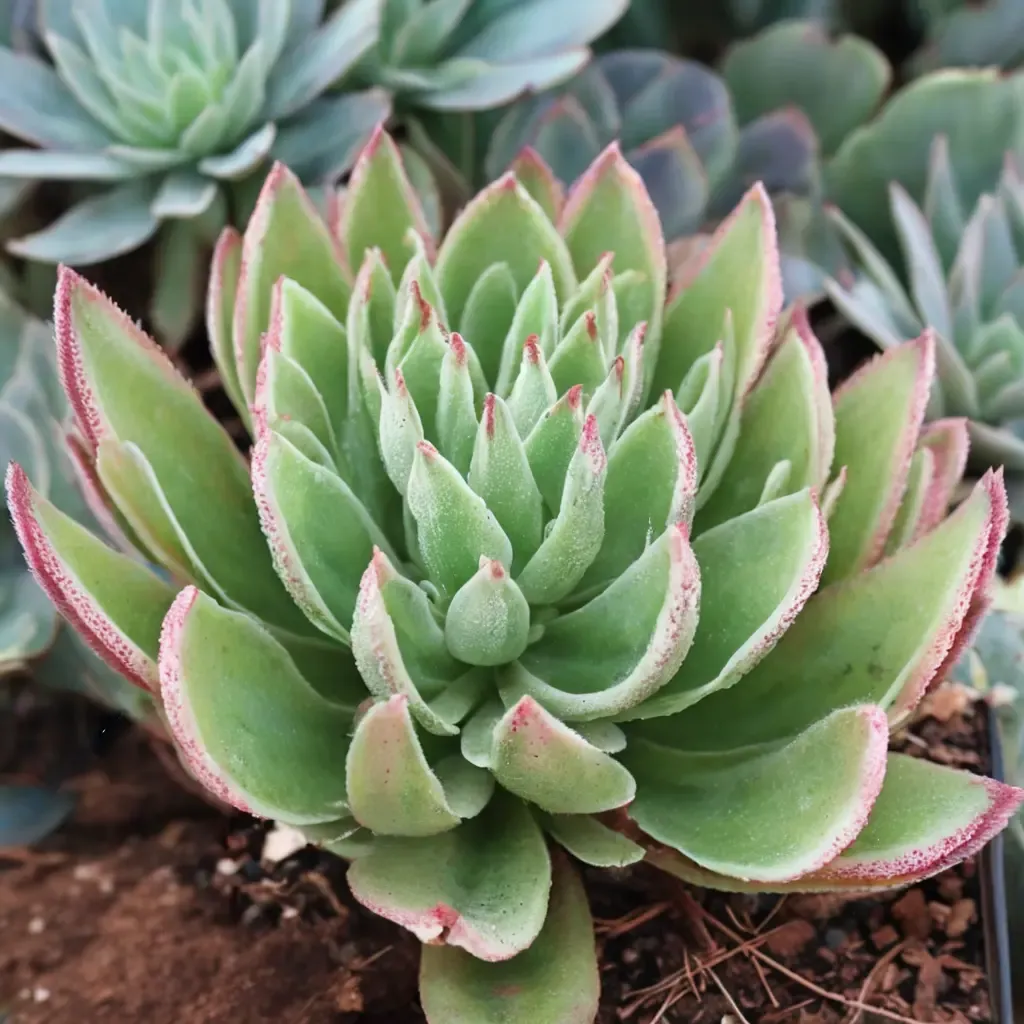
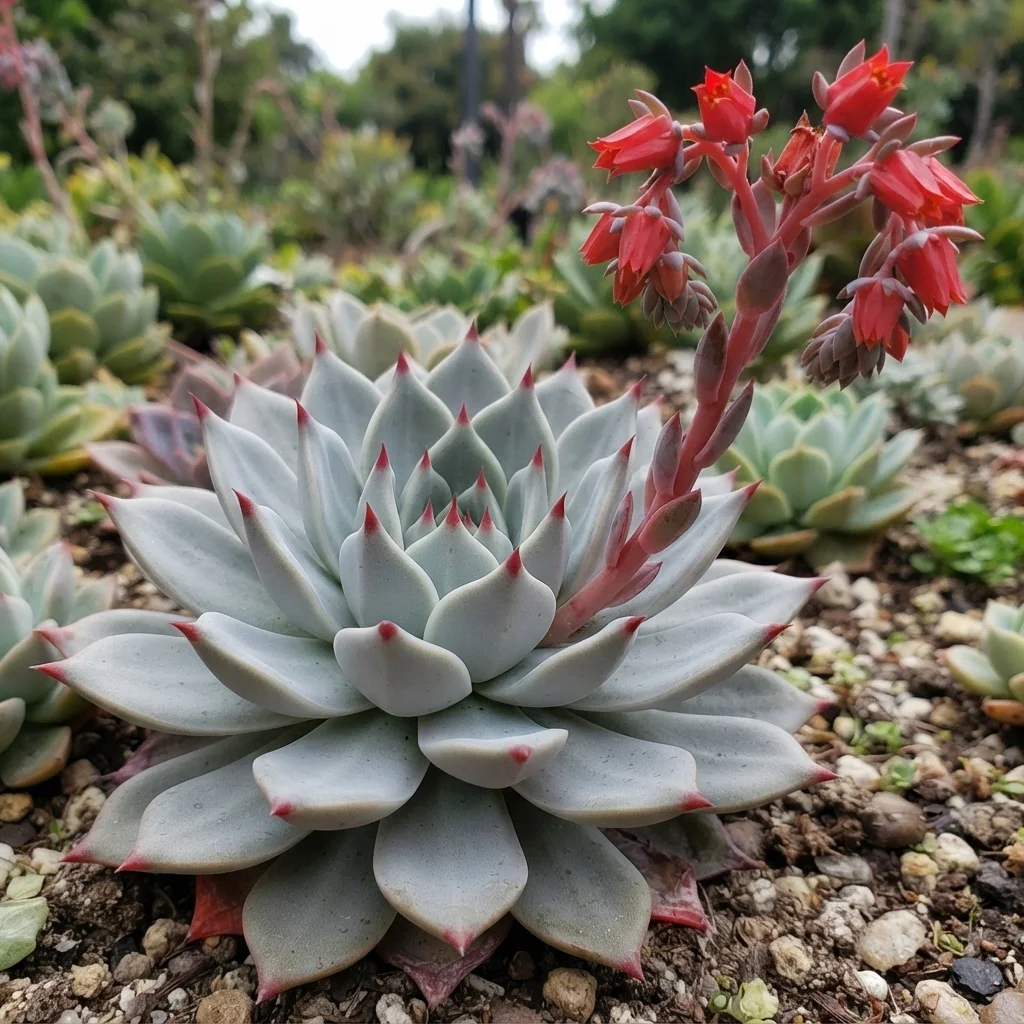
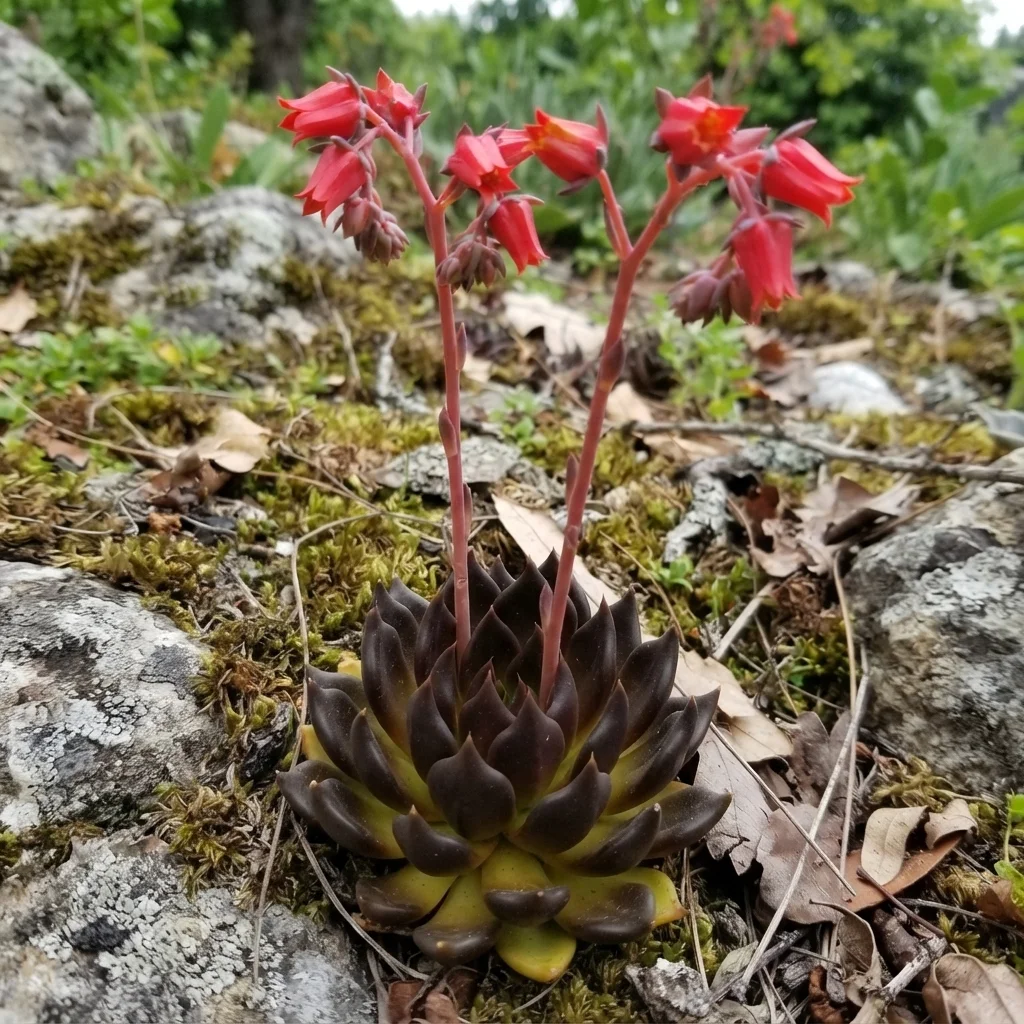
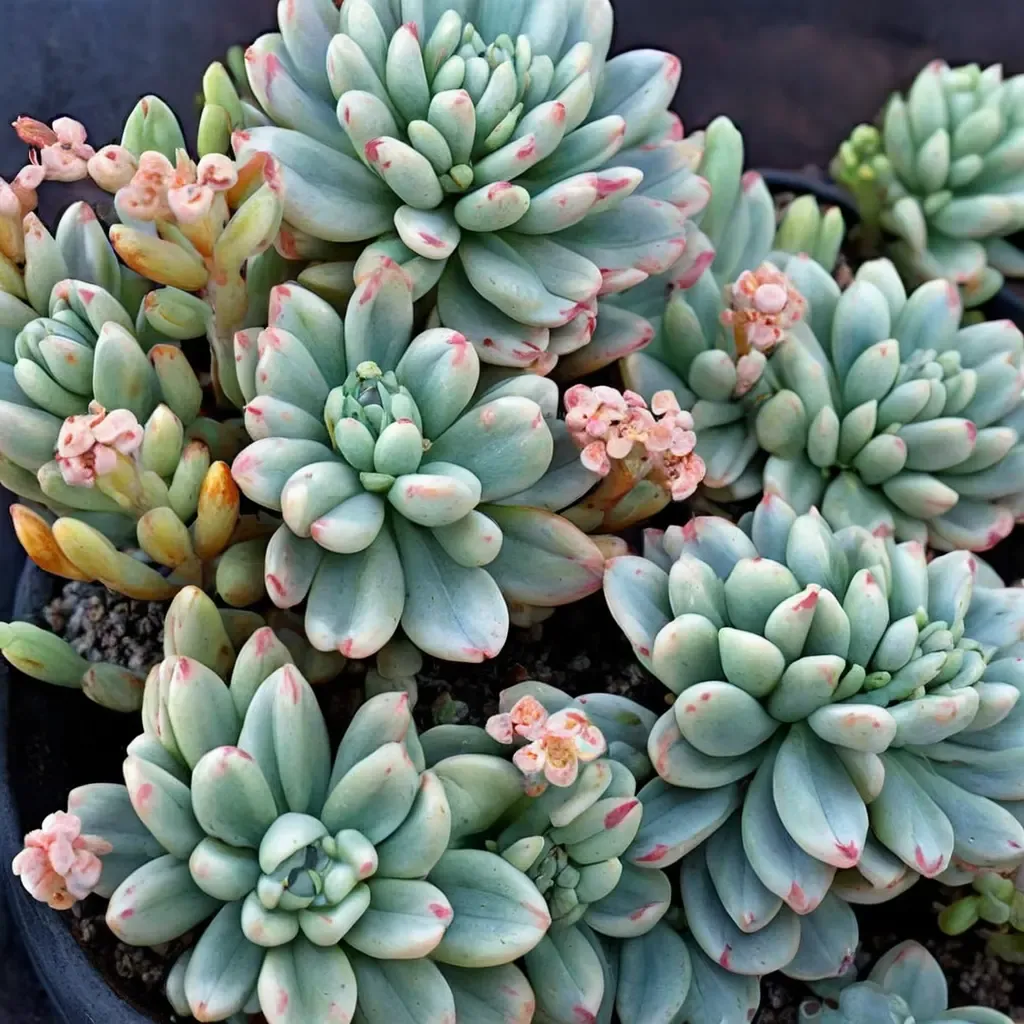
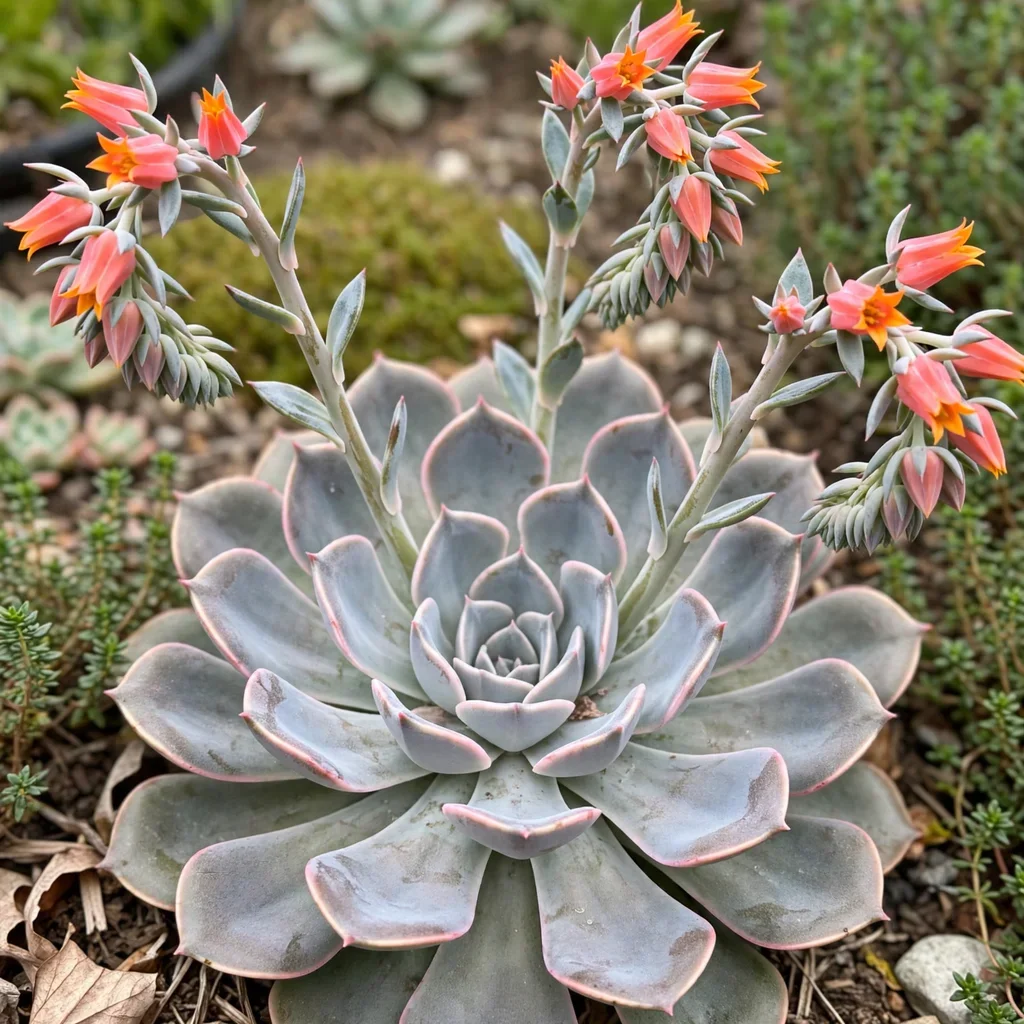
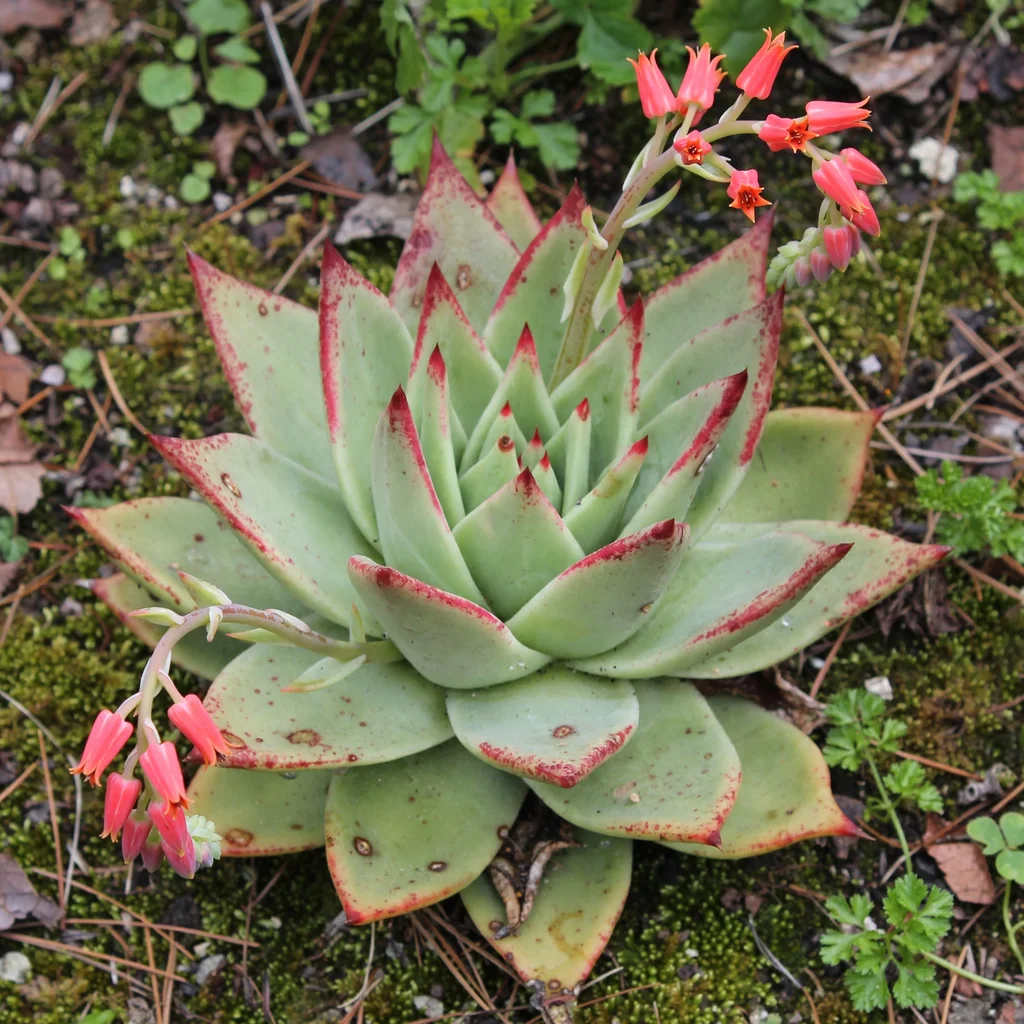
Browse all 14 Echeveria varieties →
7 species of Echeveria
Each one is a parent of the varieties above.
Track your Echeveria in Sow
Save the Echeveria you grow and get care reminders timed to your zone.
How to grow Echeveria
Whats common across all Echeveria varieties in our catalog — drawn from the care records of the 14 most-grown of them.
The Echeveria year
- FertilizeMay–August86% of varieties
Use diluted low-nitrogen fertilizer monthly during active growth
- PropagateApril–July71% of varieties
Separate offsets ('chicks') from the mother plant
- Winter PrepOctober and November64% of varieties
Move container plants indoors before temperatures drop below 40°F
- Check for PestsMay–September57% of varieties
Inspect leaf axils and the center of the rosette for mealybugs and aphids.
- PlantMay and June36% of varieties
Plant outdoors in containers or rock gardens after danger of frost


Do
- Use well-draining soil to prevent root rot
- Give it full sun for compact rosettes ☀️
- Water only when soil is completely dry 🌱
- Rotate plant regularly for even sun exposure
- Water into the soil only 💧
Avoid
- Do not expose to frost or freezing temperatures
- Overwater, which can cause root rot ❌
- Water into the centre ❌
- Rub the waxy bloom off the leaves ❌
What goes wrong with Echeveria
| Problem | What you'll see | What to do |
|---|---|---|
| Mealybugs | White cottony clusters between the leaves and around the roots | Dab with alcohol on a cotton bud and check the rootball when repotting; they hide below soil level |
| Aphids | Sticky residue and distorted new growth | Use insecticidal soap or neem oil |
| Spider mites | Fine webbing and stippled foliage. | Increase air circulation and treat with insecticidal soap or miticides. |
| Vine weevil | Rosettes loosen and topple as grubs eat the roots away below ground | Check the compost when repotting and use biological controls while the soil is warm |
| Root rot | Soft, blackened roots and wilting | Reduce watering, improve drainage, and remove affected roots |
| Crown and root rot | The centre of the rosette blackens and collapses after water sits in the leaves or compost stays wet | Water into the soil only and use gritty compost; remove affected rosettes before rot spreads to offsets |
| Root Rot | Soft, blackened roots and wilting plant | Improve drainage and reduce watering |
Making more Echeveria
Offsets
- Pull away a rooted offset from the parent clump.
- Let the wound dry for a day.
- Pot into gritty compost and water lightly after a week.
Leaf cuttings
- Twist off a whole leaf cleanly at the base.
- Lay it on dry gritty compost.
- Water sparingly once roots and a plantlet appear.
Echeveria questions
How many types of Echeveria are there?
The Sow catalog tracks 14 distinct Echeveria varieties. The most popular — ranked by 51 real gardeners — are shown first above.
What zones does Echeveria grow in?
Across its varieties, Echeveria covers USDA Zones 9–10. Individual varieties differ — each plant page lists its exact range, and Sow filters the catalog to your zone automatically.
When does Echeveria bloom?
Most Echeveria varieties bloom in late spring, early summer, mid-summer. Staggering early, mid, and late varieties extends the genus's season in one bed.
Which Echeveria should I choose?
Start from the most-saved varieties above — popularity across thousands of gardens is a strong signal of reliability — then filter by your zone and sun. In the Sow app you can preview any of them in a photo of your actual yard before you buy.