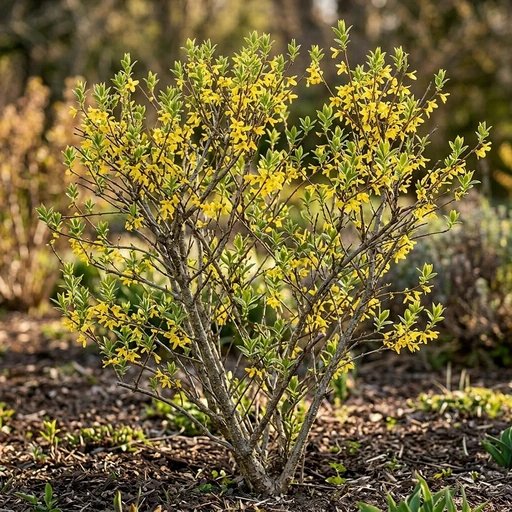
Garden hybrid
This is a garden hybrid, bred from more than one wild species, so it has no single species page of its own.
The Story
Plant Bio
Forsythia is a genus of deciduous flowering shrubs known for their profusion of bright yellow flowers that appear in early spring before the leaves. They are fast-growing and have an upright, arching habit.
'Meadowlark' is a hybrid developed for its exceptional flower bud hardiness, reliably blooming even after harsh winters in northern climates. It has a vigorous, arching habit.
Uses & Benefits:
Bred from more than one wild species, so it has no species page of its own.
Essentials
At a Glance
Plant Type
Shrub
Height
108"
Width
108"
Light
Full Sun, Partial Sun
Zones
4, 5, 6, 7, 8
Water
Medium
Humidity
Average
Lifespan
Long-lived shrub
Native To
Hybrid of Asian species
Toxicity
Non-toxic
Bloom period
Early spring – Mid-spring
In flower about 2 months of the year
Planting
How to Grow
- Choose a location with at least six hours of direct sunlight daily.
- Dig a hole twice the width of the root ball.
- Place the shrub in the hole, ensuring the crown is level with the soil.
- Backfill with native soil, firming gently around the roots.
- Water thoroughly after planting to settle the soil.
- Apply a 2-inch layer of mulch around the base.
Pro Tip
Prune right after flowering ends; pruning later in the season will remove next year's flower buds.
Keep It Thriving
Care Guide
Do
- Prune immediately after flowering for shaping.
- Water deeply during prolonged dry spells.
- Allow its natural arching habit to develop.
Don't
- Don't prune into a tight, formal shape.
- Don't prune in late summer or fall.
- Don't plant in poorly drained, boggy soil.
Seasonal Care Calendar
| Task | Jan | Feb | Mar | Apr | May | Jun | Jul | Aug | Sep | Oct | Nov | Dec |
|---|---|---|---|---|---|---|---|---|---|---|---|---|
| Fertilize | ||||||||||||
| Propagate | ||||||||||||
| Prune |
Watch Out For
Pests & Diseases
Common Pests
Common Diseases
In the Garden
Landscape Uses & Companions
Landscape Uses
Multiply
Propagation Methods
Good to Know
Common Questions
Meadowlark Forsythia questions
What zones can Meadowlark Forsythia grow in?
Meadowlark Forsythia is hardy in USDA Zones 4–8. Inside that range it survives winter in the ground; outside it, grow it as an annual or a container plant you protect.
Is Meadowlark Forsythia deer resistant?
Yes — Meadowlark Forsythia is rated deer-resistant. Deer typically pass it over, though extreme hunger can override any plant's defenses.
When does Meadowlark Forsythia bloom?
Meadowlark Forsythia typically blooms in early spring through mid-spring. Exact timing shifts a week or two with your zone — Sow's bloom calendar maps it to your garden.
Does Meadowlark Forsythia need full sun?
Meadowlark Forsythia does best in full sun to part shade. In hot climates, afternoon shade keeps blooms fresher longer.
Is Meadowlark Forsythia drought tolerant?
Yes — once established (usually after the first full season), Meadowlark Forsythia handles dry spells with minimal watering. Water deeply its first year to build the root system that makes that possible.
More Forsythia to compare
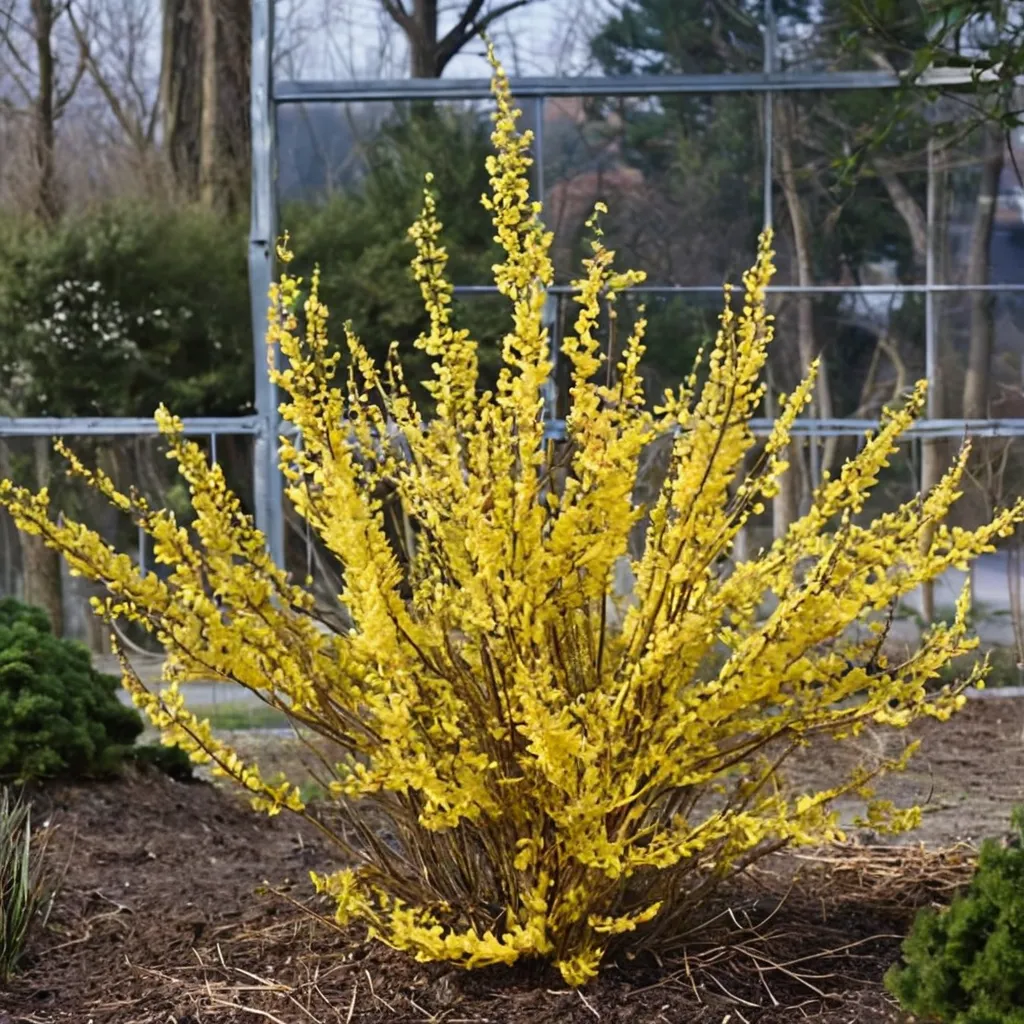
Show Off Forsythia
Forsythia x intermedia 'Show Off'
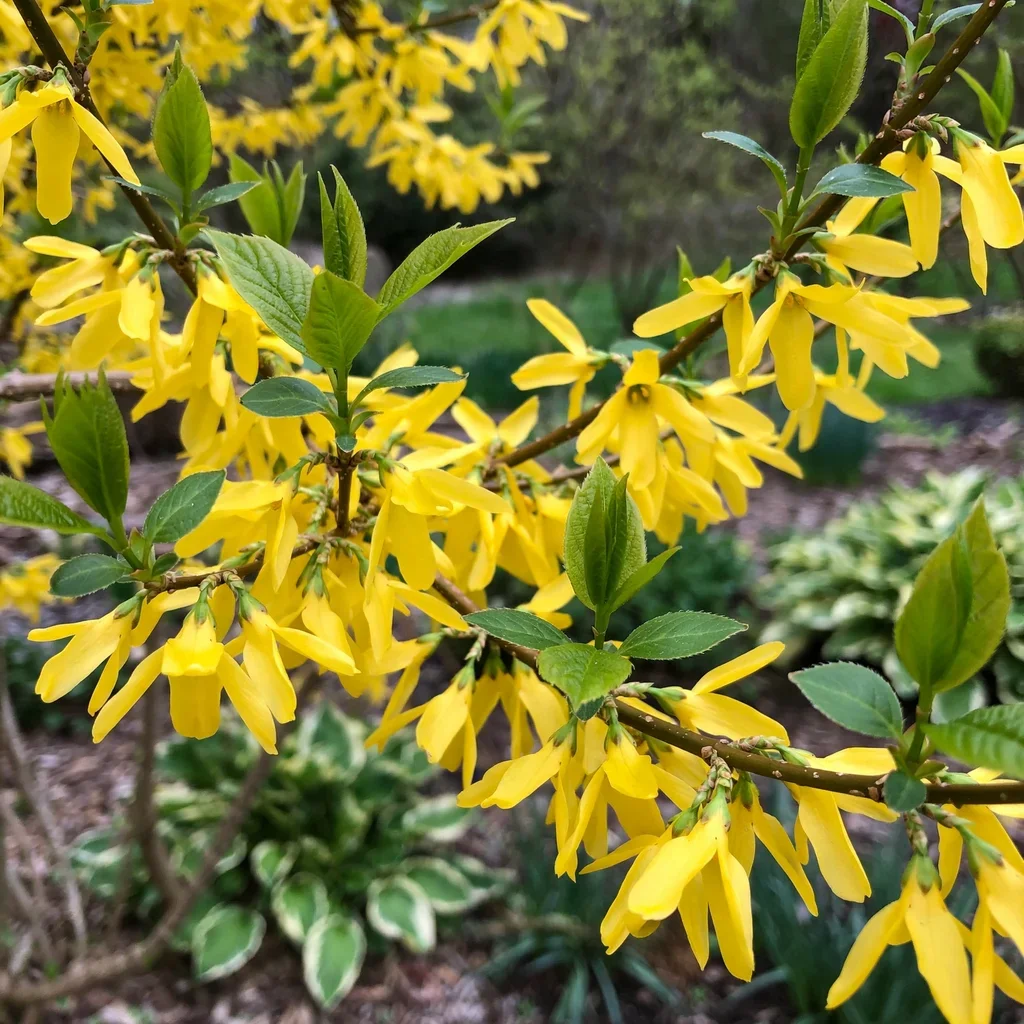
Lynwood Gold Forsythia
Forsythia x intermedia 'Lynwood Gold'
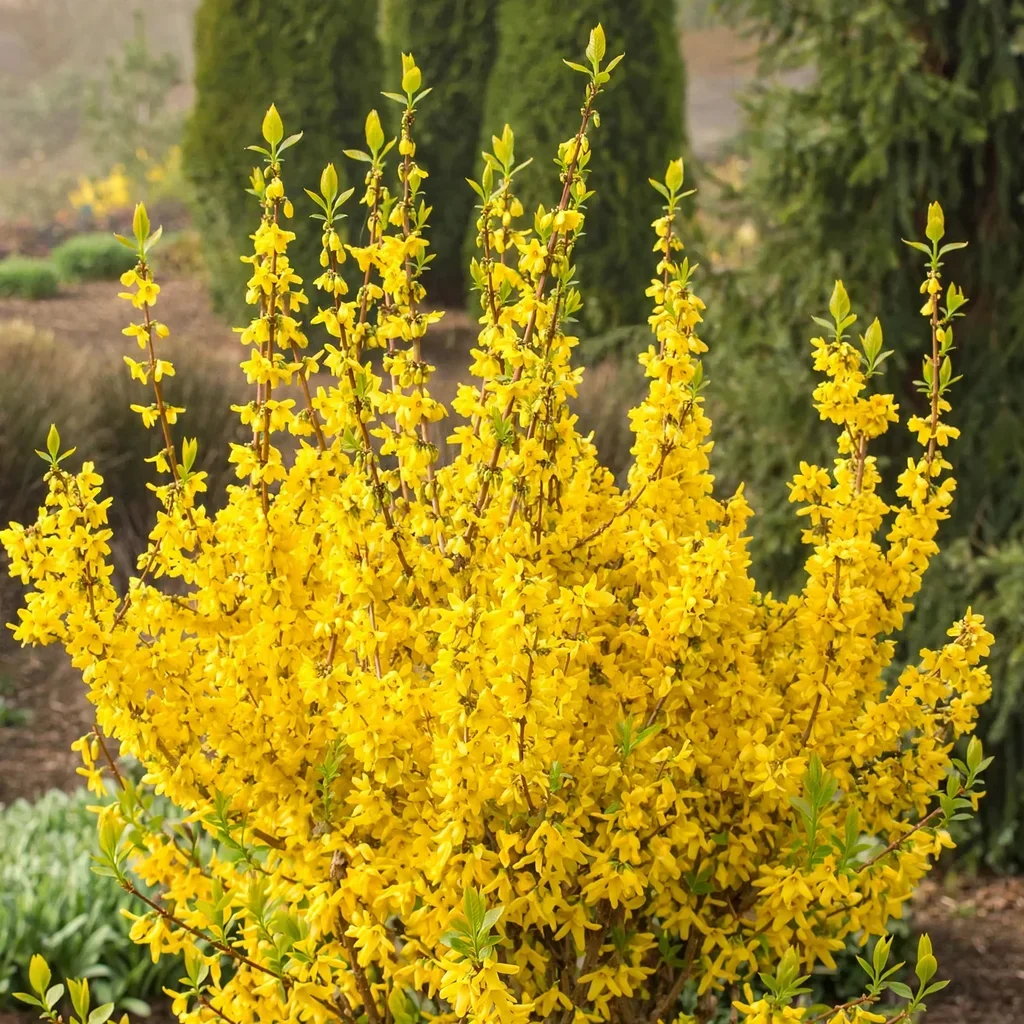
Magical Gold Forsythia
Forsythia x intermedia 'Magical Gold'
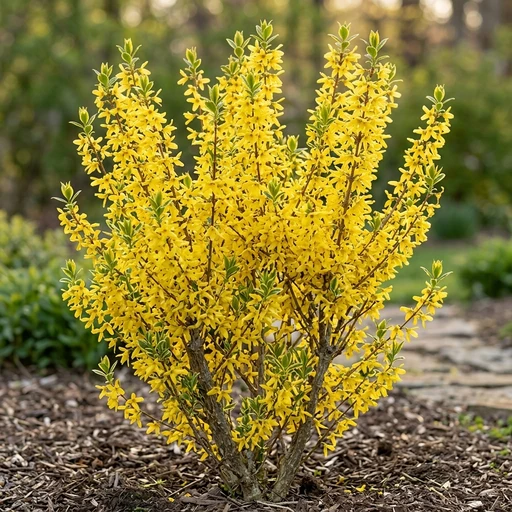
Nimbus Forsythia
Forsythia x intermedia 'Nimbus'
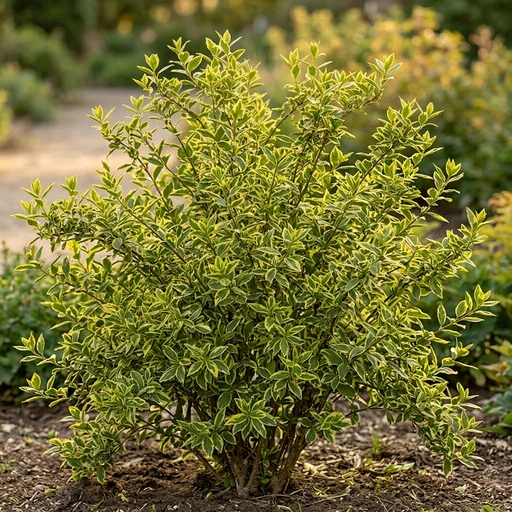
New Hampshire Gold Forsythia
Forsythia x intermedia 'New Hampshire Gold'
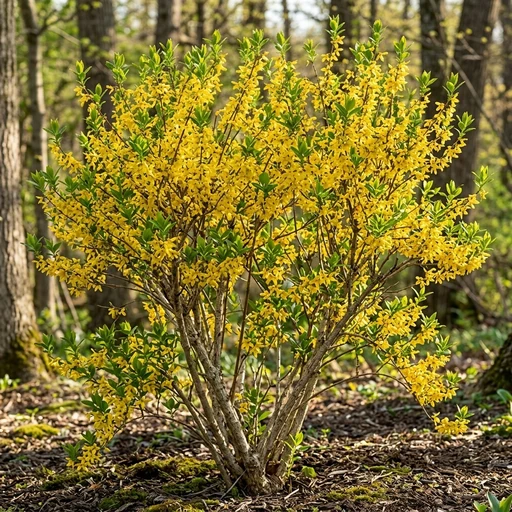
Showy Border Forsythia
Forsythia x intermedia 'Showy Border'
Keep exploring
Explore the genus
Hardy in your zone?
Grow Meadowlark Forsythia with confidence
See it in a design of your actual yard, get zone-matched care reminders, and track it season by season in your garden journal.