The Story
Plant Bio
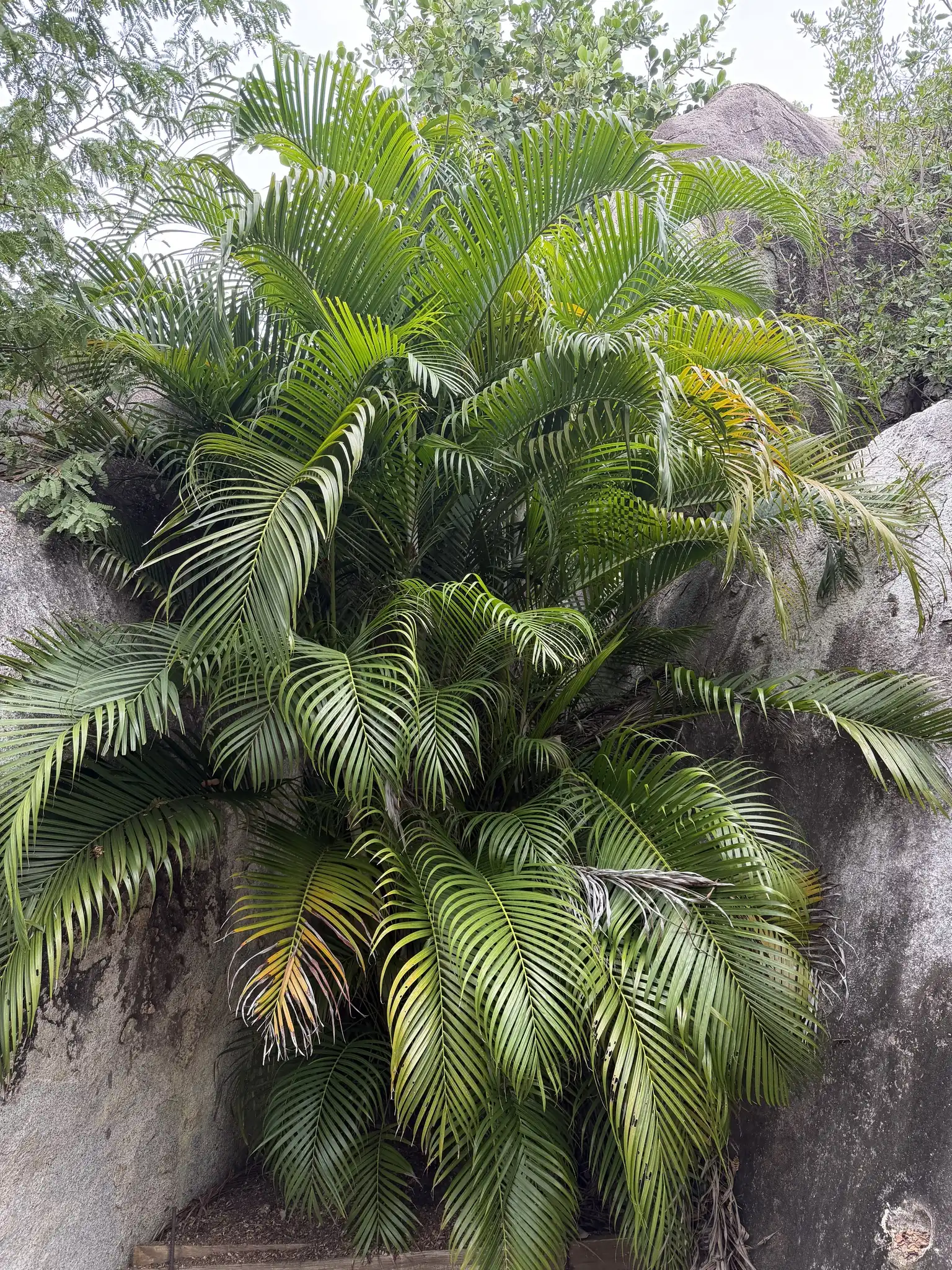
Dypsis lutescens is a clustering, multi-stemmed palm native to the moist forest and coastal regions of Madagascar. The plant forms dense, upright-to-arching clumps of cane-like stems with prominent nodes that closely resemble bamboo.
The pinnate, upward-curving fronds feature yellow midribs and produce new growth with distinct golden-orange to pinkish hues. In summer, mature outdoor specimens produce small yellow flowers on branched panicles below the foliage.
Uses & Benefits:
Essentials
At a Glance
Plant Type
Tropical
Height
360"
Width
180"
Light
Partial Sun, Shade
Zones
10
Water
Consistent moisture
Humidity
High
Lifespan
Perennial
Native To
Madagascar
Toxicity
Non-toxic
Bloom period
Summer
In flower about 3 months of the year
Marketplace
Where to Buy
Shipping costs Year-round shipping Free shipping
Planting
How to Grow
- Select a potting mix rich in organic matter that drains freely, or plant in well-drained, loamy garden soil in frost-free regions.
- Position the plant in bright, filtered indoor light or partial shade outdoors, avoiding harsh afternoon sun which scorches the foliage.
- Water consistently to keep the soil evenly moist, allowing only the top inch of soil to dry slightly between waterings.
- Apply a balanced, slow-release palm fertilizer containing magnesium and iron during the active spring and summer growing seasons.
Pro Tip
To prevent leaf tip necrosis and brown tips, maintain high ambient humidity and never allow the root ball to dry out completely, while ensuring the soil drains rapidly to avoid root rot.
Keep It Thriving
Care Guide
Do
- Keep ambient humidity high around indoor plants to prevent dry, brown leaf tips.
- Remove completely dead, brown fronds at the base once they dry out.
- Ensure pots have excellent drainage holes to prevent waterlogged soil.
Don't
- Do not cut into live green stems or strip away healthy, functional leaves prematurely.
- Do not let the root ball dry out completely, which causes immediate wilting and leaf necrosis.
- Do not use heavy, clay-rich soils that retain excess water around the roots.
Seasonal Care Calendar
| Task | Jan | Feb | Mar | Apr | May | Jun | Jul | Aug | Sep | Oct | Nov | Dec |
|---|---|---|---|---|---|---|---|---|---|---|---|---|
| Fertilize | ||||||||||||
| Pest Check | ||||||||||||
| Prune | ||||||||||||
| Winter Prep |
Watch Out For
Pests & Diseases
Common Pests
Common Diseases
In the Garden
Landscape Uses & Companions
Landscape Uses
Companion Plants
Multiply
Propagation Methods
Good to Know
Common Questions
Areca Palm questions
What zones can Areca Palm grow in?
Areca Palm is hardy in USDA Zone 10. Inside that range it survives winter in the ground; outside it, grow it as an annual or a container plant you protect.
When does Areca Palm bloom?
Areca Palm typically blooms in summer through summer. Exact timing shifts a week or two with your zone — Sow's bloom calendar maps it to your garden.
Does Areca Palm need full sun?
Areca Palm does best in part shade.
Keep exploring
Explore the genus
Hardy in your zone?
Grow Areca Palm with confidence
See it in a design of your actual yard, get zone-matched care reminders, and track it season by season in your garden journal.