The Story
Plant Bio
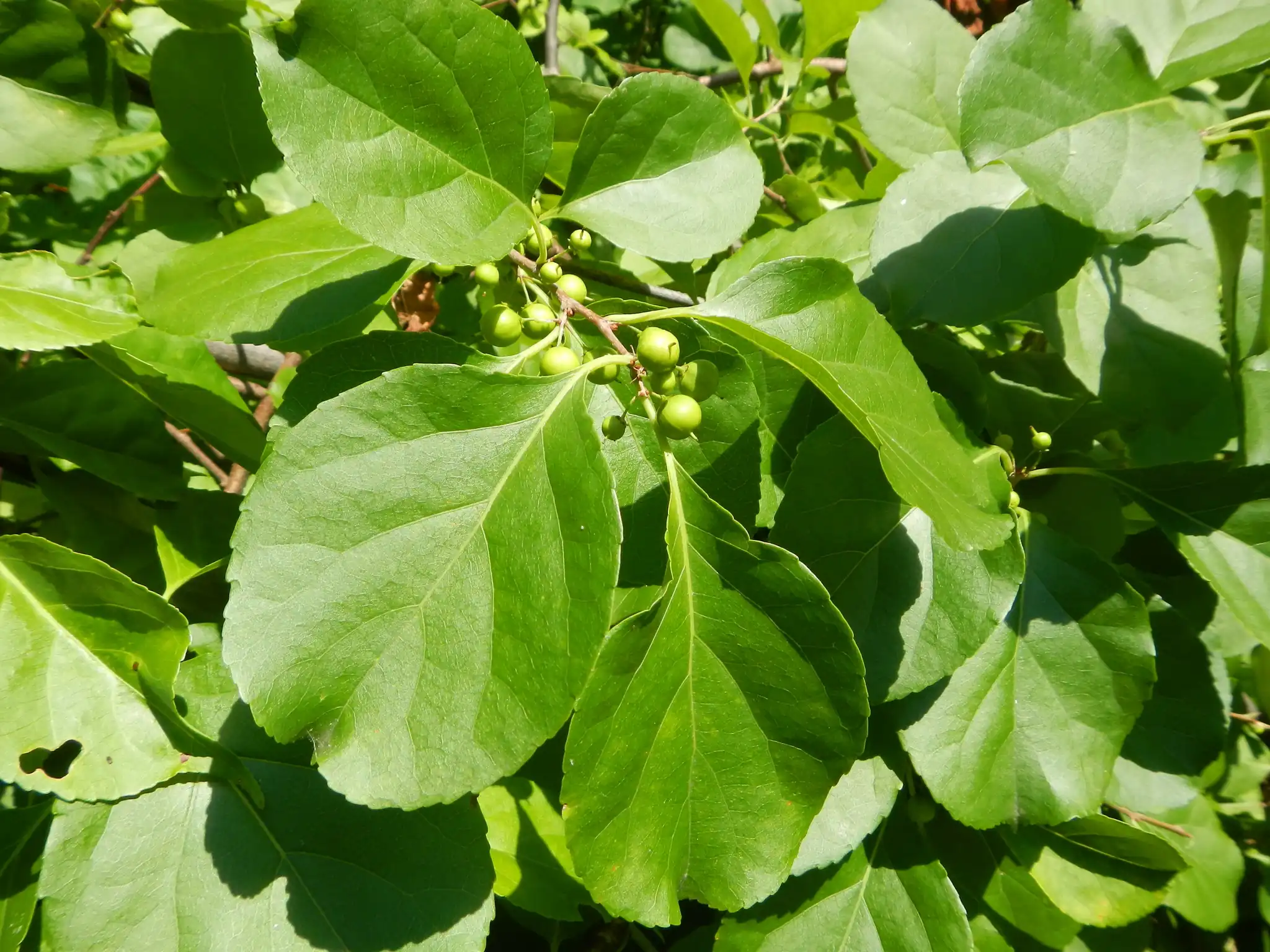
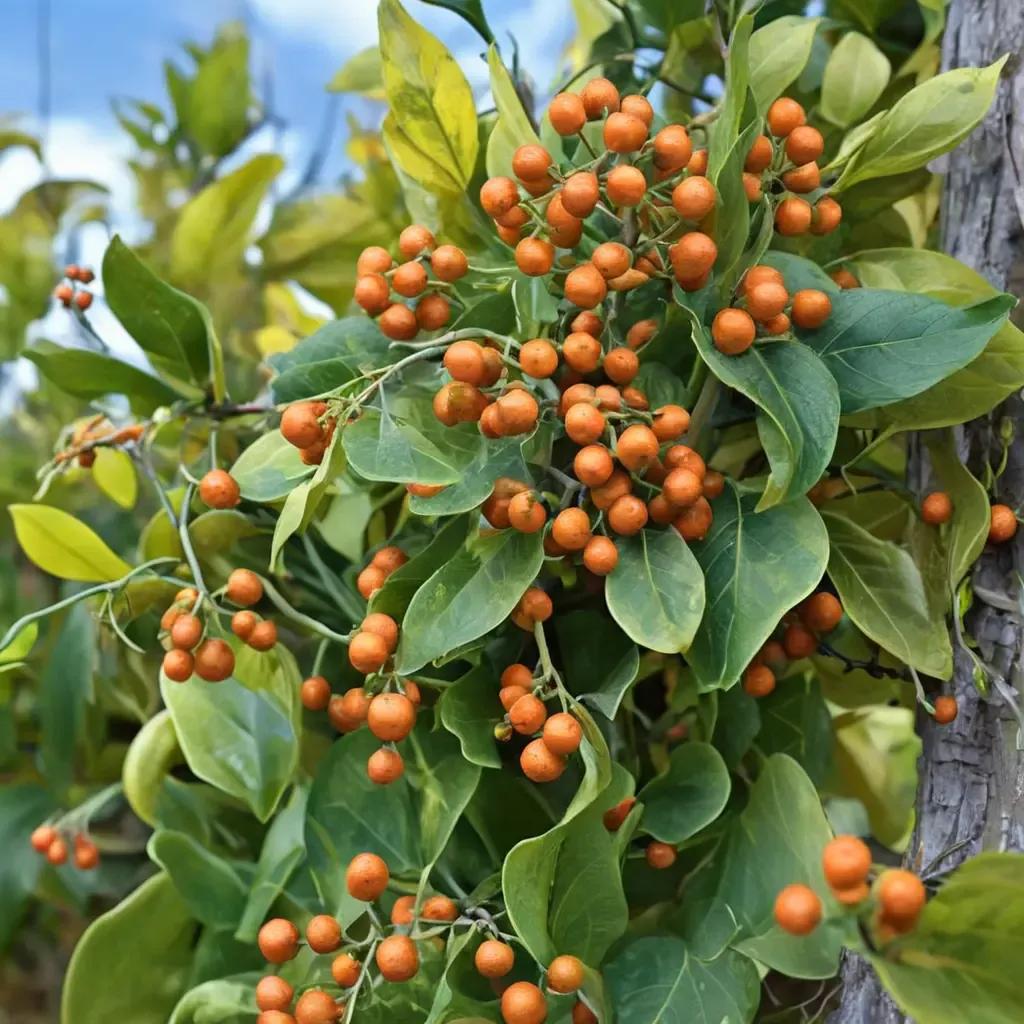
Celastrus orbiculatus, Oriental bittersweet, is a vigorous woody twining vine from East Asia, climbing thirty to sixty feet. Rounded glossy leaves clothe grey-brown stems that thicken with age, and clusters of small green flowers give way to capsules that split to reveal scarlet seeds against a yellow shell.
This is one of the most damaging invasive vines in the eastern United States. It girdles and strangles trees outright, its weight brings down mature canopy, and birds spread the seed for miles. It also hybridises with the native American bittersweet, genetically swamping it. Do not plant it — plant Celastrus scandens, which gives the same autumn berries without the destruction.
Uses & Benefits:
Essentials
At a Glance
Plant Type
Vine
Height
480"
Width
72"
Light
Full Sun, Partial Sun
Zones
4, 5, 6, 7, 8
Water
Moderate
Humidity
Moderate
Lifespan
Perennial
Native To
China, Korea, Japan and the Russian Far East
Toxicity
Berries are toxic if eaten
Planting
How to Grow
- Do not plant it; choose native Celastrus scandens.
- Learn to identify it: rounded leaves, berries along the stem.
- Cut climbing stems at the base to save a strangled tree.
- Treat or dig the cut stumps, which resprout hard.
- Bag and bin all berried material rather than composting.
- Check for seedlings where birds perch.
Pro Tip
Tell it from the native by where the fruit sits: Oriental bittersweet fruits all along the stem, the native only at the tips.
Keep It Thriving
Care Guide
Do
- Plant native Celastrus scandens instead 🌱
- Cut vines off trees at the base ✂️
- Bag berried material for disposal 🗑️
- Check for bird-sown seedlings 🔍
Don't
- Plant it anywhere ❌
- Use the berried stems in wreaths ❌
- Leave cut stumps untreated ❌
Seasonal Care Calendar
| Task | Jan | Feb | Mar | Apr | May | Jun | Jul | Aug | Sep | Oct | Nov | Dec |
|---|---|---|---|---|---|---|---|---|---|---|---|---|
| Control | ||||||||||||
| Identify |
Watch Out For
Pests & Diseases
Common Pests
Common Diseases
In the Garden
Landscape Uses & Companions
Landscape Uses
Multiply
Propagation Methods
Good to Know
Common Questions
American Bittersweet questions
What zones can American Bittersweet grow in?
American Bittersweet is hardy in USDA Zones 4–8. Inside that range it survives winter in the ground; outside it, grow it as an annual or a container plant you protect.
Is American Bittersweet deer resistant?
Yes — American Bittersweet is rated deer-resistant. Deer typically pass it over, though extreme hunger can override any plant's defenses.
When does American Bittersweet bloom?
American Bittersweet typically blooms in late spring through early summer. Exact timing shifts a week or two with your zone — Sow's bloom calendar maps it to your garden.
Does American Bittersweet need full sun?
American Bittersweet does best in full sun to part shade. In hot climates, afternoon shade keeps blooms fresher longer.
Is American Bittersweet drought tolerant?
Yes — once established (usually after the first full season), American Bittersweet handles dry spells with minimal watering. Water deeply its first year to build the root system that makes that possible.
More Celastrus to compare
Keep exploring
Explore the genus
Hardy in your zone?
Grow American Bittersweet with confidence
See it in a design of your actual yard, get zone-matched care reminders, and track it season by season in your garden journal.