The Story
Plant Bio
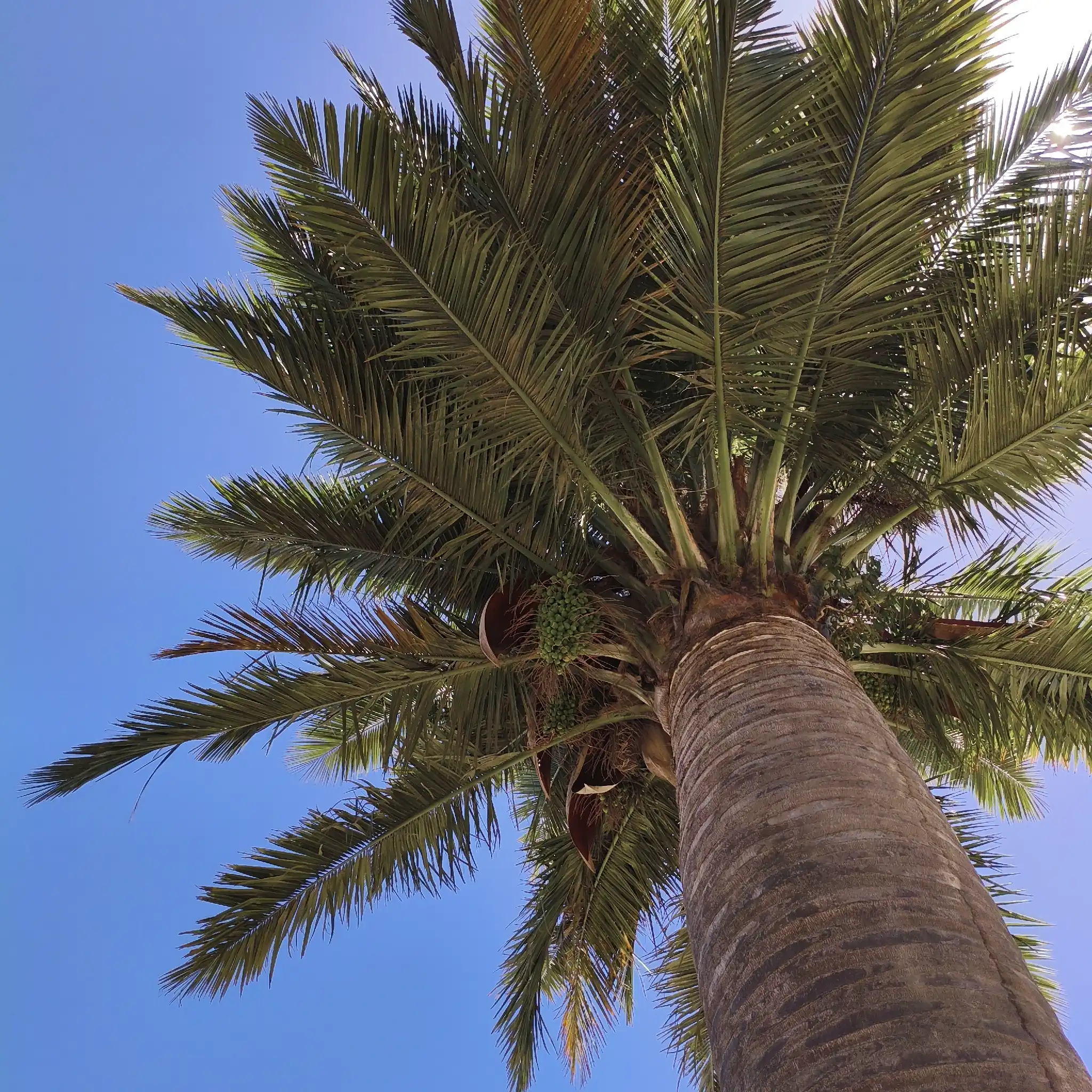
Jubaea chilensis is a massive, slow-growing evergreen palm distinguished by its exceptionally thick, smooth gray trunk that can reach up to six feet in diameter. It supports a dense, rounded crown of stiff, arching dark green pinnate fronds that can extend up to sixteen feet in length.
This species is the most cold-hardy of all pinnate-leaved palms, surviving temperatures down to 5 degrees Fahrenheit once established. Its slow growth rate means it remains a manageable, architectural specimen for decades before developing its signature trunk.
Uses & Benefits:
Essentials
At a Glance
Plant Type
Tree
Height
984"
Width
236"
Light
Full Sun
Zones
8, 9, 10
Water
Low
Humidity
Low to moderate
Lifespan
Long-lived
Native To
Chile
Toxicity
Non-toxic
Bloom period
Summer
In flower about 3 months of the year
Planting
How to Grow
- Select a planting site in full sun with excellent drainage, as standing water in the root zone is fatal.
- Dig a hole twice as wide as the root ball but no deeper, ensuring the palm is planted at the same depth it was in the container.
- Backfill with native soil without adding organic amendments, and water deeply to settle the soil around the roots.
- Establish a minimal watering schedule, allowing the soil to dry completely between waterings once the root system is established.
Pro Tip
Avoid the temptation to accelerate growth with heavy nitrogen fertilizers or excess water, which triggers fatal root and crown rot; patience is mandatory as this species takes decades to mature.
Keep It Thriving
Care Guide
Do
- Remove only completely dead, brown fronds close to the trunk base.
- Apply a slow-release palm fertilizer containing micronutrients once or twice a year in spring.
- Protect young, unestablished plants from severe winter freezes.
Don't
- Do not prune green or upward-pointing fronds, as this severely reduces photosynthetic capacity.
- Do not overwater or allow water to pool around the base of the trunk.
- Do not attempt to transplant mature specimens bare-root.
Seasonal Care Calendar
| Task | Jan | Feb | Mar | Apr | May | Jun | Jul | Aug | Sep | Oct | Nov | Dec |
|---|---|---|---|---|---|---|---|---|---|---|---|---|
| Fertilize | ||||||||||||
| Pest Check | ||||||||||||
| Prune | ||||||||||||
| Winter Prep |
Watch Out For
Pests & Diseases
Common Pests
Common Diseases
In the Garden
Landscape Uses & Companions
Landscape Uses
Companion Plants
Multiply
Propagation Methods
Good to Know
Common Questions
Chilean Wine Palm questions
What zones can Chilean Wine Palm grow in?
Chilean Wine Palm is hardy in USDA Zones 8–10. Inside that range it survives winter in the ground; outside it, grow it as an annual or a container plant you protect.
Is Chilean Wine Palm deer resistant?
Yes — Chilean Wine Palm is rated deer-resistant. Deer typically pass it over, though extreme hunger can override any plant's defenses.
When does Chilean Wine Palm bloom?
Chilean Wine Palm typically blooms in summer through summer. Exact timing shifts a week or two with your zone — Sow's bloom calendar maps it to your garden.
Does Chilean Wine Palm need full sun?
Chilean Wine Palm does best in full sun (6+ hours).
Is Chilean Wine Palm drought tolerant?
Yes — once established (usually after the first full season), Chilean Wine Palm handles dry spells with minimal watering. Water deeply its first year to build the root system that makes that possible.
Keep exploring
Explore the genus
Hardy in your zone?
Grow Chilean Wine Palm with confidence
See it in a design of your actual yard, get zone-matched care reminders, and track it season by season in your garden journal.