The Story
Plant Bio
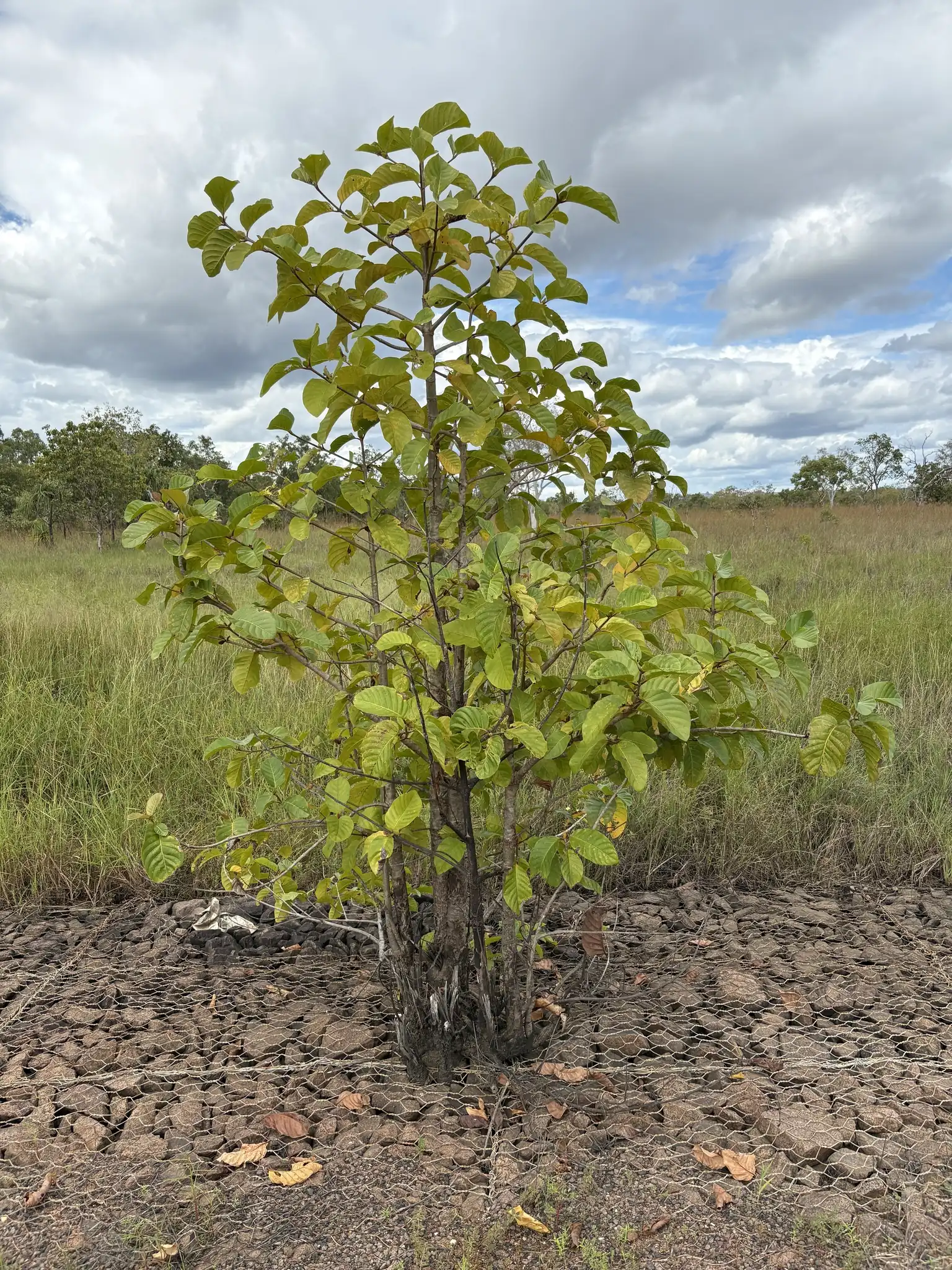
Nauclea orientalis is a medium to large semi-deciduous tropical tree characterized by a pyramidal to rounded crown with distinctive, layered horizontal branching. The large, glossy green leaves are opposite and broadly ovate, protected in their early stages by prominent oval stipules containing red resinous glands.
The species is distinguished by its spherical, yellow-to-orange flower heads that release a strong fragrance throughout spring and summer. These globular clusters feature densely packed flowers with highly prominent, protruding white styles.
Uses & Benefits:
Essentials
At a Glance
Plant Type
Tree
Height
1181"
Width
787"
Light
Full Sun, Partial Sun
Zones
10
Water
High
Humidity
High
Lifespan
Long-lived
Native To
Tropical Asia, Papuasia, Northern Australia
Toxicity
Non-toxic
Bloom period
Spring – Summer
In flower about 6 months of the year
Planting
How to Grow
- Select a planting site in full sun to partial shade with moist, rich loam or clay loam soil.
- Dig a hole twice the width of the root ball and set the plant at the same depth as its container.
- Water deeply immediately after planting and maintain highly consistent moisture during the establishment phase.
- Apply a balanced, slow-release tropical fertilizer during active spring growth if establishment appears sluggish.
Pro Tip
Though often treated as a delicate, dry-loving houseplant due to its semi-deciduous nature, this species is an aggressive moisture-lover that requires abundant water during establishment and thrives in waterlogged soils.
Keep It Thriving
Care Guide
Do
- Provide regular and abundant irrigation, especially during dry spells.
- Protect containerized specimens from any exposure to frost.
- Perform formative pruning on young trees to clear lower branches.
Don't
- Do not prune heavily into old, leafless wood as recovery is extremely slow.
- Do not allow container soil to dry out completely during the active growing season.
- Do not apply heavy fertilizer applications to slow-growing plants in winter.
Seasonal Care Calendar
| Task | Jan | Feb | Mar | Apr | May | Jun | Jul | Aug | Sep | Oct | Nov | Dec |
|---|---|---|---|---|---|---|---|---|---|---|---|---|
| Fertilize | ||||||||||||
| Pest Check | ||||||||||||
| Prune | ||||||||||||
| Winter Prep |
Watch Out For
Pests & Diseases
Common Pests
Common Diseases
In the Garden
Landscape Uses & Companions
Landscape Uses
Companion Plants
Multiply
Propagation Methods
Good to Know
Common Questions
Bur Tree questions
What zones can Bur Tree grow in?
Bur Tree is hardy in USDA Zone 10. Inside that range it survives winter in the ground; outside it, grow it as an annual or a container plant you protect.
When does Bur Tree bloom?
Bur Tree typically blooms in spring through summer. Exact timing shifts a week or two with your zone — Sow's bloom calendar maps it to your garden.
Does Bur Tree need full sun?
Bur Tree does best in full sun to part shade. In hot climates, afternoon shade keeps blooms fresher longer.
Is Bur Tree drought tolerant?
Yes — once established (usually after the first full season), Bur Tree handles dry spells with minimal watering. Water deeply its first year to build the root system that makes that possible.
Keep exploring
Explore the genus
Hardy in your zone?
Grow Bur Tree with confidence
See it in a design of your actual yard, get zone-matched care reminders, and track it season by season in your garden journal.